
-
👉 Slate Preorders Tracking List: Add Your Slate Preorder 📊
Sponsored
Slate contingency/exit plan
- Thread starter SynphulGryph
- Start date
- Watchers 26
-
- Tags
- contingency exit plan future
Gozer
Active Member
- Joined
- Jul 5, 2026
- Threads
- 0
- Messages
- 27
- Reaction score
- 63
- Location
- San Diego, CA
- Vehicles
- 2022 Arcimoto FUV, 2008 Mazda MX-5 PRHT, 1997 Toyota RAV4
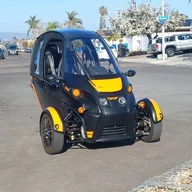
I already took a chance on a startup EV and have no regrets. I commute with an Arcimoto FUV, thirty two thousand miles in four years. They ceased production because they couldn't make vehicles at a profit, but they never filed for bankruptcy. Yet the owners of the vehicles find a way to stay on the road. Indeed, I continue to get service and modifications from a former R&D engineer for Arcimoto. Even Fisker Ocean owners have found a way to stay on the road, they're an inspiring story.
My advice concerning Slate? Do not live in fear. Fear of the past. Fear of what could happen.
I look forward to taking delivery of my Slate SUV in five to seven months and supporting this EV startup. They look to disrupt legacy auto and make automotive history. I want to be a part of that and I am not alone.
My advice concerning Slate? Do not live in fear. Fear of the past. Fear of what could happen.
I look forward to taking delivery of my Slate SUV in five to seven months and supporting this EV startup. They look to disrupt legacy auto and make automotive history. I want to be a part of that and I am not alone.
Last edited:
Bee
Well-Known Member
Your premise is all wrong. Why do the motors suck for ME? Why does the battery suck for ME? How is it not competitive for MY dollar?As for the Slate lasting forever, why would you want that? The Slate is already a dinosaur. The motors suck. The battery sucks. They're not even remotely competitive in 2026, let alone 2030. Heck, I would not be surprised to see current flammable lithium ion batteries banned worldwide come maybe 2035 - just for the fire risk. Or insurance companies refusing to insure them. Or charging an extra hazard premium. Why would you want to park a Slate in your garage in 2035 when it could catch fire and burn your house down - when by then you can purchase a cheap solid state, fireproof BEV.
(Also you are overstating the fire risk and if the battery degrades, I’ll just replace it.)
I do plan to keep this one forever. It fits everything I need a car for and eliminates the things I don’t want. I just need a city beater to do quick jaunts around city, haul yard waste, appliances. And thing for friends and occasionally go camping (which is easily in range). I drive a leaf now and have not needed to use the rear seats for passengers, never dropped below 30%.
Slate doesn’t need to fit the lifestyles of everyone or even most people. It just needs to fulfill the needs of a group of people that is large enough for the company to thrive.
Offering your opinion wrapped in the guise of facts does not make it correct and, with all due respect, makes you sound intellectually dishonest.
MontesDesigns
Well-Known Member
- First Name
- Daniel
- Joined
- May 25, 2026
- Threads
- 4
- Messages
- 154
- Reaction score
- 303
- Location
- SoCal
- Website
- www.montesdesigns.xyz
- Vehicles
- '20 Chevy Malibu, '59 Impala, '59 Ford F100, '24 Subaru Crosstrek Wilderness
I love the genuine alternative thoughts and ideas. I suspect Slate has a few fleet customers that will be a big support for its longevity. I agree that most people who are all in accept the risk and are tinkers who will figure out how to keep it running if the alternative does happen. But it would be unwise not to have a contingency plan since it is a startup; Honestly, I don't see it happening anytime soon. I am more curious about the long-term plan and next steps to stay relevant with a generation that seems to be more mechanically inclined or just not willing to learn. No offense, just my observation.

E90400K
Well-Known Member
I think @tubes and me are pretty much in the same political camp and are a tribe of 2 regarding nuclear energy. I do not think EV policy resurgence is necessarily tied to the next full-term election in 2028. I'm not making a political statement, rather just reading the tea leaves as I see them in 2026. I also agree EV should stand on their own, but realistically battery cost just makes EV too expensive to produce reasonably content rich BEV competitive with ICEV at the point of sale. I think BEV market adoption is closely tied to the availability of secure overnight charging and is why the adoption rate has leveled off. The ROI on public charging sites just makes selling ions no less expensive than selling petrol for the BEV end user.It changed with a new budget in October 2025 and IMO won’t change again until a new budget in October 2029, at the earliest. I don’t foresee return of tax credits. YMMV
BEV sales stagnated in early 2024, long before the election.
.
Slate is by far not the first low-priced BEV effort/experiment by a producer. The 1st Gen Bolt was well under $20K when the incentives were in place and its sales were not enough for GM to consider keeping it. Sales surged right at the end before the tax subsidy went away and as to my understanding was mostly driven by Uber and Lyft operators. It must be questioned if the BEV market is just saturated at some 9% - 11% of total annual vehicle sales.
Also in agreement with @tubes ,is the punitive policies for buying BEV. In my state of Virginia, we have the HUF tax (Highway Use Fund) as a replacement for the gas tax on BEV and hybrid/highly fuel efficient vehicles. If you buy a BEV you cannot opt out of the statutory $131.88 tax and choose the alternative use tax determined by actual annual miles driven. When I do the math on what gas tax I pay on my 15 MPG Hummer H3T at 3,810 miles driven annually, it is just $82. If I bought a Maverick instead of a Slate, the VA gas tax I'd pay is just $46 annually. And the Feds have yet to figure out how it is going to recover its $0.184 per gallon fuel tax.
Last edited:
Moe
Well-Known Member
We drive fewer than 4,000 miles per year, meaning a Slate will see about 2,000. We’ll pay $200/year EV registration. Is that fair? We don’t care. It’s preferable to annual inspections, much less vehicle tracking, to pay a “fair” use based fee. YMMV

tubes
Well-Known Member
Federal:What laws, aside from controversial fees to offset gas/diesel road tax loss, penalize EVs? Are they federal or state?
Congress tried to put $250 per year, per EV in the OBB but the senate said no. https://www.congress.gov/crs_external_products/IF/PDF/IF13064/IF13064.1.pdf
Congress is still trying. Time is running out, and if it does, this idea will likely be toast based on the upcoming election probable results. Suffice it to say, my vote will be intentional on this issue in order to throw brakes on congressional mandates. There's a good chance the senate seat could flip in NC, and I could be part of it.
States:
All kinds of taxes are already in place. More are proposed in other states, or significant raises as has happened in my state of NC. Mine is $214.50 per year with future rises in place.
Also proposed are up-front battery disposal fees. Some of this is going on already and is direct to the manufacturer. Some proposals are looking to push it to the user. I think Colorado did that, and now grabbed it back to the producer. This may be why Slate seems a little cool on Colorado!
Thoughts:
So if Slate is a second car that only gets 5k miles per year, and if the federal tax comes into play, I'd be paying $464.50 per year. This is way over the equivalent gas tax for those miles and my vehicles. The gas tax has not raised through the years at a proper rate, and hence may very well be underfunded. So instead of raising the gas tax and charging a per-mile or reasonable EV tax, lawmakers of all stripes (state, federal) are looking to soak it to the EVs.
To be clear, I'm OK with something to capture the EV's impact on roads. Many states like mine require inspection so they know my mileage and could make it per mile. But, nope, just charge one of the higher fees in the country.
Last edited:
tubes
Well-Known Member
Battery disposal laws and fees that go back to the manufacturer exist. I believe CA and CO both have them.So at this time, there are no laws, aside from controversial fees to offset gas/diesel road tax loss, that penalize EVs, either federal or state?
A tax law is a law. I mean, yeah, there's no law saying you can't park where an ICE pickup could park.
Can you clarify what you are getting at? Tax and fee laws are laws and have a significant impact to current and future owners of EVs.
Moe
Well-Known Member
There are disposal fees on tires, refrigerant, etc. What I’m getting at is that some have expanded the road tax issue into a general persecution of EV drivers that doesn’t exist.

CorvusCorvax
Well-Known Member
- Joined
- Apr 30, 2026
- Threads
- 4
- Messages
- 142
- Reaction score
- 333
- Location
- Portland, OR
- Vehicles
- 1985 Porsche 911, 2009 BMW 328i Touring, 1997 Ford F-150, 2010 Audi A6 Avant
I also lean conservative. I disagree with fission-based nuclear power because it seems that the consequences of failure can be extreme. The exception to that would be the thorium-cycle reactors, but now we're really going far afield. I'd love for fusion to work, but it seems like we're a ways off on that. I live in a place with a gigantic overabundance of cheap, renewable electricity. That makes an electric vehicle (my first) to make all kinds of sense. Encouraging people to not add more carbon to the atmosphere, and maybe subsidizing actual end users instead of corporations is a better use of finite tax dollars? Like in a no net loss sort of way where Exxon-Mobile gets fewer dollars, while end BEV purchasers get more? Ending reliance on a potentially finite, strategic resource to now focus on a resource that is almost endless, cheap, and can more efficiently move us around seems like a wise investment, rather than padding the already-full wallets of the investor class.Agree if they can make it 3 years and then enter with a real 4 door, it looks very positive. Slate's timing is both disastrous and serendipitous. Disastrous because of the loss of the rebate, and subsequent internet haters saying "BuT IT isN't UnDEr $20k". Serendipitous because I believe there are a lot of forces coming together that will favor its segment including the need for affordability and an eventual EV resurgence.
This likely resurgence brings me to my rare political thought. I lean conservative. I was not an EV fan. I probably still am not. But I think they have a place and a huge future. I am pro nuclear energy. I don't find myself in any tribe because I'm favoring EVs and nukes, which would get me eliminated from the two main tribes. All this is to say what I've seen go on with lawmaking against EVs really pisses me off, and it will affect my vote. I am not the only one. And be clear, I'm not talking about the rebate removal. I'm talking the oppressive laws popping up like: onerous yearly EV registration/tax fee, battery disposal fees paid up front, obnoxious noise generating requirements, and on and on, some of it just being politicians spouting off their pie hole without thinking.
I remember a time when folks thought beyond the next quarter's profit/loss statements. Encouraging people to move to a vehicle they could realistically fuel themselves seems like a win all the way around - get some solar panels and a battery bank and use that big fusion reactor in the sky to push yourself back and forth to work, and the store, and the local hardware/garden/lumber joint. While folks may take some sort of political position on carbon emissions, I take the conservative position of "if the experts actually are telling us something, listening doesn't hurt anything, and if they are right, taking action to mitigate isn't wrong." You know, conserving the current conditions. I understand this form of conservatism isn't in fashion right now, but you know what they say about old dogs and tricks.
Yes, the roads need fixing, and that money comes from somewhere. It used to be largely from fuel taxes and vehicle registrations, but still had a component of general tax dollars. Nowadays, much more than half comes from general tax dollars (more or less, depending on the state) and the percentage of tax on a per gallon basis has gone down considerably. This leads folks in places of power to want to run things like a per-mile tax on personal vehicles, instead of per-gallon charges on fuel. This gets around the argument that EVs don't "pay their fair share," even though the owners are still paying plenty via general fund taxation. And maybe, just move to weight/mile taxes. The more you weight, the more you pay. The more you drive, the more you pay. My Porsche, being 2750lbs and being driven 2500 miles/year would LOVE this setup. My F-150, being 5300lbs and driven 1000 miles/year? Well, that's fair, and would probably get taxed slightly less than it is now. My BMW E91, at about 3500lbs and 10000 miles/year would have to pay much more than either - and again, that's fair.
Unfortunately, ANY change to a regulatory system is going to cause jimmies to be rustled. You and I could probably get together and figure out a fair and equitable system that would work well for most end users. Then the folks with all the money in the world would open up their wallets, buy some quality time with the legislator of their choice, and kill our excellent solution before it ever saw the light of day.

AZFox
Well-Known Member
The subsidized Slate FN (with NMC cells) is a different vehicle than the non-subsidized Slate FN (with LFP cells) and the latter is much better IMO.Slate's timing is both disastrous and serendipitous. Disastrous because of the loss of the rebate, and subsequent internet haters saying "BuT IT isN't UnDEr $20k".
This.It is much, much more than tax credits. And I personally hope they don't come back. Let EVs compete on their own, but don't make laws to penalize them, as have been popping up. 2027 can be a pivot year to stop and stabilize.
AZFox
Well-Known Member
There's lots of good information about the power grid, including about nuclear fusion and fission (see chapter index), in this rather long, but comprehensive, podcast.
E90400K
Well-Known Member
Yeah, that is what pisses me off about Virginia. In some instances, based on the type of vehicle, you can opt of the HUF and go on an annual mileage basis. BUT, Virginia requires a tracking device to collect the mileage data, even though, like North Carolina, Virginia has annual safety inspection where the mileage is recorded, so they do have the annual mileage. Of course Virginia states the 3rd-Party company administering the mileage tracking system protects driver's privacy. Yeah, right - LOL. No one believes it and that is why some citizens are willing to pay double or triple of the gas tax they'd normally pay. And the state knows it, so they jack up the fee. Virginia's HUF is based on 11,600 miles driven annually. But the HUF is capped for some hybrids. When I was driving 40,000 miles annually my gas tax never got capped.Federal:
Congress tried to put $250 per year, per EV in the OBB but the senate said no. https://www.congress.gov/crs_external_products/IF/PDF/IF13064/IF13064.1.pdf
Congress is still trying. Time is running out, and if it does, this idea will likely be toast based on the upcoming election probable results. Suffice it to say, my vote will be intentional on this issue in order to throw brakes on congressional mandates. There's a good chance the senate seat could flip in NC, and I could be part of it.
States:
All kinds of taxes are already in place. More are proposed in other states, or significant raises as has happened in my state of NC. Mine is $214.50 per year with future rises in place.
Also proposed are up-front battery disposal fees. Some of this is going on already and is direct to the manufacturer. Some proposals are looking to push it to the user. I think Colorado did that, and now grabbed it back to the producer. This may be why Slate seems a little cool on Colorado!
Thoughts:
So if Slate is a second car that only gets 5k miles per year, and if the federal tax comes into play, I'd be paying $464.50 per year. This is way over the equivalent gas tax for those miles and my vehicles. The gas tax has not raised through the years at a proper rate, and hence may very well be underfunded. So instead of raising the gas tax and charging a per-mile or reasonable EV tax, lawmakers of all stripes (state, federal) are looking to soak it to the EVs.
To be clear, I'm OK with something to capture the EV's impact on roads. Many states like mine require inspection so they know my mileage and could make it per mile. But, nope, just charge one of the higher fees in the country.
Moe
Well-Known Member
This is why I’ll pay Ohio’s $200 annual fee and not complain about it. The ultimate in “fairness” is tracking every vehicle’s every mile and charging more per mile for roads that are more expensive to maintain or are recouping investment. They could sell it as eliminating tolls.Virginia requires a tracking device to collect the mileage data…. Of course Virginia states the 3rd-Party company administering the mileage tracking system protects driver's privacy. Yeah, right - LOL.
Similar threads


- Replies
- 28
- Views
- 2,905


- Replies
- 54
- Views
- 3,531


- Replies
- 22
- Views
- 1,038

Similar threads


- Replies
- 8
- Views
- 4,519
