
fuzzyweis
Well-Known Member
- First Name
- Jim
- Joined
- Aug 10, 2025
- Threads
- 5
- Messages
- 51
- Reaction score
- 120
- Location
- Southeast US
- Vehicles
- 2000 Ford Ranger Electric (OEM), 2024 Honda Prologue, 2023 Outlander PHEV
- Thread starter
- #1
I was going to reply in another thread, but this goes a bit long and don't want to take from that. The topic of the market is brought up frequently, and having lived through most of it and still having a small EV truck I'd like to review some points on the market for the Slate or other small trucks.
I feel like the market concern is valid, but my view is the US systemically has just become unwelcoming for small trucks here the past 40 years. And most manufacturers instead of chasing the market, just went with profits.
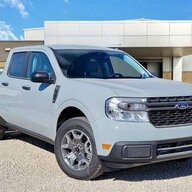
Starting with the numbers, last full sales year of the small Ford Ranger in 2011, over 70,000 units, and first sales year of the small, but still not that small, Maverick, over 70,000 units, and almost double that 2 years later, that is not a Market that went away, it was just vacated.
In the 1970s the small truck craze started, imports from Japan, but in 1989 the chicken tax loophole was closed on shipping here without the bed or adding seats to the bed(Subaru).
But Americans had the bug, Toyota found ways around the tax, Nissan built them here starting in 1983, Toyota at the NUMMI plant in 1991 (yes, THAT NUMMI plant), so they weren't going away, Ford and GM kept making their small trucks.
So things were cool for like 20 years, and if you look at between the mid 80s to mid-2000s, small trucks didn't change much, grew a little but mainly styling changes. In 2008 the CAFE Footprint rule started, with hard enforcement in 2011, that along with the recession reducing the overall market and the small trucks just went away, Ford didn't even offer the 'new' Ford Ranger again here until 2018, even though they had a new version in 2011 globally.
So now, with EVs and hybrids, why haven't more car companies followed the Maverick into the market? It's clearly doing well, but only Hyundai tried and apparently failed. But if you look at the Santa Cruz it still gets the footprint rule applied and doesn't have the efficiency of the hybrid Maverick so it was really close to not meeting it, it was also more expensive, and according to people like Fuzzyweis on the Slate forums it's front end has all the appeal of a cheese grater, not trucklike enough, at least the Maverick cosplays the part well.
I'll quote a co-worker on why nobody else has brought back a smaller(let's not call the Maverick regular small) truck yet. "When manufacturers get too big, they're like a government, decisions can not be made quickly."
Look at Tesla and how quick car makes were to react, the Cadillac ELR was a sad attempt of repurposing the Volt platform, I test drove a used one recently, it was a dog, heck the Chevy Spark EV could out accelerate it at the time. Ford's closest attempt at a Tesla competitor, the Mach-E, came out a full 7 years after Tesla, 7 years! Tesla released it's 4th model around the same time.
Only in the past 5 years, and with help from China and Saudi Arabia are car makes starting to have models on par with what the Model S was over a dozen years ago, nevermind the Model 3 and Y that came after. Ford also recently said they built the Mach-E wrong, and if you look at the Munro teardown of the first model when he pulled the frunk liner out, it was obviously slapdash created to have 'something' to compete.
But what about Bollinger/Canoo/Lordstown? They were mainly targeting fleets and still expensive, the Bollinger was going to be over $100k, Lordstown over $50k, Canoo around $40k, and they still followed the standard road map Tesla used, buy an old car plant for way too much money, and just keep pumping money into it until critical mass is achieved. Even Rivian hasn't had a profitable year yet, and Ford and GM are taking write downs on their EVs.
Ford has spent 4 billion on their $30k Slate competitor and isn't even in production ready yet, that's 4x the expense of Slate so far, and that is their 'skunkworks' project. That's not Skunkworks, that's an entire Scout(funded by VW) factory build! So that's the upcoming competition and they're already so far behind in costs it's insane.
So with all that(and sorry it's a lot). I feel like there is a market, there is definitely a market still here. Even with all it's recalls Mavericks are flying off the lot. I see young guys driving around in old Rangers, Frontiers and SR5s around here, it's the south so they're still in great shape. Just this past week I saw a teal SR5 2WD with side stripes go by and some kid, looked like he was 12(to me) in it and his face was beaming just driving his truck.
Used small trucks are still going for crazy prices, 15 year old Ford Rangers with 100k miles on them in good shape go for $10k, Tacomas add another $5k, $15k for a 15 year old truck with over 100k miles on it! But truck makers see that and say, if they're willing to pay that much for something that old, new trucks should cost at least $50k, and new EV trucks another $10k on top of that, at least!
So I feel like Slate, with it's low cost so far in implementation, simple build plan, classic truck looks, and low price target, has a chance. Not saying it's a slam dunk, but the market is definitely there, the only reason other makes aren't jumping in the pool is they don't want to bother or just can't move that fast or that cheap.
-Jim
I feel like the market concern is valid, but my view is the US systemically has just become unwelcoming for small trucks here the past 40 years. And most manufacturers instead of chasing the market, just went with profits.
Starting with the numbers, last full sales year of the small Ford Ranger in 2011, over 70,000 units, and first sales year of the small, but still not that small, Maverick, over 70,000 units, and almost double that 2 years later, that is not a Market that went away, it was just vacated.
In the 1970s the small truck craze started, imports from Japan, but in 1989 the chicken tax loophole was closed on shipping here without the bed or adding seats to the bed(Subaru).
But Americans had the bug, Toyota found ways around the tax, Nissan built them here starting in 1983, Toyota at the NUMMI plant in 1991 (yes, THAT NUMMI plant), so they weren't going away, Ford and GM kept making their small trucks.
So things were cool for like 20 years, and if you look at between the mid 80s to mid-2000s, small trucks didn't change much, grew a little but mainly styling changes. In 2008 the CAFE Footprint rule started, with hard enforcement in 2011, that along with the recession reducing the overall market and the small trucks just went away, Ford didn't even offer the 'new' Ford Ranger again here until 2018, even though they had a new version in 2011 globally.
So now, with EVs and hybrids, why haven't more car companies followed the Maverick into the market? It's clearly doing well, but only Hyundai tried and apparently failed. But if you look at the Santa Cruz it still gets the footprint rule applied and doesn't have the efficiency of the hybrid Maverick so it was really close to not meeting it, it was also more expensive, and according to people like Fuzzyweis on the Slate forums it's front end has all the appeal of a cheese grater, not trucklike enough, at least the Maverick cosplays the part well.
I'll quote a co-worker on why nobody else has brought back a smaller(let's not call the Maverick regular small) truck yet. "When manufacturers get too big, they're like a government, decisions can not be made quickly."
Look at Tesla and how quick car makes were to react, the Cadillac ELR was a sad attempt of repurposing the Volt platform, I test drove a used one recently, it was a dog, heck the Chevy Spark EV could out accelerate it at the time. Ford's closest attempt at a Tesla competitor, the Mach-E, came out a full 7 years after Tesla, 7 years! Tesla released it's 4th model around the same time.
Only in the past 5 years, and with help from China and Saudi Arabia are car makes starting to have models on par with what the Model S was over a dozen years ago, nevermind the Model 3 and Y that came after. Ford also recently said they built the Mach-E wrong, and if you look at the Munro teardown of the first model when he pulled the frunk liner out, it was obviously slapdash created to have 'something' to compete.
But what about Bollinger/Canoo/Lordstown? They were mainly targeting fleets and still expensive, the Bollinger was going to be over $100k, Lordstown over $50k, Canoo around $40k, and they still followed the standard road map Tesla used, buy an old car plant for way too much money, and just keep pumping money into it until critical mass is achieved. Even Rivian hasn't had a profitable year yet, and Ford and GM are taking write downs on their EVs.
Ford has spent 4 billion on their $30k Slate competitor and isn't even in production ready yet, that's 4x the expense of Slate so far, and that is their 'skunkworks' project. That's not Skunkworks, that's an entire Scout(funded by VW) factory build! So that's the upcoming competition and they're already so far behind in costs it's insane.
So with all that(and sorry it's a lot). I feel like there is a market, there is definitely a market still here. Even with all it's recalls Mavericks are flying off the lot. I see young guys driving around in old Rangers, Frontiers and SR5s around here, it's the south so they're still in great shape. Just this past week I saw a teal SR5 2WD with side stripes go by and some kid, looked like he was 12(to me) in it and his face was beaming just driving his truck.
Used small trucks are still going for crazy prices, 15 year old Ford Rangers with 100k miles on them in good shape go for $10k, Tacomas add another $5k, $15k for a 15 year old truck with over 100k miles on it! But truck makers see that and say, if they're willing to pay that much for something that old, new trucks should cost at least $50k, and new EV trucks another $10k on top of that, at least!
So I feel like Slate, with it's low cost so far in implementation, simple build plan, classic truck looks, and low price target, has a chance. Not saying it's a slam dunk, but the market is definitely there, the only reason other makes aren't jumping in the pool is they don't want to bother or just can't move that fast or that cheap.
-Jim
Last edited: