
Simplicity!

E90400K

Well-Known Member
First Name
Francis
Joined
Apr 26, 2025
Threads
5
Messages
379
Reaction score
244
Location
Middle of the Mid Atlantic
Vehicles
A Ford truck
Yes, I know those cheap ICEs exist, but I am in the market for a simple affordable 2 door pickup truck.
The Slate gets bonus points because it will be easy for me to reconfigure it as I wish.

Understood, so am I, but the sustainability of Slate is dependent upon the market acceptance of the Slate's idea to more than us here on the forum.
 

Imhotep

Well-Known Member
Joined
May 27, 2025
Threads
2
Messages
89
Reaction score
154
Location
Seattle
Vehicles
2008 Prius
Yeah. So, is the 9-peice-part door a 1-part assembly or in the 600-part count? And compared to say a Ranger, with a 20-piece part count door assembly...?
I would say it depends on how (if?) it arrives from the supplier. Everything pre-assembled counts as one. That’s how it works at the factory I work at, but I will not claim to be an expert in the automotive industry.
 

Sparkie

Well-Known Member
First Name
Sparkie
Joined
May 16, 2025
Threads
2
Messages
109
Reaction score
219
Location
Massachusetts
Vehicles
Bronco
Understood, so am I, but the sustainability of Slate is dependent upon the market acceptance of the Slate's idea to more than us here on the forum.
Yup.
I balance my minor concerns regarding Slate's long term sales and production over a naive hope in 3 possibilities:
  1. Slate's fleet sales will overshadow individual sales to consumers like me
  2. Some non-EV auto maker will purchase Slate as a new division to their existing ICE portfolio (a company like Mazda)
  3. That a simplified EV pickup DIY niche market can somehow continue despite low volume -- similar to how we still have motorcycle makers surviving today.
I wonder what I will think of myself when I re-read my post 3 years from now.
 

cadblu

Well-Known Member
Joined
Apr 28, 2025
Threads
59
Messages
529
Reaction score
1,054
Location
New York
Vehicles
Tesla
It all looked great on paper. But now "production hell" is upon them. I'm cheering for Slate to triumph, because who wouldn't? But I'm cheering with the same confidence as NY Jets fans.
Folks, it really doesn’t matter much if it’s 600 parts or 6000…. If key suppliers don‘t deliver the ONE crippling part on time, production will come to a screeching halt. Yes, I’ve lived through production hell, and yes, you can only build short with so many workarounds until …the SHTF stage.

I wonder if Chris, Erik, and Tisha are preparing to sleep on the shop floor as Elon routinely did in the early factory startup days.
 

KevinRS

Well-Known Member
First Name
Kevin
Joined
Jul 4, 2025
Threads
2
Messages
565
Reaction score
719
Location
California
Vehicles
Nissan Versa
From how it's been talked about in the interviews, it may be less 600 assemblies than 600 part numbers.
The left and right tail lights: the same part numbers, it's symmetrical and just flipped over. The door armrest, same part both sides, and also same part on the console option.
Round headlights, same on both sides.
I'm sure they are counting a wheel bearing as one part, and not counting each bearing in it, that's not something that is reasonably going to be disassembled and an individual bearing swapped out.
The instrument panel was designed down from 27 parts to 7, so they obviously aren't counting every diode and resistor. Take apart a dashboard on most cars, and you have dozens to maybe a hundred parts. Slate looks to maybe have around 1 dozen parts total, not counting those 7 in the electronic instrument panel, maybe 2 dozen if you count all the buttons and controls, and multiple are duplicates.
 

E90400K

Well-Known Member
First Name
Francis
Joined
Apr 26, 2025
Threads
5
Messages
379
Reaction score
244
Location
Middle of the Mid Atlantic
Vehicles
A Ford truck
This is an excerpt from an SAE article I found on the subject of the Slate's part count.

While smaller than a traditional automotive factory, the footprint of the Warsaw, Indiana, factory seems to be perfect for Slate's plans. The vehicle's gray molded exterior panels negate the need for an expensive and space-intensive paint shop. There is no need for large casting machines. Barman noted that a typical pickup is built from 5,000 to 6,000 parts.

"The Blank Slate has just over 600 parts and one configuration," Barman told the audience. “Let that sink in for a moment, just 10% of the parts of its typical truck to build upon. We're retooling the factory in such a way that truly allows for manufacturing simplicity and rapid scaling.”

That dedication to simplicity has a snowball effect on cost savings. In addition to not having to buy the parts, there are inventory savings, the factory line moves quicker because there are fewer items to put into the vehicle, and quality control becomes less intensive because again, fewer items.

"We removed everything that is in our car to improve reliability and efficiency and deliver the value customers want over time. Removing the unnecessary content gets back to the basics and allows customers to enjoy a simple and pure, thriving experience," Barman said.


So, the CEO of Slate says they can build their vehicle with just 10% of the parts a typical manufacturer uses to build it's pickup trucks (600 parts vs. 6,000 parts). That statement needs to be clarified because that is some serious innovation in the automotive industry that no other manufacturer has ever contrived, not even Toyota.

The truck part count is not being reduced to just 10% of the typical pickup truck by using the same parts for the door arm rests and center console arm rest and the same taillights and head lights and door handles, and manual roll up windows.

The best I can determine for the 54kWh battery pack assembly it will use 288 pouch cells in addition to the battery case, wiring, cooling, and electrical connectors. The battery alone, which Slate says they are building in house from supplier-sourced cells, is nearly 300 parts just by itself. The rest of the truck is built with just 300 parts?

In my earlier post regarding the suspension and drive components of 199 parts, I did include the individual component parts that make up a wheel bearing just as an exercise as to determine what level of part count Barman is speaking to. For all four bearing assemblies the part out I came up with was 88. Take the sealed wheel bearings as 4 LAU (lowest assembly unit) parts and my estimate drops to 115.
 
Last edited:

Kopsis

New Member
First Name
David
Joined
Dec 7, 2025
Threads
0
Messages
3
Reaction score
5
Location
Arizona
Vehicles
Kia EV6
I'm not sure where the 600 part count comes from, because no vehicle is built in its entirety with just 600 parts. I think the Slate is built from 600 lowest units of assembly on the production line.
It's 600 items on the engineering BOM (bill of material). Most of those items will come from suppliers and may each be made of tens or even thousands of parts (eg. a modern circuit card assembly). From Slate's standpoint a "part" is something they have to specifiy, procure, and inventory. And typically that means a part used multiple times (like a battery cell pouch) is generally just counted as one part. That's consistent with the way other automakers operate, so the numbers they're quoting are a legit apples-to-apples comparison but are only meant to show "order of magnitude" differences in design complexity -- not how many "physical things" you'll end up with if you strip the car down to the individual ball bearings.

Also note that the numbers they quoted are from a time when they still planned to procure the entire body-in-white as a single part, so it's important to not try to read too much into the numbers or take them too literally.
 

zipn

Well-Known Member
Joined
Apr 30, 2025
Threads
6
Messages
129
Reaction score
208
Location
memphsi, tn
Vehicles
25 ford maverick hybrid awd, 91 mazda miata
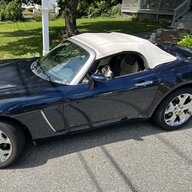
Agree with the OP. I've had 7 Miatas (so far). I've had NAs, NBs, and a NC. Some were loaded from the factory (power tractable hard top, top of the line options and features), some were modified (super charger, turbo charger, many performance and comfort mods).

I'm down to one now. It's been my favorite, A mostly stock 1991 with a 5 speed, manual top, and maybe 100 hp on a good day from its simple 1.6L normally aspirated 4 cylinder.

It's simple. It's an absolute joy to drive.

That's the main appeal to me for the SLATE. Keep it simple (I'll just add a double-din stereo with carPlay). I don't NEED a truck, but a simple, low cost EV for around town is all I am looking for.
 

E90400K

Well-Known Member
First Name
Francis
Joined
Apr 26, 2025
Threads
5
Messages
379
Reaction score
244
Location
Middle of the Mid Atlantic
Vehicles
A Ford truck
It's 600 items on the engineering BOM (bill of material). Most of those items will come from suppliers and may each be made of tens or even thousands of parts (eg. a modern circuit card assembly). From Slate's standpoint a "part" is something they have to specify, procure, and inventory. And typically that means a part used multiple times (like a battery cell pouch) is generally just counted as one part. That's consistent with the way other automakers operate, so the numbers they're quoting are a legit apples-to-apples comparison but are only meant to show "order of magnitude" differences in design complexity -- not how many "physical things" you'll end up with if you strip the car down to the individual ball bearings.

Also note that the numbers they quoted are from a time when they still planned to procure the entire body-in-white as a single part, so it's important to not try to read too much into the numbers or take them too literally.
I used Barman's own words (as members here insist we do). She said the Slate truck is going to be manufactured with just 10% of the "parts" that a typical pickup truck from other manufacturers use; 600 vs. 6,000. Whether her definition of a "part" is a subassembly part number, a component part number, or an actual individual part (number) listed on the manufacturing bill of material really is immaterial to the discussion. What is material to the discussion is her claim the Slate truck is being manufactured with 90% less parts (-5,400) than a typical pickup truck manufactured by another manufacturing company (such as Ford). Her statement infers Slate has devised a way to significantly reduce the cost of manufacturing the vehicle (let's assume for discussion sakes it is by 50% less based on Slate's projected price of $25K vs. the typical pickup truck at $50K) because the Slate truck has just 600 pieces to assemble vs. 6,000 pieces.

My point with the part count exercise was to show her statement regarding part counts is disingenuous. I used the suspension and end-components of the drivetrain (i.e. the drive axles) as examples because regardless of powertrain architecture, all pickup trucks use similar/common designs, thus components, to assemble the suspension and drivetrain. As an example, a drive axle is a drive axle, it has 1 ea. shaft, 2 ea. CV joints, 2 ea. CV joint dust boots, 4 ea. dust cover bands, etc., it can't be made with any less parts regardless if it is installed in a 2WD Ford Maverick or a Slate pickup. Both Ford and Slate will source their drive axles from a supplier and the manufacturing engineering bill of material will have the drive axle as a single P/N quantity 2 ea. And considering Ford buys literally millions of drive axles from their supplier base annually, they will pay less per part cost than Slate will.

Regarding the "body-in-white", whether Slate initially planned on buying the truck's frame as a subassembly or now it has to build the frame at Warsaw, a manufacturer (or manufacturers) somewhere has to stamp the steel parts, build the welding jig(s), and weld the piece parts together. That manufacturer(s) has to perform/monitor the quality control procedures/processes. It's not like those manufacturing costs go away just because Slate receives a fully formed body-in-white chassis at Warsaw and just bolts the other 599 parts to it. Slate eventually pays all those manufacturing costs the supplier incurred to make the body-in-white subassembly through the price it pays for the subassembly.
 

ScooterAsheville

Well-Known Member
First Name
Scooter
Joined
Jul 25, 2025
Threads
6
Messages
179
Reaction score
429
Location
Asheville, NC
Vehicles
Maverick, Volvo
Agree with the OP. I've had 7 Miatas (so far). I've had NAs, NBs, and a NC.
Oh man, you totally destroyed my sense of automotive coolness. I thought I was the coolest car guy ever because I owned three Miatas, NA, NB, NC, with a 93 RX7 R1 thrown in. But seven! Proud to say my third Miata was passed onto two nieces that learned how to drive a manual in that car. One is still driving hers, leading to crushed male egos (most young men her age can't drive a stick).

I came so close to an ND, but they had issues early on, and I just got old and too frigging stiff to slide down into that seat six inches off the pavement. I totally agree on the Miata and simple. I called my Miatas "The most smiles per mile per dollar" of any automobile ever built by man.
 

zipn

Well-Known Member
Joined
Apr 30, 2025
Threads
6
Messages
129
Reaction score
208
Location
memphsi, tn
Vehicles
25 ford maverick hybrid awd, 91 mazda miata
Oh man, you totally destroyed my sense of automotive coolness. I thought I was the coolest car guy ever because I owned three Miatas, NA, NB, NC, with a 93 RX7 R1 thrown in. But seven! Proud to say my third Miata was passed onto two nieces that learned how to drive a manual in that car. One is still driving hers, leading to crushed male egos (most young men her age can't drive a stick).

I came so close to an ND, but they had issues early on, and I just got old and too frigging stiff to slide down into that seat six inches off the pavement. I totally agree on the Miata and simple. I called my Miatas "The most smiles per mile per dollar" of any automobile ever built by man.
thanks
They’re great cars and nothing clears the mind like going topless and rowing the gears through the twisties. I figure there is still an ND in my future… a 2019 or later with a 6 speed.

Miata’s are a nice compliment / stable mate to the Slate!
 

KevinRS

Well-Known Member
First Name
Kevin
Joined
Jul 4, 2025
Threads
2
Messages
565
Reaction score
719
Location
California
Vehicles
Nissan Versa
I used Barman's own words (as members here insist we do). She said the Slate truck is going to be manufactured with just 10% of the "parts" that a typical pickup truck from other manufacturers use; 600 vs. 6,000. Whether her definition of a "part" is a subassembly part number, a component part number, or an actual individual part (number) listed on the manufacturing bill of material really is immaterial to the discussion. What is material to the discussion is her claim the Slate truck is being manufactured with 90% less parts (-5,400) than a typical pickup truck manufactured by another manufacturing company (such as Ford). Her statement infers Slate has devised a way to significantly reduce the cost of manufacturing the vehicle (let's assume for discussion sakes it is by 50% less based on Slate's projected price of $25K vs. the typical pickup truck at $50K) because the Slate truck has just 600 pieces to assemble vs. 6,000 pieces.

My point with the part count exercise was to show her statement regarding part counts is disingenuous. I used the suspension and end-components of the drivetrain (i.e. the drive axles) as examples because regardless of powertrain architecture, all pickup trucks use similar/common designs, thus components, to assemble the suspension and drivetrain. As an example, a drive axle is a drive axle, it has 1 ea. shaft, 2 ea. CV joints, 2 ea. CV joint dust boots, 4 ea. dust cover bands, etc., it can't be made with any less parts regardless if it is installed in a 2WD Ford Maverick or a Slate pickup. Both Ford and Slate will source their drive axles from a supplier and the manufacturing engineering bill of material will have the drive axle as a single P/N quantity 2 ea. And considering Ford buys literally millions of drive axles from their supplier base annually, they will pay less per part cost than Slate will.

Regarding the "body-in-white", whether Slate initially planned on buying the truck's frame as a subassembly or now it has to build the frame at Warsaw, a manufacturer (or manufacturers) somewhere has to stamp the steel parts, build the welding jig(s), and weld the piece parts together. That manufacturer(s) has to perform/monitor the quality control procedures/processes. It's not like those manufacturing costs go away just because Slate receives a fully formed body-in-white chassis at Warsaw and just bolts the other 599 parts to it. Slate eventually pays all those manufacturing costs the supplier incurred to make the body-in-white subassembly through the price it pays for the subassembly.
Slate isn't assembling the drive axles from all those subcomponents though. So for Slate or Ford, a drive axle is 1 part.
The savings is in things like the dashboard and instrument panel. The tailgate, the doors, and multiple other areas I can't think of at the moment. Those areas are designed to have less components, and designed for simpler assembly.
Replacing the door lock actuator in my sister's Rogue, from memory I had to remove around 10 screws, and half a dozen parts, and probably a dozen or more clips were involved, and that wasn't even taking apart much of the door. A similar job in the Slate will probably be around 4 screws and 2-3 parts as a guess.
 
 
Top