
Blank slate narrative is a mistake, and that needs to change

E90400K

Well-Known Member
First Name
Francis
Joined
Apr 26, 2025
Threads
5
Messages
671
Reaction score
511
Location
Under a Bridge in the Middle of the Mid Atlantic
Vehicles
A Ford truck
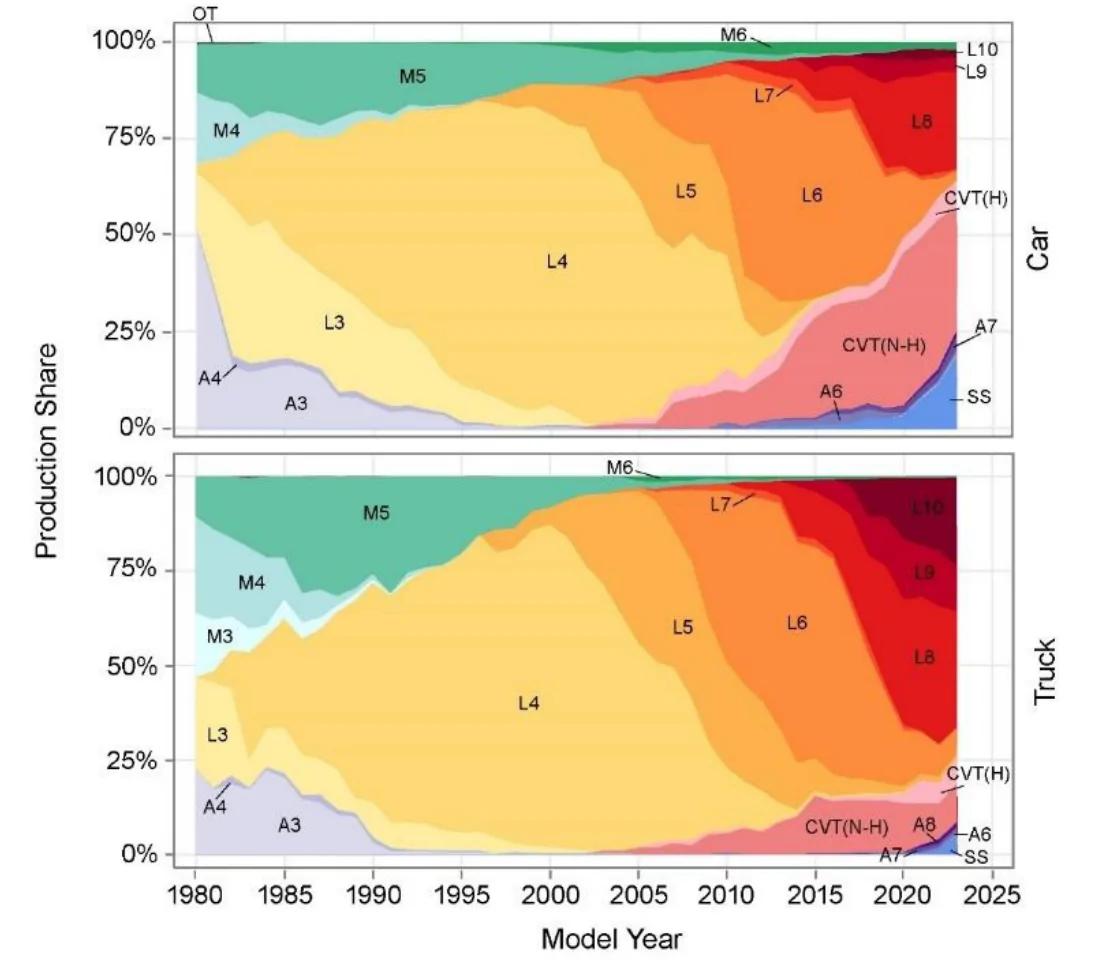
Even in 1980, MT were only around 30% of cars, and just over 50% of trucks. both dropped under 25% by the early 90s, by 2000 both were around 10%
The Iphone wasn't released until 2007.

Screenshot-2024-01-10-163740.webp

This is the chart from that article.
I really don't think holding a phone to do something on it while driving happened a whole lot until touchscreens became really prevalent, which was for the most part led off by the Iphone and contemporary phones,
Heat maps of manual transmission usage since 1980? Why not go back to 1940?

If you thought I was saying that the cell phone (usage) was solely responsible for the transition to automatics since before smart cell phones were invented, then I find it amusing you had to go find heat maps to try and prove your point. I clearly said automatics are the primary transmission due to customer choice.

In recent time, say the past 15 years, manual transmission availability even further declined as consumers prefer to increasingly use their cell phones while driving, whether that is on its own or integrated into the infotainment system. As a result, ADAS safety systems have been developed as a counter technology to avoid liability on the part of the manufacturer.

I'll point to the BMW 3-Series as an example. For over 50 years the 3-series was offered with a manual transmission, first as standard equipment, then starting with the F30, as a non-cost option. The G20 was the first time in the US market a BMW (non-///M) 3-series was not available with a manual transmission. The Ultimate Driving Machine now all ADAS'd up because it has a screen in it.
 
Last edited:

cadblu

Well-Known Member
Joined
Apr 28, 2025
Threads
64
Messages
748
Reaction score
1,458
Location
New York
Vehicles
Tesla
In recent time, say the past 15 years, manual transmission availability even further declined as consumers prefer to increasingly use their cell phones while driving, w
Long before cell phones were a thing, I bought a few sports cars back in the day with manual transmissions and absolutely loved them.

To this day, I still recall the cautionary tale I heard during the buying process. It went something like this. Disclaimer: I don't want to upset anyone here...

"Well, you're going to have rough time selling this thing. Most people want automatics, and you're shutting out the vast majority of prospective buyers, especially women." :oops:
 

Turkey Trot

Member
Joined
Feb 4, 2026
Threads
0
Messages
7
Reaction score
14
Location
Colorado
Vehicles
Jeep Wrangler, Toyota Sienna
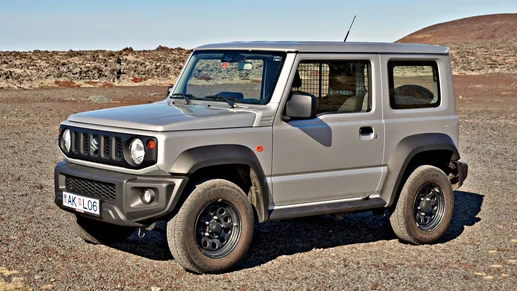
Here's 2023 TopSpeed article about why Jimnies aren't available in the U.S.:
The Real Reason Why We Can’t Have The Suzuki Jimny In the U.S.
Suzuki_Jimny_in_Desert.webp
This subject is an amalgam (see me getting in over my head with alloy references here!) and so it can be pretty easy to point fingers at all kinds of factors as being "the" reason for unnecessarily expensive cars and feature creep. Nobody wakes up trying to make cars absurdly expensive. But the system we built guarantees that outcome.

I agree with the article’s basic point. It’s one reason I still drive a 2004 Jeep. The section about how rules from the Environmental Protection Agency and National Highway Traffic Safety Administration effectively squeeze out truly cheap vehicles lands pretty close to the truth. The people working in those agencies are mostly trying to do good work. The system optimizes for measurable compliance metrics, not for actual outcomes. It counts trees and misses the forest.

Incoming rant:

I remember listening to a Lex Fridman interview where Elon Musk talked about “first-principles thinking.” Strip a problem down to the physical truths and build upward from there. It’s a powerful method. It’s also a method that tends to get quietly dropped the moment it threatens his business model.

Take Tesla. One of the stated missions is reducing fossil-fuel dependence in transportation. Fine. Electrification helps. But if you actually follow first principles all the way down, you hit a more basic lever:

The cleanest mile is the one not driven.

Cut total driving in half and you get a bigger environmental win than electrifying half the fleet. Less energy use, fewer materials, less road wear, fewer crashes, less everything. It’s the boring solution.

Safety works the same way.

The single most reliable way for me to reduce my crash risk is not better airbags, better lane assist, or a heavier vehicle. It’s driving fewer miles. I’ve made life choices around that in various ways. I picked housing near work. I push for safer crossings and walkable access to groceries. Not because I’m ideological about transportation, but because the math is obvious. My jeep gets 14mpgs but I’m well below the median carbon footprint in the US.

We keep tightening vehicle safety requirements… each one individually reasonable, each one adding cost, weight, and complexity, while largely ignoring a core variable in traffic fatalities:

Speed.

Higher speeds mean worse crashes. That relationship is not subtle, yet we design road systems that encourage speed. Then require ever-more-engineered vehicles to survive the consequences of that speed. Faster roads → bigger crashes → heavier vehicles → stricter regulation → more expensive cars → repeat.

And the side effect is predictable: cars become so expensive that the thing they supposedly provide (accessible personal freedom) starts slipping out of reach for the very people who depend on them most.

If you start from first principles, the solution stack looks different:

  1. Reduce required driving distance where possible.
  2. Design streets that naturally control speed.
  3. Then improve vehicle technology.
We’ve mostly done step three first, skipped steps one and two, and now we’re surprised the results are expensive and mediocre.

And I’m no stranger to the petrol-head world; I’ve rebuilt motorcycles, modified rock crawlers, played with Miatas, etc. I just think that this thickening lipstick of safety technology is still covering the pig of our base transportation philosophy.
 

Tom Sawyer

Well-Known Member
Joined
Jan 11, 2026
Threads
0
Messages
116
Reaction score
87
Location
Northeast Ohio
Vehicles
CJ-7
Even in 1980, MT were only around 30% of cars, and just over 50% of trucks. both dropped under 25% by the early 90s, by 2000 both were around 10%
The Iphone wasn't released until 2007.
Screenshot-2024-01-10-163740.webp

This is the chart from that article.
I really don't think holding a phone to do something on it while driving happened a whole lot until touchscreens became really prevalent, which was for the most part led off by the Iphone and contemporary phones,

Heat maps of manual transmission usage since 1980? Why not go back to 1940?

If you thought I was saying that the cell phone (usage) was solely responsible for the transition to automatics since before smart cell phones were invented, then I find it amusing you had to go find heat maps to try and prove your point. I clearly said automatics are the primary transmission due to customer choice.
The charts are from an article quoted in a previous message, and were easy to spot as they were displayed prominently! I guess it's easy to miss if you didn't read the article.
I found some charts at https://www.theautopian.com/heres-e...smissions-became-more-efficient-than-manuals/ that show production share of different transmission types, manuals were a shrinking share long before cell phones became more than an expensive novelty.
It's funny to watch how threads drift off topic. 😜
 

E90400K

Well-Known Member
First Name
Francis
Joined
Apr 26, 2025
Threads
5
Messages
671
Reaction score
511
Location
Under a Bridge in the Middle of the Mid Atlantic
Vehicles
A Ford truck
The charts are from an article quoted in a previous message, and were easy to spot as they were displayed prominently! I guess it's easy to miss if you didn't read the article.

It's funny to watch how threads drift off topic. 😜
I didn't miss the charts. I read the article. I completely agree a 10-speed automatic with a lockup torque converter is more fuel efficient, but as I pointed out not much more efficient. In the two examples a non-sport Corolla and a sports-oriented Cayman, each just 2 MPG better than the manual. If you keep strict fuel consumption records, as I do, you'll find 2-MPG is a low standard deviation.

For the Corolla example, using 120,000 miles as a use case (i.e. 10 years of driving @ the EPA defined national average) and using the national average for regular-grade gasoline (as of 2/17/26), the 2-MPG delta is just 6% better for the auto trans, which translates into just $64 annual savings. I could argue the manual saves on brakes to the tune of $64-per-year (i.e. less brake replacements) and just for fun, $64 in savings at Starbucks because trying to drink coffee in rush hour traffic with a manual is a PITA, so the manual driver will drink less coffee during his commute. It is not like an automatic saves huge amounts of money in gas cost over an automatic using just straight up math. Heat maps notwithstanding.

[Tongue in cheek]... I could also argue that as the article states, the changeover to automatics being slightly more efficient occurred in 2010, 3 years after the debut of the iPhone 7. Perhaps automakers began developing more efficient automatics because the consumer wanted a more fuel-efficient automatic transmission as they no longer want to shift for themselves and use their smart phones more while driving(?).

I hope everyone gets the point that saving $64 per year is not really significant or noticeable in most people's budgets... (i.e. people just do not like to shift for themselves).
 

E90400K

Well-Known Member
First Name
Francis
Joined
Apr 26, 2025
Threads
5
Messages
671
Reaction score
511
Location
Under a Bridge in the Middle of the Mid Atlantic
Vehicles
A Ford truck
This subject is an amalgam (see me getting in over my head with alloy references here!) and so it can be pretty easy to point fingers at all kinds of factors as being "the" reason for unnecessarily expensive cars and feature creep. Nobody wakes up trying to make cars absurdly expensive. But the system we built guarantees that outcome.

I agree with the article’s basic point. It’s one reason I still drive a 2004 Jeep. The section about how rules from the Environmental Protection Agency and National Highway Traffic Safety Administration effectively squeeze out truly cheap vehicles lands pretty close to the truth. The people working in those agencies are mostly trying to do good work. The system optimizes for measurable compliance metrics, not for actual outcomes. It counts trees and misses the forest.

Incoming rant:

I remember listening to a Lex Fridman interview where Elon Musk talked about “first-principles thinking.” Strip a problem down to the physical truths and build upward from there. It’s a powerful method. It’s also a method that tends to get quietly dropped the moment it threatens his business model.

Take Tesla. One of the stated missions is reducing fossil-fuel dependence in transportation. Fine. Electrification helps. But if you actually follow first principles all the way down, you hit a more basic lever:

The cleanest mile is the one not driven.

Cut total driving in half and you get a bigger environmental win than electrifying half the fleet. Less energy use, fewer materials, less road wear, fewer crashes, less everything. It’s the boring solution.

Safety works the same way.

The single most reliable way for me to reduce my crash risk is not better airbags, better lane assist, or a heavier vehicle. It’s driving fewer miles. I’ve made life choices around that in various ways. I picked housing near work. I push for safer crossings and walkable access to groceries. Not because I’m ideological about transportation, but because the math is obvious. My jeep gets 14mpgs but I’m well below the median carbon footprint in the US.

We keep tightening vehicle safety requirements… each one individually reasonable, each one adding cost, weight, and complexity, while largely ignoring a core variable in traffic fatalities:

Speed.

Higher speeds mean worse crashes. That relationship is not subtle, yet we design road systems that encourage speed. Then require ever-more-engineered vehicles to survive the consequences of that speed. Faster roads → bigger crashes → heavier vehicles → stricter regulation → more expensive cars → repeat.

And the side effect is predictable: cars become so expensive that the thing they supposedly provide (accessible personal freedom) starts slipping out of reach for the very people who depend on them most.

If you start from first principles, the solution stack looks different:

  1. Reduce required driving distance where possible.
  2. Design streets that naturally control speed.
  3. Then improve vehicle technology.
We’ve mostly done step three first, skipped steps one and two, and now we’re surprised the results are expensive and mediocre.

And I’m no stranger to the petrol-head world; I’ve rebuilt motorcycles, modified rock crawlers, played with Miatas, etc. I just think that this thickening lipstick of safety technology is still covering the pig of our base transportation philosophy.
I'll take the solution stripping down one more level...

Demand the population learn how to drive better. Better driving = less crashes, regardless of speed.

My rant - over.
 

Tom Sawyer

Well-Known Member
Joined
Jan 11, 2026
Threads
0
Messages
116
Reaction score
87
Location
Northeast Ohio
Vehicles
CJ-7
I didn't miss the charts. I read the article.
I didn't read the article! I had to go back to see what the big deal was. Ain't got no time for such things lol.

I completely agree a 10-speed automatic with a lockup torque converter is more fuel efficient, but as I pointed out not much more efficient. In the two examples a non-sport Corolla and a sports-oriented Cayman, each just 2 MPG better than the manual. If you keep strict fuel consumption records, as I do, you'll find 2-MPG is a low standard deviation.

For the Corolla example, using 120,000 miles as a use case (i.e. 10 years of driving @ the EPA defined national average) and using the national average for regular-grade gasoline (as of 2/17/26), the 2-MPG delta is just 6% better for the auto trans, which translates into just $64 annual savings. I could argue the manual saves on brakes to the tune of $64-per-year (i.e. less brake replacements) and just for fun, $64 in savings at Starbucks because trying to drink coffee in rush hour traffic with a manual is a PITA, so the manual driver will drink less coffee during his commute. It is not like an automatic saves huge amounts of money in gas cost over an automatic using just straight up math. Heat maps notwithstanding.

[Tongue in cheek]... I could also argue that as the article states, the changeover to automatics being slightly more efficient occurred in 2010, 3 years after the debut of the iPhone 7. Perhaps automakers began developing more efficient automatics because the consumer wanted a more fuel-efficient automatic transmission as they no longer want to shift for themselves and use their smart phones more while driving(?).

I hope everyone gets the point that saving $64 per year is not really significant or noticeable in most people's budgets... (i.e. people just do not like to shift for themselves).
But it's more than that! You know as someone who drives a manual transmission that with skill & attention a manual can be operated to consume less fuel than an automatic. At least with a manual the driver can control the shift points. That's not exactly the case with the automatics - even paddle shifters limit what gears can be selected at any given speed.

But set aside such semantics and let's get back to coffee and automatics. We can't let that go away just yet - I'm sure there's more juice that can be wrung from that rag. 🐴 (can't find a dead horse emoji)
I'll take the solution stripping down one more level...

Demand the population learn how to drive better. Better driving = less crashes, regardless of speed.

My rant - over.
It's never over! (look for the joke at the end of the video - it's worth your time.)

Simple model for online 'discussion' lol
 
Last edited:

Turkey Trot

Member
Joined
Feb 4, 2026
Threads
0
Messages
7
Reaction score
14
Location
Colorado
Vehicles
Jeep Wrangler, Toyota Sienna
I hope everyone gets the point that saving $64 per year is not really significant or noticeable in most people's budgets... (i.e. people just do not like to shift for themselves).
You're assuming that people are doing this math, though. It's not... it's the manufacturers' trying to eek out every single digit percentage of mpg increase that they can to meet EPA standards. I've owned a Honda with a VCM that was installed from the factory. Basically 2/6 cylinders are disabled in low torque/cruising conditions to ever so slightly increase mpgs. This VCM shortens the life of the engine... those two cylinders don't have enough pressure in them and oil works past the rings in this scenario.

Honda did not want to install this; it makes the vehicle run worse and reduces the reliability of their v6's. Owners do not want this for the same reason; it increases the overall cost of ownership due to the shortened lifespan. So why is it installed? To eek out 1 mpg on the freeway, saving pennies for the owner. In isolation, this decision seems absurd. But manufacturers make these kinds of decisions all across the vehicle; from transmissions to air dams to auto start/stop, etc. and in aggregate it is done to reduce emissions. It does work on a macro scale to some degree due to the sheer amount of vehicles on the road and miles driven.

And most people buying cars are not drivers who care deeply about the experience. They are simply purchasing a convenience. There is no better option for transport than a personal motor vehicle, so people buy the most comfortable version that they can for the most part. Part of that comfort is not shifting. It's also things like keyless entry, heated seats, dual climate control, noise reduction, etc.
 

Turkey Trot

Member
Joined
Feb 4, 2026
Threads
0
Messages
7
Reaction score
14
Location
Colorado
Vehicles
Jeep Wrangler, Toyota Sienna
I'll take the solution stripping down one more level...

Demand the population learn how to drive better. Better driving = less crashes, regardless of speed.

My rant - over.
I would like to open the possibility up that this may not be the answer. For something like transportation, we should make it as convenient as possible to be safe as possible. This is also known as forced function. On an individual level, of course I'm responsible for my own safety. But when talking about the main mode of transportation for Americans, we shouldn't place the burden on being hyper attentive and not allowing for mistakes when driving. We should instead design our transportation with the idea that people WILL make mistakes and account for that.

I would like my roads to be safe even with ignorant or distracted drivers, and I would like the mistakes that do happen to be of low consequence. It's not really any different than a safety lid on medicine. We design pill bottles such that, should someone make the mistake of leaving one out or making an error in judgement, that kids don't pay a huge penalty for discovering the bottle.
 

Daemoch

Well-Known Member
First Name
Ugle
Joined
Jun 26, 2025
Threads
6
Messages
189
Reaction score
207
Location
Wisconsin
Vehicles
Lots. Just....lots.
I blame the mass adoption of drive throughs and the fast food culture on the decline of MT. Cell phones were just the coffin nail.

Maybe mom and dad got an AT so they could eat and drive, or maybe just so junior wouldnt keep kicking the damn shifter out of gear while sitting on the front bench seat. Remember bench seats were the standard then too. Also dont forget AT was a status symbol for a long while! Then guess who was never taught to drive a MT? MT practice wasnt even an option in my schools Drivers Ed courses. Years later, when little Johnny or Sally was old enough to get their first car, they didnt have very many used MT to pick from then. Generally, in my experience, no parent wants their poor baby to also be 'distracted' by a MT. Most insurance companies even gave you a rate break for an AT by that point too. And what kid wants uncle Jimbo's ol' janky smelly work truck with the MT? And theres NO WAY M&D are going to let them have that v8 Detriot Muscle Death Machine the neighbor's selling. Now rinse and repeat.... add in the oil crisis of the 70s and all the tiny crap cars we got, half of which rotted away to nothing right away, and then add in cell phones a decade or two later. Boom; no one buys MT because no one learned to drive them or like them, so no one offers them. Chicken and egg.

For the record, I can talk on my cell, eat a double whopper, and shift all at the same time. If I'm running hands free for the call I can then hold my coffee, too. It's possible. Probably not the best choice I suppose..... but 35 years later I'm still doing it, accident free!
 

Imhotep

Well-Known Member
Joined
May 27, 2025
Threads
2
Messages
99
Reaction score
182
Location
Seattle
Vehicles
2008 Prius
I blame the mass adoption of drive throughs and the fast food culture on the decline of MT. Cell phones were just the coffin nail.

Maybe mom and dad got an AT so they could eat and drive, or maybe just so junior wouldnt keep kicking the damn shifter out of gear while sitting on the front bench seat. Remember bench seats were the standard then too. Also dont forget AT was a status symbol for a long while! Then guess who was never taught to drive a MT? MT practice wasnt even an option in my schools Drivers Ed courses. Years later, when little Johnny or Sally was old enough to get their first car, they didnt have very many used MT to pick from then. Generally, in my experience, no parent wants their poor baby to also be 'distracted' by a MT. Most insurance companies even gave you a rate break for an AT by that point too. And what kid wants uncle Jimbo's ol' janky smelly work truck with the MT? And theres NO WAY M&D are going to let them have that v8 Detriot Muscle Death Machine the neighbor's selling. Now rinse and repeat.... add in the oil crisis of the 70s and all the tiny crap cars we got, half of which rotted away to nothing right away, and then add in cell phones a decade or two later. Boom; no one buys MT because no one learned to drive them or like them, so no one offers them. Chicken and egg.

For the record, I can talk on my cell, eat a double whopper, and shift all at the same time. If I'm running hands free for the call I can then hold my coffee, too. It's possible. Probably not the best choice I suppose..... but 35 years later I'm still doing it, accident free!
You’re making me want to keep my old four on the floor.
 

KevinRS

Well-Known Member
First Name
Kevin
Joined
Jul 4, 2025
Threads
3
Messages
882
Reaction score
1,061
Location
California
Vehicles
Nissan Versa
The charts are from an article quoted in a previous message, and were easy to spot as they were displayed prominently! I guess it's easy to miss if you didn't read the article.

It's funny to watch how threads drift off topic. 😜
Yes, after I linked the article, the next post again mentioned cell phones, so I copied in the image, because by the time the Iphone launched, only around 10% were MT. That indicates to me that MT were already well on their way out. That was the only chart I could find showing the trend of numbers of AT vs MT each year. The other parts of the article point out that a MT really doesn't beat an AT on efficiency anymore, because if it's done right, it is using the correct shift points. Even more so with CVT, a good one just stays at the sweet spot of RPM and gearing vs speed, with no shift points. Leave a light and the car next to you takes off revving the engine, then drops back and revs again at each shift while you smoothly accelerate and get to full speed ahead of them.
They do have maintenance and wear issues though, and the cheaper ones like on my versa apparently have a little CVT and 2 automatic gears.
 
 
Top