
How do you feel about Slate's towing capacity?

How do you feel about a strictly 1k lb towing capacity for the Slate.


  • Total voters
    95

E90400K

Well-Known Member
First Name
Francis
Joined
Apr 26, 2025
Threads
5
Messages
1,143
Reaction score
974
Location
Under a Bridge in the Middle of the Mid Atlantic
Vehicles
A Ford truck
FTFY. It's honestly not an otherwise unreasonable conclusion for anybody not doing this type of stuff for a living, and becomes valid with this small but critical added distinction. You don't engineer the vehicle then figure out what it's capabilities it might meet. You choose the capabilities to meet then engineer the vehicle to suit. So while it's true that the hitch area frame structure was not what caused the 1k choice, the 1k choice was a driver of what the hitch area frame structure was engineered to handle.

The 5* crash rating intent also doesn't actually tell us anything about the rear structure for two reasons. First, there is no rear impact crash test that they have to pass to achieve a 5* rating. Second, even if there was, the most efficient structural design for more impact energy dissipation in a sheet metal structure is not inherently the most efficient structural design for a stronger hitch mount. Whether or not the additional crash impact structural needs were addressed in a way that also made the hitch mounting points equivalent to a 3.5x heavier rated vehicle is purely a baseless assumption at this point.

Remember, it's not the static load rating of 100 vs 350 pounds that's the real issue here. It's the imperfect (real world) loading and dynamic loads. Few people know their actual tongue weight compared to the common recommendation is 10% minimum up to 15% tongue weight, vs the typical 10% 'max' official rating, and a 2.5x dynamic load factor. Combine those and t's now 375 vs 1312 pounds pulling on those few weld-nuts in the sheet metal... And as I previously noted, while they might integrate the hitch design to not need the extension, if they don't change the hitch mounting points from their trucks used while performing their SAE J2807 testing and it stays similarly cantilevered out like that, there's another rough doubling of the 'equivalent' loads at the mounts to potentially 750 vs 2625 pounds... Which is the same reason for Tesla derating from 350 to 160 for cantilevered accessories.


Reducing frame flex between the front and rear suspensions does not reduce local flexing and metal fatigue of structure cantilevered behind the rear suspension, and the motor likewise does not react torque through structure that isn't between the motor mounts and suspension. That's simply not how structures actually work. The hitch is mounted behind both the rear suspension and motor mounts. The suspension and motor mounts also all have increased metal thicknesses engineered to specifically meet their respective chosen load requirements too.

It's 300 pounds of tongue weight. Lol.
 

Driven5

Well-Known Member
Joined
Jul 8, 2025
Threads
2
Messages
283
Reaction score
496
Location
WA
Vehicles
F150
It's 300 pounds of tongue weight. Lol.
Only when at a constant speed on a perfectly flat, level, smooth, and straight road. LOL
 
Last edited:

E90400K

Well-Known Member
First Name
Francis
Joined
Apr 26, 2025
Threads
5
Messages
1,143
Reaction score
974
Location
Under a Bridge in the Middle of the Mid Atlantic
Vehicles
A Ford truck
Only when at a constant speed on a perfectly flat, level, smooth, and straight road. LOL
There are so many variables to what the dynamic load translates to it is nearly impossible to narrowly design the chassis to a rating minimum (of 1,000 pounds) as you suggest. Cargo load placement, tongue-to-trailer axle distance, hitch ball height-to-frame distance, are a few.

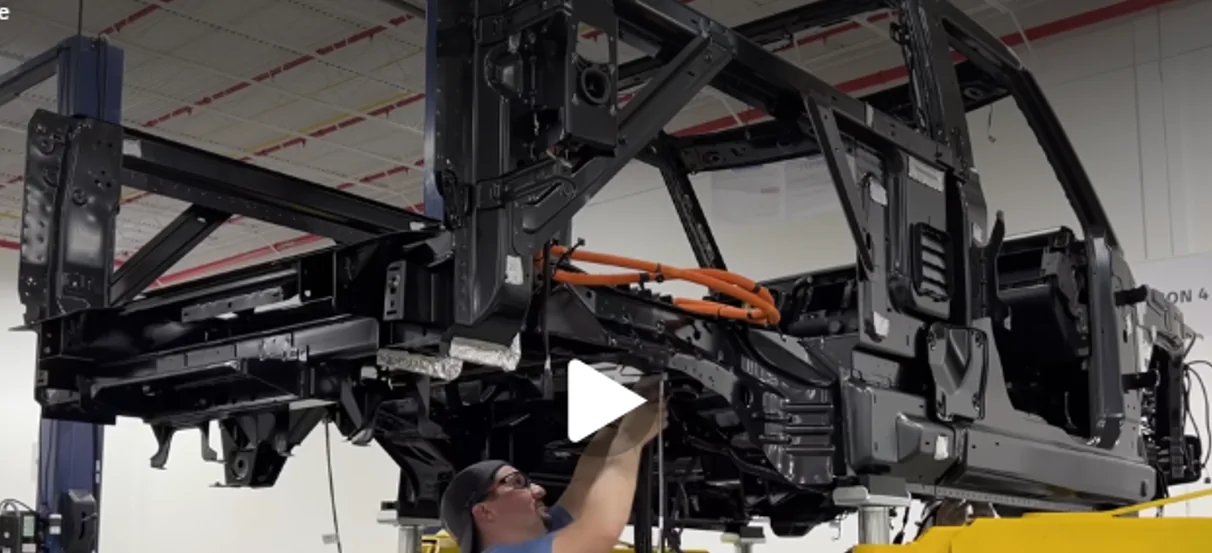
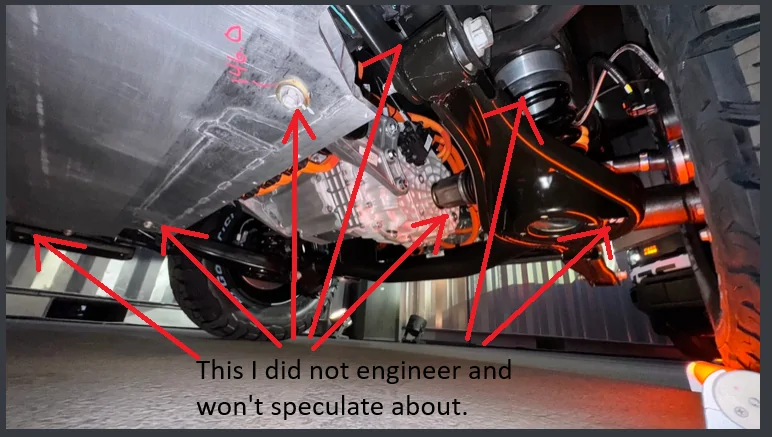
This is the ass end of the Slate's chassis from the Munro video (granted it is a prototype - charge port is on the right-side corner). Triangularly tie the receiver to frame end-caps bumper mounts and to the center tail piece and a 3,500-pound tow capacity is easily achievable. There are a lot of frame member joints to spread the load over. It's not papier mâché. (WHAT is papaiye' machaie'!) - LOL

Slateass.webp
 
Last edited:

kvermeer

Well-Known Member
First Name
Kevin
Joined
Mar 29, 2026
Threads
2
Messages
52
Reaction score
100
Location
Grand Rapids, MI
Vehicles
Toyota Sequoia, Toyota Highlander, Ford Escape, (previously) Ford Ranger
This is the ass end of the Slate's chassis from the Munro video (granted it is a prototype - charge port is on the right-side corner). Triangularly tie the receiver to frame end-caps bumper mounts and to the center tail piece and a 3,500-pound tow capacity is easily achievable.
Excellent shot! Crawling under the truck and checking out this part of the frame is one of the reasons I'm hoping to see it in person.

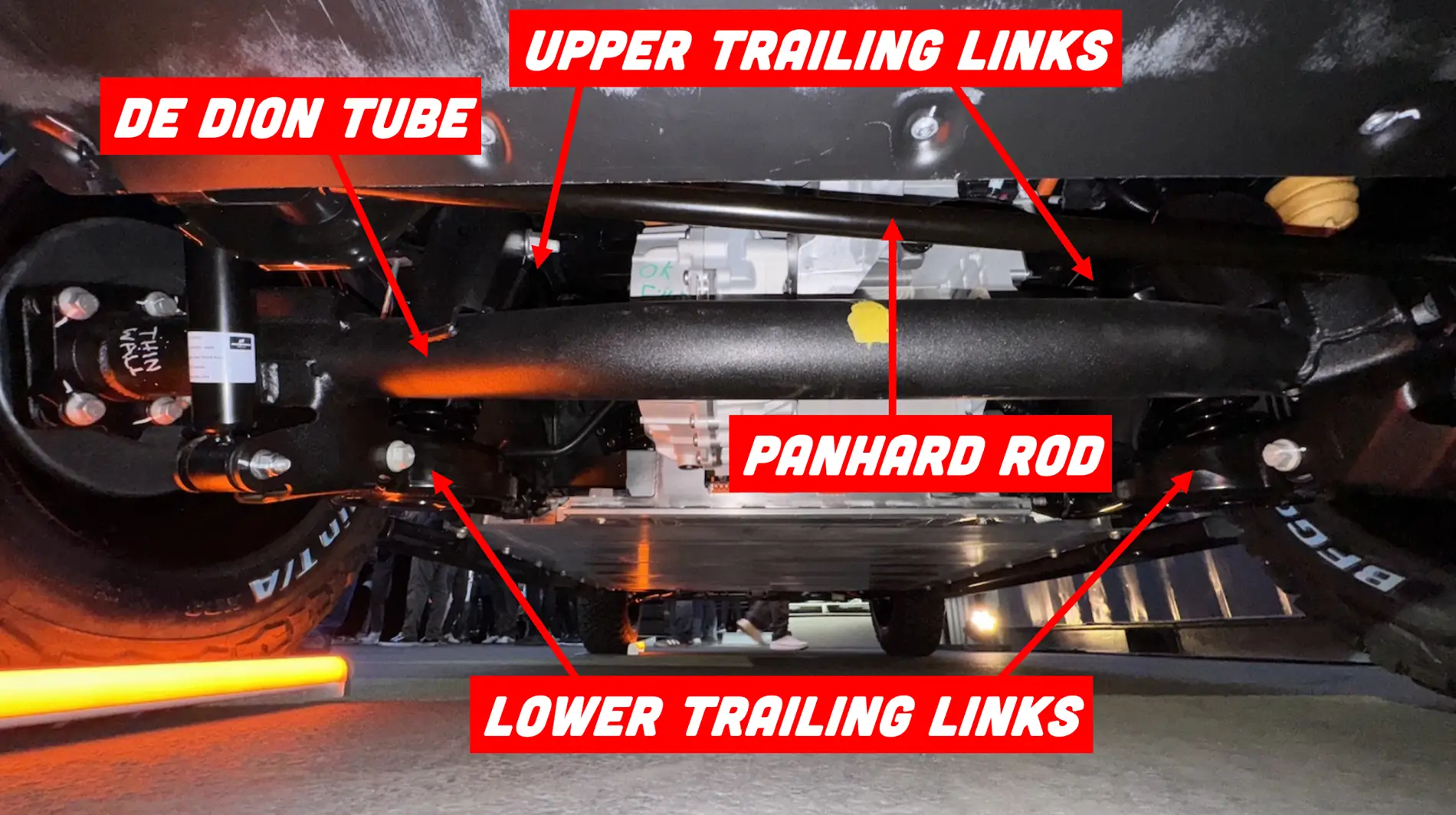
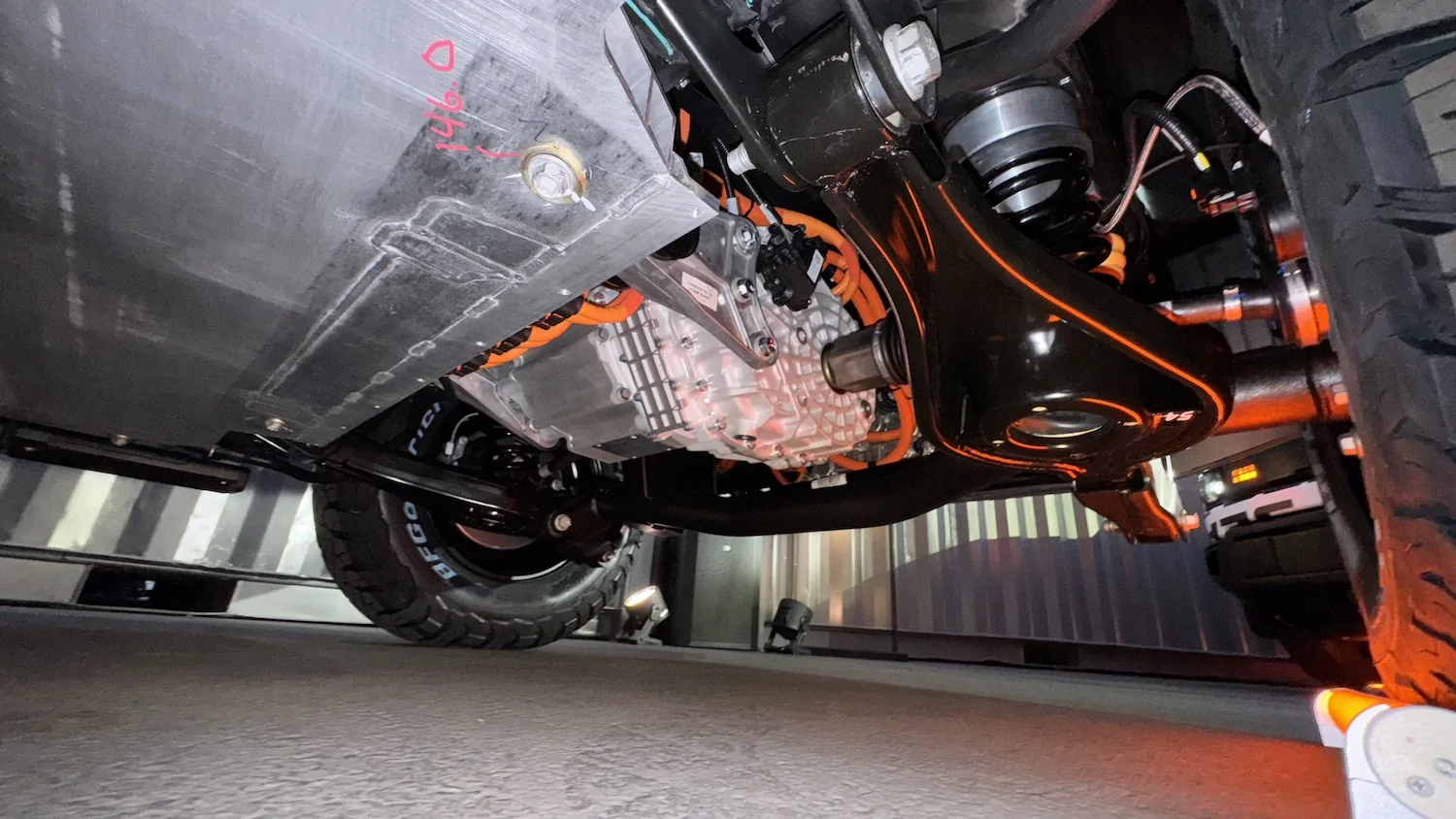
I also found these images from TheAutopian's suspension article from last year:

Slate-Axle-2048x1147.webp


slate_7644.webp


I imagine fabricating some complicated frame sleeves/boxes/braces to reinforce those frame rails from the rear bumper mounts over the spring perches all the way forwards to the trailing links for the axle. And adding stiffer springs and/or airbags. Triangulating between the bumper mounts and the middle of the frame is a good start, but with a 1000 lbs tow rating there's no need for those points way out back to support significant vertical loads or resist torques about the hitch mounting point.

For lower effort, a weight-distributing hitch might not be a bad idea for a quick-and-dirty way to turn cantilevered twisting loads behind the bumper into purely vertical loads. Something like this:

https://www.etrailer.com/Weight-Distribution-Hitch/Blue-Ox/BXW0350.html

I run a big 2 5/16" Curt TrueTrack with my travel trailer and equipment trailer, my 10k lbs rated Sequoia with the independent rear suspension and coil springs would pop a wheelie without it. I've never needed one for smaller utility trailers, but it's an option.
 
 
Top