
-
👉 Slate Reservations Tracking List: Add Your Slate Reservation 📊
Does the current spike in fuel prices increase the appeal of the Slate?

phidauex
Well-Known Member
- First Name
- Sam
- Joined
- Nov 24, 2025
- Threads
- 0
- Messages
- 89
- Reaction score
- 160
- Location
- Boulder, CO
- Vehicles
- 2021 Mach E AWD, 1997 Tacoma ExCab
Unfortunately I don't think fuel prices actually impact buying behavior much at all. Prices have swung all over the place in the last 25 years, and at no point has it made big pickups any less popular.
The reality is that the cost of the fuel just isn't that big of an expense compared to the total cost of the vehicle. If you are paying $700/mo in a car payment, driving 10k miles per year, at 20mpg, then gas going up by $1/gallon is only a 4.8% increase in your automotive spending. At $40/month, the increase is less than most people's monthly streaming services.
Even $5/gallon is unbelievably cheap for a resource as powerful and useful as gasoline. That is barely more than a gallon of milk. People LOVE complaining about it, but they don't actually modify their behavior.
I think for gas prices to make a real long term impact on buying patterns, it would have to be closer to $10/gallon. For instance, Norway has a very high EV uptake, and their gasoline costs about $2.10/liter, or ~$8/gallon.
The reality is that the cost of the fuel just isn't that big of an expense compared to the total cost of the vehicle. If you are paying $700/mo in a car payment, driving 10k miles per year, at 20mpg, then gas going up by $1/gallon is only a 4.8% increase in your automotive spending. At $40/month, the increase is less than most people's monthly streaming services.
Even $5/gallon is unbelievably cheap for a resource as powerful and useful as gasoline. That is barely more than a gallon of milk. People LOVE complaining about it, but they don't actually modify their behavior.
I think for gas prices to make a real long term impact on buying patterns, it would have to be closer to $10/gallon. For instance, Norway has a very high EV uptake, and their gasoline costs about $2.10/liter, or ~$8/gallon.

beatle
Well-Known Member
- Joined
- Jan 13, 2026
- Threads
- 2
- Messages
- 202
- Reaction score
- 359
- Location
- Springfield, VA
- Vehicles
- '23 R1T, '97/25 Miatas, '19 Monkey
Depends on what you're cross shopping and the cost of gas/electric where you live. The Maverick hybrid is a pretty good comparison since it's already good on fuel and it's the closest size to the Slate. Using its real world city mpg of 44 and 2.85mi/kwh on the Slate, here are some numbers:
And if your know your electric rate:
VA has relatively inexpensive electric at around 13-14 cents/kwh, so it makes more sense to pivot to an efficient EV to save money, but really it's going to take a lot of miles to make up the difference from a cost perspective. Depending on how many you put on in a year, it could take a very long time to make up the difference, even if you live where there's cheap electric. If electric is expensive, the gap closes.
TBH the cost savings was never really the reason I chose to drive an EV. They are just more fun, faster, smoother, and quieter. Since I charge at home, not having to stop at a gas station is great.
| If Gasoline is... | Electricity must be... | Cost Per Mile (Both Vehicles) |
| $2.50 / gal | $0.16 / kWh | $0.057 |
| $3.00 / gal | $0.19 / kWh | $0.068 |
| $3.50 / gal | $0.23 / kWh | $0.080 |
| $4.00 / gal | $0.26 / kWh | $0.091 |
| $4.50 / gal | $0.29 / kWh | $0.102 |
| $5.00 / gal | $0.32 / kWh | $0.114 |
| $5.50 / gal | $0.36 / kWh | $0.125 |
And if your know your electric rate:
| If Electricity is... | Gasoline must be... | Cost Per Mile (Both Vehicles) |
| $0.12 / kWh | $1.85 / gal | $0.042 |
| $0.15 / kWh | $2.32 / gal | $0.053 |
| $0.18 / kWh (Nat'l Avg) | $2.78 / gal | $0.063 |
| $0.21 / kWh | $3.24 / gal | $0.074 |
| $0.24 / kWh | $3.71 / gal | $0.084 |
| $0.28 / kWh | $4.32 / gal | $0.098 |
VA has relatively inexpensive electric at around 13-14 cents/kwh, so it makes more sense to pivot to an efficient EV to save money, but really it's going to take a lot of miles to make up the difference from a cost perspective. Depending on how many you put on in a year, it could take a very long time to make up the difference, even if you live where there's cheap electric. If electric is expensive, the gap closes.
TBH the cost savings was never really the reason I chose to drive an EV. They are just more fun, faster, smoother, and quieter. Since I charge at home, not having to stop at a gas station is great.
ScooterAsheville
Well-Known Member
- First Name
- Scooter
- Joined
- Jul 25, 2025
- Threads
- 9
- Messages
- 384
- Reaction score
- 842
- Location
- Asheville, NC
- Vehicles
- Maverick, Volvo
Since the Slate isn't being sold today, it's a totally irrelevant question. Ask it in early 2027, based on fuel prices then.
OP
OP

cadblu
Well-Known Member
- Thread starter
- #5
The question is about perceptions and appeal of the Slate truck in view of wildly fluctuating fuel prices. It‘s relevant today and in the future.Since the Slate isn't being sold today, it's a totally irrelevant question. Ask it in early 2027, based on fuel prices then.

SparkYellow
Well-Known Member
- First Name
- Sam
- Joined
- Nov 17, 2025
- Threads
- 5
- Messages
- 124
- Reaction score
- 141
- Location
- California
- Vehicles
- R56, CX3, SA, C1500, E150
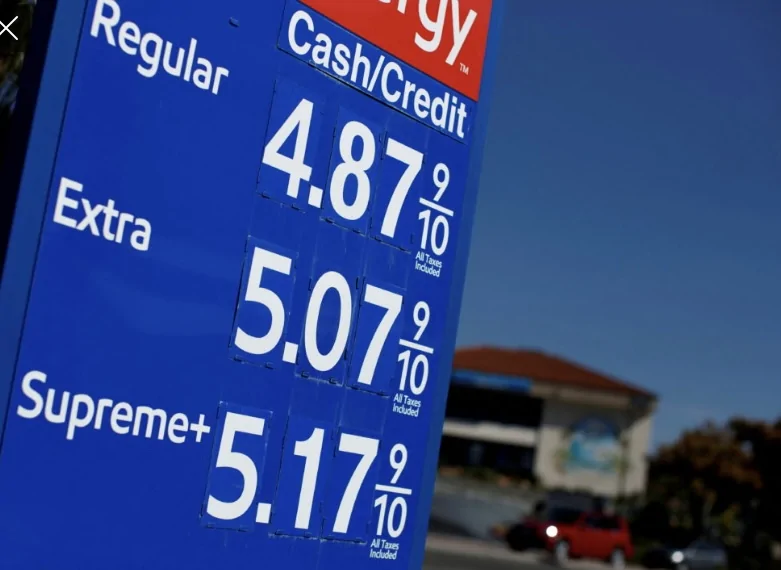
Regular gas was $5.69/ga at Valero when I filled up yesterday. To compensate (vaguely), I have stopped ordering food deliveries in the last two weeks. I can also go on a diet to lose some pounds if necessary. Will wait for Slate.
SparkYellow
Well-Known Member
- First Name
- Sam
- Joined
- Nov 17, 2025
- Threads
- 5
- Messages
- 124
- Reaction score
- 141
- Location
- California
- Vehicles
- R56, CX3, SA, C1500, E150
Thank you for this! One gallon of milk or one dozen of eggs sure won't make me move 35 miles. 🙂...
Even $5/gallon is unbelievably cheap for a resource as powerful and useful as gasoline. That is barely more than a gallon of milk
...

E90400K
Well-Known Member
Is that just fuel only, or do your numbers include maintenance. DOE says EV maintenance is 6-cents a mile vs. ICEV at 10-cents per mile.Depends on what you're cross shopping and the cost of gas/electric where you live. The Maverick hybrid is a pretty good comparison since it's already good on fuel and it's the closest size to the Slate. Using its real world city mpg of 44 and 2.85mi/kwh on the Slate, here are some numbers:
If Gasoline is... Electricity must be... Cost Per Mile (Both Vehicles) $2.50 / gal $0.16 / kWh $0.057 $3.00 / gal $0.19 / kWh $0.068 $3.50 / gal $0.23 / kWh $0.080 $4.00 / gal $0.26 / kWh $0.091 $4.50 / gal $0.29 / kWh $0.102 $5.00 / gal $0.32 / kWh $0.114 $5.50 / gal $0.36 / kWh $0.125
And if your know your electric rate:
If Electricity is... Gasoline must be... Cost Per Mile (Both Vehicles) $0.12 / kWh $1.85 / gal $0.042 $0.15 / kWh $2.32 / gal $0.053 $0.18 / kWh (Nat'l Avg) $2.78 / gal $0.063 $0.21 / kWh $3.24 / gal $0.074 $0.24 / kWh $3.71 / gal $0.084 $0.28 / kWh $4.32 / gal $0.098
VA has relatively inexpensive electric at around 13-14 cents/kwh, so it makes more sense to pivot to an efficient EV to save money, but really it's going to take a lot of miles to make up the difference from a cost perspective. Depending on how many you put on in a year, it could take a very long time to make up the difference, even if you live where there's cheap electric. If electric is expensive, the gap closes.
TBH the cost savings was never really the reason I chose to drive an EV. They are just more fun, faster, smoother, and quieter. Since I charge at home, not having to stop at a gas station is great.
beatle
Well-Known Member
- Joined
- Jan 13, 2026
- Threads
- 2
- Messages
- 202
- Reaction score
- 359
- Location
- Springfield, VA
- Vehicles
- '23 R1T, '97/25 Miatas, '19 Monkey
Just gas, since the topic was whether gas prices would push people towards the Slate. Maintenance differences haven't changed.

GaRailroader
Well-Known Member
- First Name
- PJ
- Joined
- Apr 26, 2025
- Threads
- 12
- Messages
- 360
- Reaction score
- 586
- Location
- Atlanta, GA
- Vehicles
- 2026 Tesla Model Y Premium, 2018 Tesla Model 3 LR
Wouldn't using the combined rating of 37 mpg rating be a little more apples to apples since the 2.85 mi/kWh is assumed a combined EPA rating? Heck the city rating I am seeing from Google search for Maverick Hybrid is 42 mpg not 44 anyway. Also, here in Georgia I am paying 6.47¢/kWh from 11p-7a.(SuperOffPeak + fuel)Depends on what you're cross shopping and the cost of gas/electric where you live. The Maverick hybrid is a pretty good comparison since it's already good on fuel and it's the closest size to the Slate. Using its real world city mpg of 44 and 2.85mi/kwh on the Slate, here are some numbers:
If Gasoline is... Electricity must be... Cost Per Mile (Both Vehicles) $2.50 / gal $0.16 / kWh $0.057 $3.00 / gal $0.19 / kWh $0.068 $3.50 / gal $0.23 / kWh $0.080 $4.00 / gal $0.26 / kWh $0.091 $4.50 / gal $0.29 / kWh $0.102 $5.00 / gal $0.32 / kWh $0.114 $5.50 / gal $0.36 / kWh $0.125
And if your know your electric rate:
If Electricity is... Gasoline must be... Cost Per Mile (Both Vehicles) $0.12 / kWh $1.85 / gal $0.042 $0.15 / kWh $2.32 / gal $0.053 $0.18 / kWh (Nat'l Avg) $2.78 / gal $0.063 $0.21 / kWh $3.24 / gal $0.074 $0.24 / kWh $3.71 / gal $0.084 $0.28 / kWh $4.32 / gal $0.098
VA has relatively inexpensive electric at around 13-14 cents/kwh, so it makes more sense to pivot to an efficient EV to save money, but really it's going to take a lot of miles to make up the difference from a cost perspective. Depending on how many you put on in a year, it could take a very long time to make up the difference, even if you live where there's cheap electric. If electric is expensive, the gap closes.
TBH the cost savings was never really the reason I chose to drive an EV. They are just more fun, faster, smoother, and quieter. Since I charge at home, not having to stop at a gas station is great.
GaRailroader
Well-Known Member
- First Name
- PJ
- Joined
- Apr 26, 2025
- Threads
- 12
- Messages
- 360
- Reaction score
- 586
- Location
- Atlanta, GA
- Vehicles
- 2026 Tesla Model Y Premium, 2018 Tesla Model 3 LR
I would push back on that analysis a bit. The $700/mo car payment is buying you a car which you own at the end of x # of payments. The gas is consumed and you don't own anything when your done. Granted the investment in the car is not a great investment but you still own something after it is said and done. The expense on fuel is worth zero once it is burned.Unfortunately I don't think fuel prices actually impact buying behavior much at all. Prices have swung all over the place in the last 25 years, and at no point has it made big pickups any less popular.
The reality is that the cost of the fuel just isn't that big of an expense compared to the total cost of the vehicle. If you are paying $700/mo in a car payment, driving 10k miles per year, at 20mpg, then gas going up by $1/gallon is only a 4.8% increase in your automotive spending. At $40/month, the increase is less than most people's monthly streaming services.
Even $5/gallon is unbelievably cheap for a resource as powerful and useful as gasoline. That is barely more than a gallon of milk. People LOVE complaining about it, but they don't actually modify their behavior.
I think for gas prices to make a real long term impact on buying patterns, it would have to be closer to $10/gallon. For instance, Norway has a very high EV uptake, and their gasoline costs about $2.10/liter, or ~$8/gallon.
In 2001 I bought a new Jeep Grand Cherokee for ~$32k. 10 years later I sold the Grand Cherokee for $7k after I had driven it 100k miles. To drive the Jeep the 100k miles, it cost me $13,200 in gas, that's more than 50% of what the vehicle itself cost. Had I driven that Jeep for 20 years and put 200k miles on it, the cost of gas would have exceeded the cost of the vehicle. The average price of gas purchased for the life of the vehicle in my ownership was $2.07/gallon.
beatle
Well-Known Member
- Joined
- Jan 13, 2026
- Threads
- 2
- Messages
- 202
- Reaction score
- 359
- Location
- Springfield, VA
- Vehicles
- '23 R1T, '97/25 Miatas, '19 Monkey
I picked the city MPG to better compare against the base Slate truck which is likely to be primarily used in the city/suburban environment. A lot of people report getting better than the EPA estimate in the city on the hybrid Maverick. Some people get upper 40s to even 50, but I think those are more fringe. The Slate numbers are also estimated.Wouldn't using the combined rating of 37 mpg rating be a little more apples to apples since the 2.85 mi/kWh is assumed a combined EPA rating? Heck the city rating I am seeing from Google search for Maverick Hybrid is 42 mpg not 44 anyway. Also, here in Georgia I am paying 6.47¢/kWh from 11p-7a.(SuperOffPeak + fuel)
The equation swings across the country:
Massachusetts has high electricity (25c/kwh) but gas is reasonable, around the national average. Maverick wins.
Hawaii has super high electricy (40c/kwh!) but its high gas prices are still not enough to make up the difference. Maverick wins by a larger margin here.
Pacific NW has cheap hydro electric around 12c/kwh and gas prices are over the national average. Slate wins here.
atx_ev
Well-Known Member
This is 100% not true. During the last big fuel crisis (around 2010) people were dumping big trucks and resale value on big trucks dropped. I personally wanted a tacoma, but they were actually more expensive than tundras so I ended up getting a tundra.Unfortunately I don't think fuel prices actually impact buying behavior much at all. Prices have swung all over the place in the last 25 years, and at no point has it made big pickups any less popular.
The reality is that the cost of the fuel just isn't that big of an expense compared to the total cost of the vehicle. If you are paying $700/mo in a car payment, driving 10k miles per year, at 20mpg, then gas going up by $1/gallon is only a 4.8% increase in your automotive spending. At $40/month, the increase is less than most people's monthly streaming services.
Even $5/gallon is unbelievably cheap for a resource as powerful and useful as gasoline. That is barely more than a gallon of milk. People LOVE complaining about it, but they don't actually modify their behavior.
I think for gas prices to make a real long term impact on buying patterns, it would have to be closer to $10/gallon. For instance, Norway has a very high EV uptake, and their gasoline costs about $2.10/liter, or ~$8/gallon.
The buying market absolutely moves to more fuel efficient cars when the price of gas gets high.

sodamo
Well-Known Member
- First Name
- David
- Joined
- May 19, 2025
- Threads
- 8
- Messages
- 1,139
- Reaction score
- 1,366
- Location
- Big Island Hawaii
- Vehicles
- Tundra 1794, Subaru Ascent
I paid 5.249/g on 3/7, but I’m off grid for electricity.
Slate is appealling to me as an EV, but only because it is a small, 2 door, EV pickup at mid $20’s. The package appeals to me, remove 1 facet and that appeal lessens greatly.
So while the EV factor is very appealing, for me that’s only about $1200/year, already in budget And now Dr says I should drink less and lose weight.
Slate is appealling to me as an EV, but only because it is a small, 2 door, EV pickup at mid $20’s. The package appeals to me, remove 1 facet and that appeal lessens greatly.
So while the EV factor is very appealing, for me that’s only about $1200/year, already in budget And now Dr says I should drink less and lose weight.
phidauex
Well-Known Member
- First Name
- Sam
- Joined
- Nov 24, 2025
- Threads
- 0
- Messages
- 89
- Reaction score
- 160
- Location
- Boulder, CO
- Vehicles
- 2021 Mach E AWD, 1997 Tacoma ExCab
I suppose it is hyperbole to say there is no correlation, but my assertion is that it is a fairly weak correlation, and not durable. There was a CBO study a number of years ago on it, and I think they found that in the mid 2000s, a $0.60/gal change in gas pricing was linked to about a 4-5% change in market share between small cars and SUV/trucks. That's not nothing, but it isn't the sea change usually described.This is 100% not true. During the last big fuel crisis (around 2010) people were dumping big trucks and resale value on big trucks dropped. I personally wanted a tacoma, but they were actually more expensive than tundras so I ended up getting a tundra.
The buying market absolutely moves to more fuel efficient cars when the price of gas gets high.
Looking quickly at F150 sales, here is a chart of the YoY change in F150 sales overlaid with the YoY change in average gas prices. Again, you can see a little influence, but it isn't strong. The early 2010's were great years for F150 sales, even while gas prices were increasing.
2015-2017 are a bit more "as expected", gas prices are dropping and sales are going up. 2020 to 2022 sees an increase in gas prices and a drop in sales, but COVID and the massive economic shocks there seem to outweigh the gas price element. 2023 and 2024 also great years for trucks, even with reasonably high prices again.
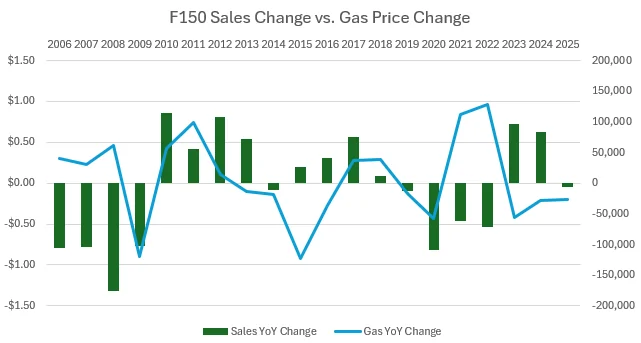
So really I think my point is not that people entirely ignore fuel prices, but that we aren't actually talking about that big of a range of changes over 20 years, and there are much bigger things that people are looking at when choosing their vehicle. You said yourself that you chose the Tundra over the Tacoma when faced with the same economic conditions.


Similar threads

- Replies
- 12
- Views
- 2,608
- Replies
- 15
- Views
- 3,200


- Replies
- 5
- Views
- 4,391

