SynphulGryph
New Member
- Thread starter
- #1
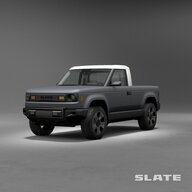
There's one particular marketing strategy I've seen Slate put forward that's been sticking out in my mind. That's where someone buys a Slate truck when they're young, find a partner, start a family, have a child, and pass the vehicle down to them. A potent strategy, which puts forward the idea that these trucks could last 20-30 years or more. Which brings up the distinct possibility that the trucks Slate manufactures could outlast the company they've built, especially when EV upstarts can be so volatile.
So, my question is this. What is Slate's contingency/exit plan? Say for example, of the 150,000 reservations currently placed (At least last I've heard, don't have the latest numbers), only a small fraction convert to sales? There could be unforeseen problems early in production which disrupt faith and trust in Slate, or the relatively low risk nature of the reservations means more people purchased them on impulse than would be willing to spend 25k on a vehicle. Say only 2000 or 3000 actual vehicles sell, and Slate needs to close up production early. How are those 2000 or 3000 vehicles going to be supported? Will they be supported? I know there's going to be decentralized support for different 3D printed parts, but what about what can't be 3D printed? Brakes, axles, motors, batteries, etc? What of the extensive accessory catalogue? Many I'd presume would be buying a Blank Slate with an eye to add things later, 2, 3, 5, 10 years down the road, likely more. If Slate needs to close its doors on production, how many of these accessories would still be produced?
I ask this not to try and undermine Slate, I'm genuinely excited for their ideas and the ethos they've put forward. Right to repair, right to customize, encouraging DIY and even 3D printing, the right to truly own your vehicle. I ask this because of how volatile EV startups can be, in conjunction with this ethos Slate is putting forward. I want to love this truck, but I also need to trust Slate is going to support it long term, even if things go in a bad direction.
Also, for the inevitable "it's not feasible to support a vehicle after production closes" mindset, I'd like to remind everyone of Pacific trucks. Their last truck was built in 1991, and they're still working with customers to this day to help them find parts and keep their trucks on the road as long as possible. So it's very possible, if the company is truly committed to supporting their customers.
So, my question is this. What is Slate's contingency/exit plan? Say for example, of the 150,000 reservations currently placed (At least last I've heard, don't have the latest numbers), only a small fraction convert to sales? There could be unforeseen problems early in production which disrupt faith and trust in Slate, or the relatively low risk nature of the reservations means more people purchased them on impulse than would be willing to spend 25k on a vehicle. Say only 2000 or 3000 actual vehicles sell, and Slate needs to close up production early. How are those 2000 or 3000 vehicles going to be supported? Will they be supported? I know there's going to be decentralized support for different 3D printed parts, but what about what can't be 3D printed? Brakes, axles, motors, batteries, etc? What of the extensive accessory catalogue? Many I'd presume would be buying a Blank Slate with an eye to add things later, 2, 3, 5, 10 years down the road, likely more. If Slate needs to close its doors on production, how many of these accessories would still be produced?
I ask this not to try and undermine Slate, I'm genuinely excited for their ideas and the ethos they've put forward. Right to repair, right to customize, encouraging DIY and even 3D printing, the right to truly own your vehicle. I ask this because of how volatile EV startups can be, in conjunction with this ethos Slate is putting forward. I want to love this truck, but I also need to trust Slate is going to support it long term, even if things go in a bad direction.
Also, for the inevitable "it's not feasible to support a vehicle after production closes" mindset, I'd like to remind everyone of Pacific trucks. Their last truck was built in 1991, and they're still working with customers to this day to help them find parts and keep their trucks on the road as long as possible. So it's very possible, if the company is truly committed to supporting their customers.