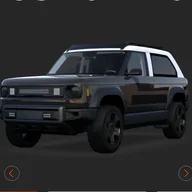
Who wants this battery in their blank Slate?

ScooterAsheville

Well-Known Member
First Name
Scooter
Joined
Jul 25, 2025
Threads
9
Messages
248
Reaction score
584
Location
Asheville, NC
Vehicles
Maverick, Volvo
I've been following the whole Donut Labs and Verge controversy since CES. The best approach I've seen is the one the scientists and engineer types have taken. Which is restrained, polite, curious observation. They don't get too excited. And they don't get all negative. They just say, "I hear your claims, and I find them interesting, but I will need objective and replicable data from a trusted source to form a scientificially sound opinion.".

One of Sandy Munro's engineers also did an interview, which I'll post here.

The great news about this story is simply that we don't have to wait years to find out one way or the other. They're saying third party test data in weeks. Product this quarter. However this story ends, it has been and will be fun to follow.


 

ScooterAsheville

Well-Known Member
First Name
Scooter
Joined
Jul 25, 2025
Threads
9
Messages
248
Reaction score
584
Location
Asheville, NC
Vehicles
Maverick, Volvo
As a guy who likes crunching numbers, I found their statement that they have one gigawatt hour capacity this year interesting. If you divide one gigwatt hour (2026 battery production) by 60 kilowatt hours (a typical EV midsize CUV battery), you get around 16,000 vehicles of annual capacity.

They described their capacity as 350 motorcycles in 2026, plus sample cells and delivery to their existing internal and external business partners. And then described "tens of gigawatts in coming years". They optimistically described scaling as exponential, not linear.

So it's not like we're going to get to December 2026 and there is a Donut Labs battery in our Slates. Think more like 2027 or 2028 or later. Why would I say that? Because (1) OEMs have to validate the battery for themselves. Then they need to (2) engineer and validate a pack design. Then Donut Labs has to (3) build a factory to supply that OEM's needs. So it's at least one year, more likely two or three. That said, these things can happen in parallel. So Donut can be building a factory in the USA at the same time OEMs are validating the battery and pack and management systems.

To put it in scale, to build a hundred thousand Slates with a pack capacity of 50kwh would require a 5 gigawatt hour factory capacity. If Merlin waved his wand and the entire USA auto market went full BEV, it would be 15 million vehicles, or 750 gigawatt hours. And to supply the entire globe's auto production would be more than that.

I hope I didn't embarass myself by misplacing a decimal point. I really should double check those calculations. I just thought the numbers were interesting. It's impressive how much battery capacity is needed to make the world's automotive fleet electric. Just food for thought.

The other intersting business aspect is all the installed capacity for existing and arriving chemistries. That's hundreds of billions in investment around the world. So it will be interesting to see how the incumbents respond to the challenge (again, assuming it's legit).

And of course, all of this is assuming the narrative itself is legitimate. Which we'll hopefully know yes or no in a few weeks to months.
 
Last edited:

E90400K

Well-Known Member
First Name
Francis
Joined
Apr 26, 2025
Threads
5
Messages
538
Reaction score
394
Location
Under a Bridge in the Middle of the Mid Atlantic
Vehicles
A Ford truck
As a guy who likes crunching numbers, I found their statement that they have one gigawatt hour capacity this year interesting. If you divide one gigwatt hour (2026 battery production) by 60 kilowatt hours (a typical EV midsize CUV battery), you get around 16,000 vehicles of annual capacity.

They described their capacity as 350 motorcycles in 2026, plus sample cells and delivery to their existing internal and external business partners. And then described "tens of gigawatts in coming years". They optimistically described scaling as exponential, not linear.

So it's not like we're going to get to December 2026 and there is a Donut Labs battery in our Slates. Think more like 2027 or 2028 or later. Why would I say that? Because (1) OEMs have to validate the battery for themselves. Then they need to (2) engineer and validate a pack design. Then Donut Labs has to (3) build a factory to supply that OEM's needs. So it's at least one year, more likely two or three. That said, these things can happen in parallel. So Donut can be building a factory in the USA at the same time OEMs are validating the battery and pack and management systems.

To put it in scale, to build a hundred thousand Slates with a pack capacity of 50kwh would require a 5 gigawatt hour factory capacity. If Merlin waved his wand and the entire USA auto market went full BEV, it would be 15 million vehicles, or 750 gigawatt hours. And to supply the entire globe's auto production would be more than that.

I hope I didn't embarass myself by misplacing a decimal point. I really should double check those calculations. I just thought the numbers were interesting. It's impressive how much battery capacity is needed to make the world's automotive fleet electric. Just food for thought.

The other intersting buisiness aspect is all the installed capacity for existing and arriving chemistries. That's hundreds of billions in investment around the world. So it will be interesting to see how the incumbents respond to the challenge (again, assuming it's legit).

And of course, all of this is assuming the narrative itself is legitimate. Which we'll hopefully know yes or no in a few weeks to months.
I'll add.

So, from what I understand from the various influencing videos posted here in this thread it seems the chemistry is some type of salt encapsulated in nano tubes made from a ceramic-clay (solid paste) material that is screen printed onto a titanium substrate then formed into a battery. Because all this is new technology since early/mid-2025 I would think the machinery to support the manufacturing process is new and has not yet even been built before. What I have not heard or seen from the videos is the manufacturing equipment is mature machine technology and that the batteries made so far are laboratory-level product that is in the midst of being scaled for mass production. Based on my experience (long ago) as an equipment planning engineer, such production-level machinery takes time (years) and capital investment to create and then mature.

On top of that timeline, the quality control must be built into the battery design and manufacturing processes at the design engineering level. That also takes time to vet and institute at large scale production. How this gets scaled to the level of capacities you correctly calculate, when the base technology seems, at best, just a few years old (2023 - 2025), it is difficult to believe such production equipment is already at the ready to begin mass production of Donut Labs' design.

But we'll see.
 
Last edited:

AZFox

Well-Known Member
Joined
Apr 29, 2025
Threads
37
Messages
1,422
Reaction score
2,010
Location
Arizona
Vehicles
Honda NC700X
To me the most significant disruptor about the Donut Lab battery is that it's supposedly made entirely from "abundant, affordable, and geopolitically safe materials" rather than rare metals.
 

ScooterAsheville

Well-Known Member
First Name
Scooter
Joined
Jul 25, 2025
Threads
9
Messages
248
Reaction score
584
Location
Asheville, NC
Vehicles
Maverick, Volvo
I'll add.

So, from what I understand from the various influencing videos posted here in this thread it seems the chemistry is some type of salt encapsulated in nano tubes made from a ceramic-clay (solid paste) material that is screen printed onto a titanium substrate then formed into a battery. Since all this is new technology since early/mid-2025 I would think the machinery to support the manufacturing process is new and has not yet even been built before. What I have not heard or seen from the videos is the manufacturing equipment is mature machine technology and that the batteries made so far are laboratory-level product that is in the midst of being scaled for mass production. Based on my experience (long ago) as an equipment planning engineer, such production-level machinery takes time (years) and capital investment to create and then mature.

On top of that timeline, the quality control must be built into the battery design and manufacturing processes at the design engineering level. That also takes time to vet and institute at large scale production. How this gets scaled to the level of capacities you correctly calculate, when the base technology seems, at best, just a few year old (2023 - 2025), it is difficult such production equipment is already at the ready to begin mass production of Donut Labs' design.

But we'll see.
Thanks for that. It's always cool when people with experience point out things us laymen, frankly, are clueless about. I think they mentioned using screen printing. Aside from that, they really kept a close hold on the production process. Other than saying that a pilot lab is in operation since last fall.

As you said, anyone who's followed the other solid state startups has seen the long, long journey from their pilot labs to their mass production. Like you said, years. Quantum Scape is still in that journey.

It's fun to watch it roll out, whichever way it goes. The world is just moving too fast for this guy who remembers the precurser to the Internet being delivered to his black and white tube tv in read-only format, once a night at 6:30 PM.,
 
 
Top