
Home Level 2 charging from generator outlet

bloo

Well-Known Member
Joined
Nov 7, 2025
Threads
3
Messages
158
Reaction score
209
Location
USA
Vehicles
'21 Kia Seltos 2.0 AWD
You're making a suicide outlet. If an insect gets in there, it'll be fried. If your finger gets in there, it'll be fried. You may wind up doing the sixty-hertz shuffle.

Also... those adaptors are a fire hazard. The connection will degrade after a few plug and unplug cycles. It'll get hot and burn. At least you won't have to worry about battery preconditioning in cold weather.

TLDR; you can do it but please don't.

 

beatle

Well-Known Member
Joined
Jan 13, 2026
Threads
1
Messages
145
Reaction score
276
Location
Springfield, VA
Vehicles
'23 R1T, '97/25 Miatas, '19 Monkey
Good points. Can you provide some links to examples?
Here's one.

Slate Auto Pickup Truck Home Level 2 charging from generator outlet 20240527_082541


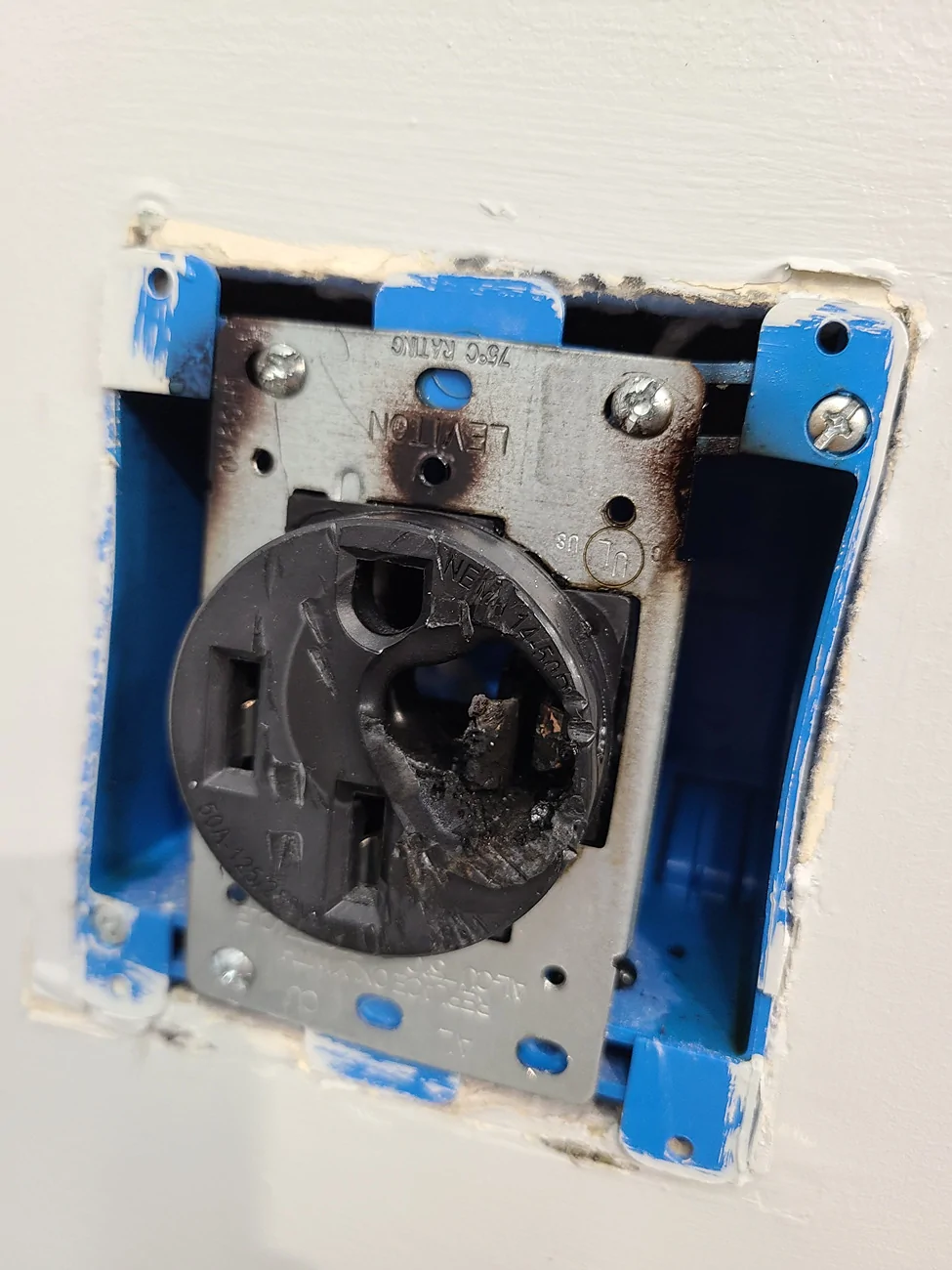
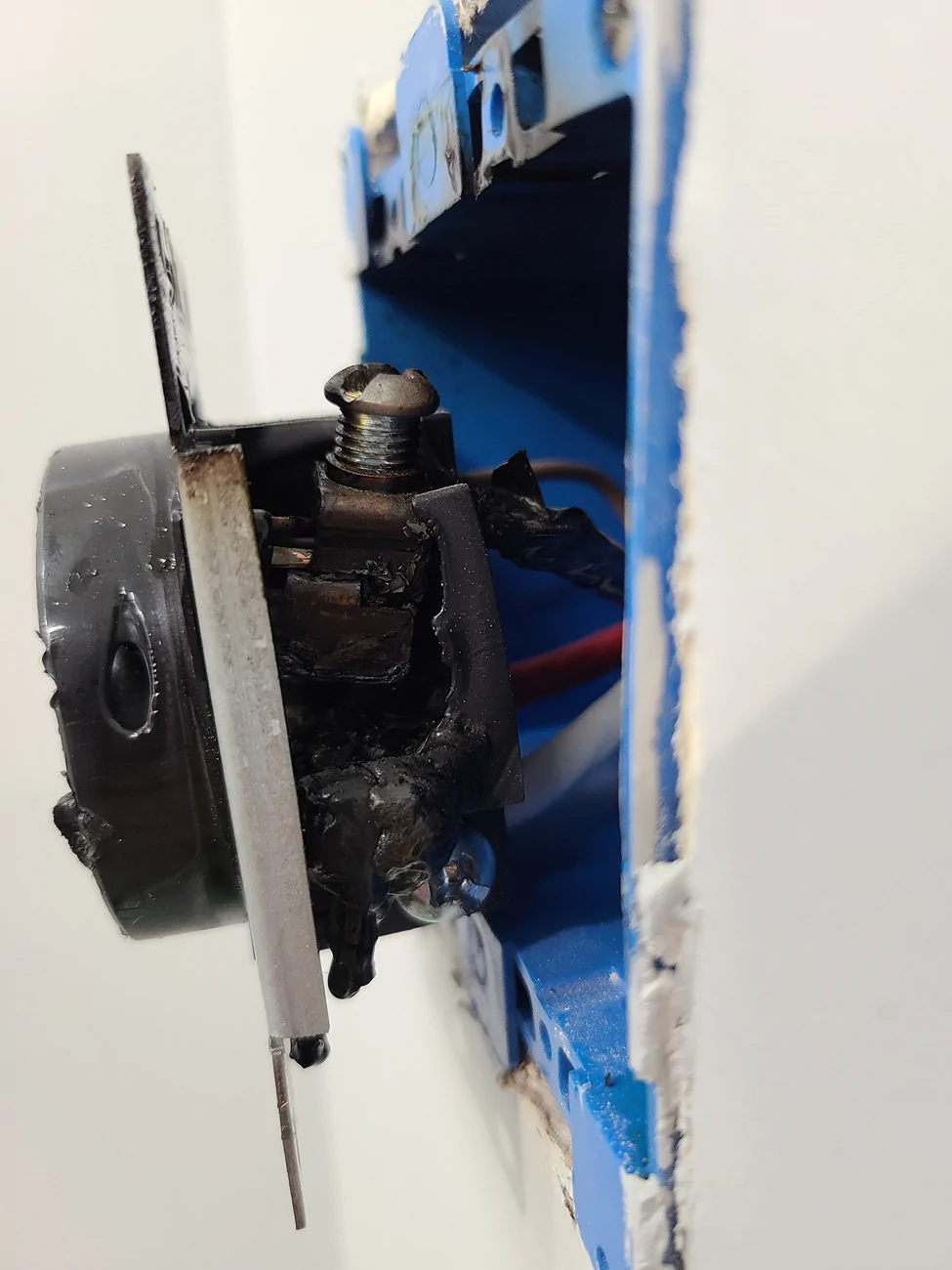
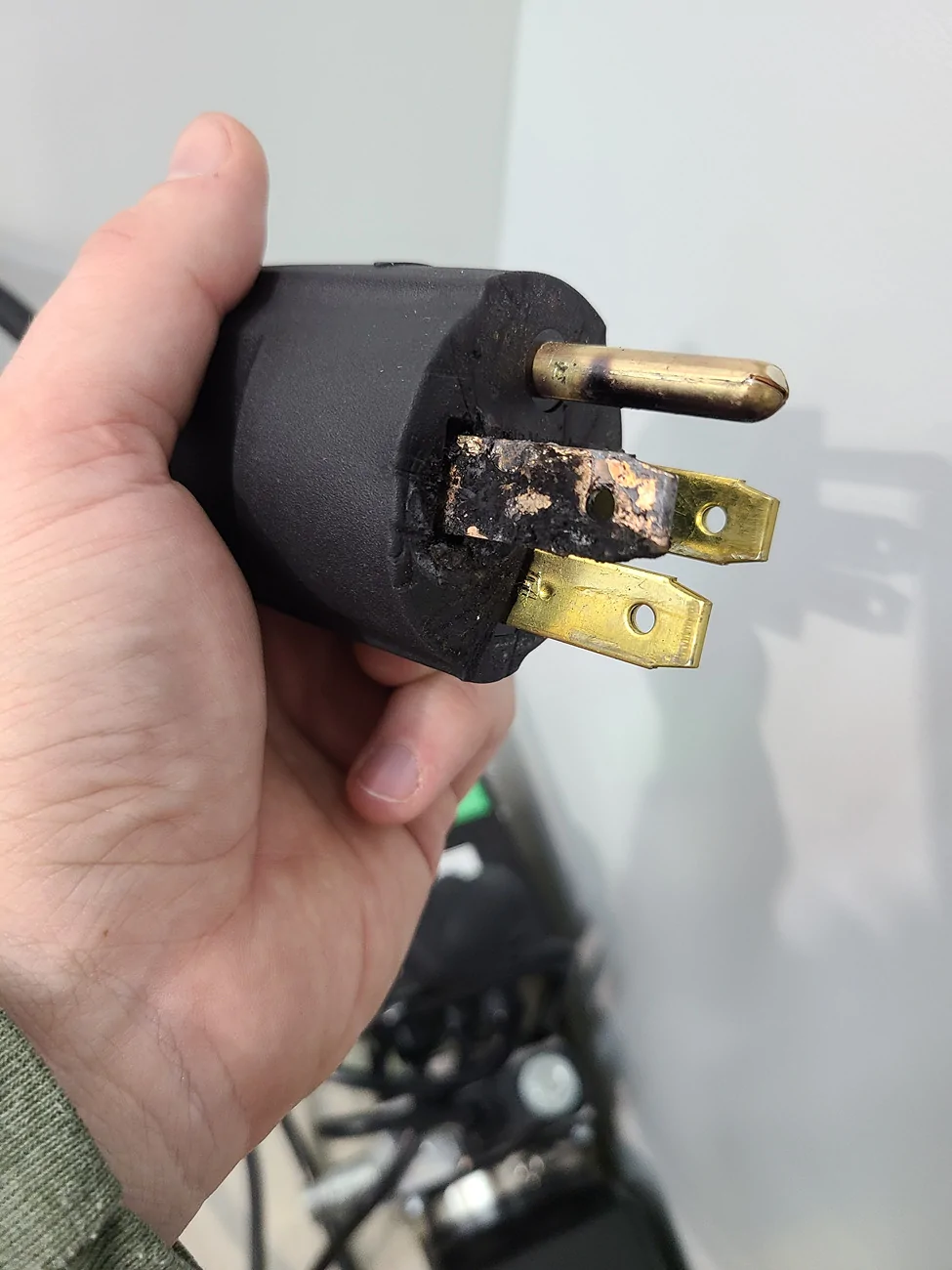
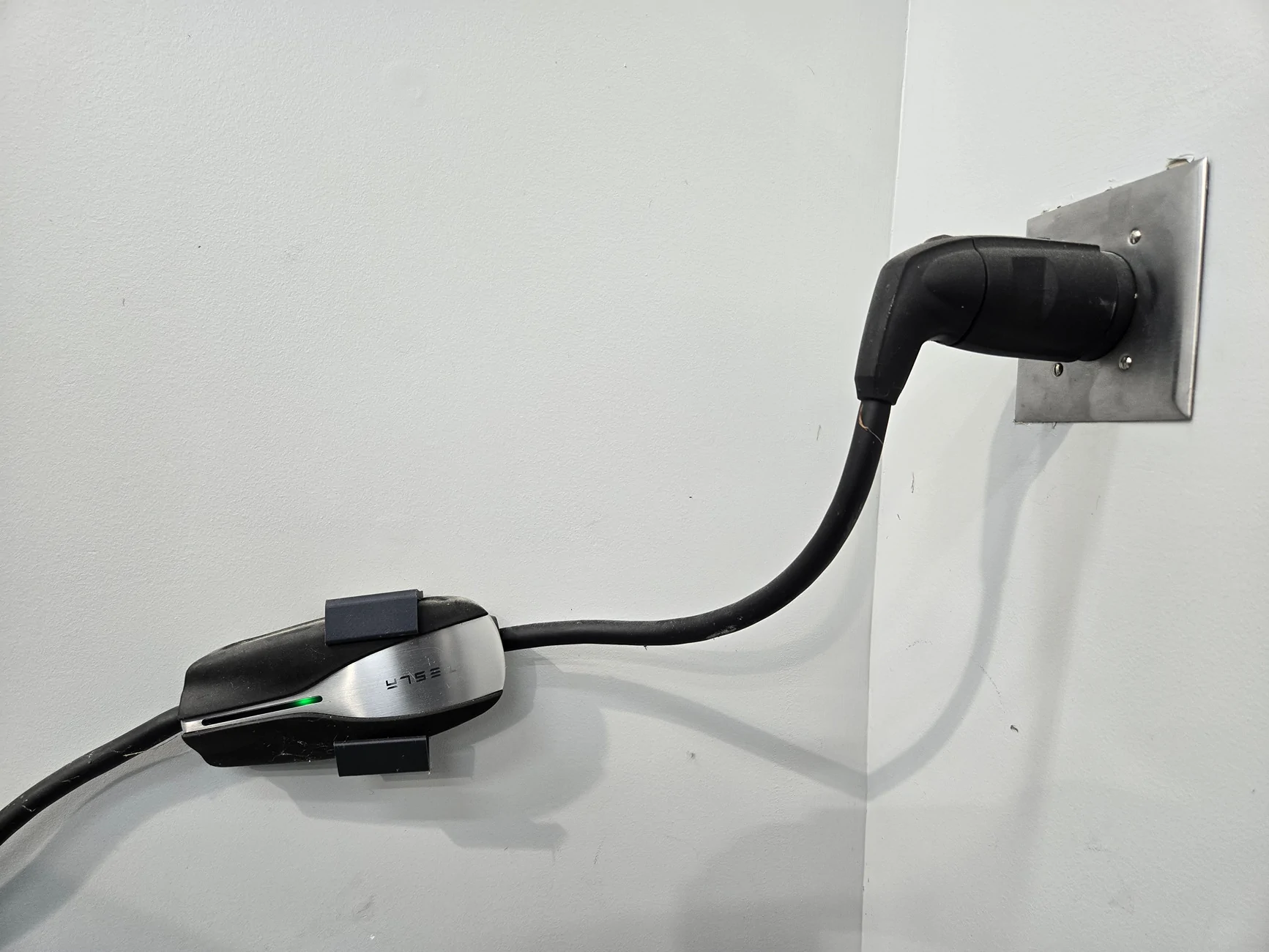
I installed a Leviton 14-50R back in October 2019. I used 6/3 Romex and a 50A breaker. I plugged my gen1 Tesla UMC into it and mounted it on the wall for strain relief. I charged my Model S at 40A (the gen1 did 40A). I left it like this, almost never unplugging it since I had a gen2 UMC that I used when I traveled, and I'd heard people would wear out the receptacle by repeated plugging/unplugging.. 2 1/2 years later I started smelling something electrical. The car threw a charging fault and refused to charge. I turned off the breaker and went to remove the plug. It wouldn't move, so I used a screwdriver and a pry bar to separate it from the receptacle.

Slate Auto Pickup Truck Home Level 2 charging from generator outlet 20220302_211915
Slate Auto Pickup Truck Home Level 2 charging from generator outlet 20220302_212035
Slate Auto Pickup Truck Home Level 2 charging from generator outlet 20220302_211910


One of the hot legs of the the receptacle had loosened over time, despite me really giving everything I had on the terminal when I installed it. This caused high resistance and probably arcing at the terminal which melted it. Fortunately no actual fire. I replaced the receptacle with a hardwired Tesla UWC. Then I started to trip the breaker. I checked and one of its terminals had loosened and heat was tripping it. I tightened it back down and it has been trouble free for a couple years, but I still check the temperature when charging every few months.

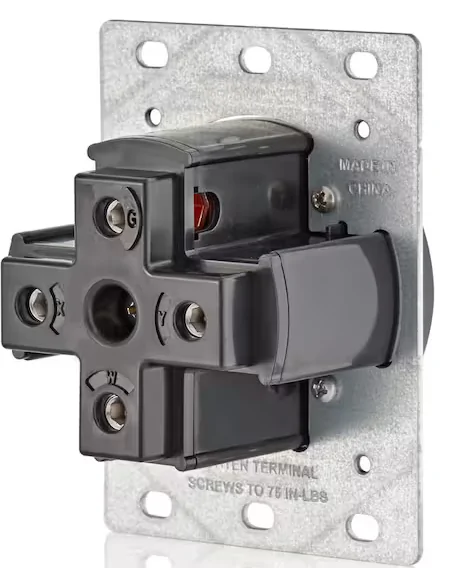
Leviton and others now make receptacles designed for plugging in an EVSE. They have better terminal screws and better overall construction. I'd still go hardwired though. This may not happen nearly as much anymore since most plug in EVSEs top out at 32A instead of 40A, and a lot of people now recommend higher quality plugs because my story isn't that unique. 40A charging creates 56% more heat than 32A.

HCGxKaLiBeR: check that the wire you're using is at least 6 gauge if it's on a 50A breaker. If that's a picture of your receptacle, it's only rated for 30A which could use wire as low as 10ga and will probably have an orange jacket. If you are not going to replace the inlet with a receptacle, at least put an adapter on it so you don't have live contactors protruding. An adapter will at least make it only as dangerous as an extension cord.
 

Tom Sawyer

Well-Known Member
Joined
Jan 11, 2026
Threads
0
Messages
130
Reaction score
92
Location
Northeast Ohio
Vehicles
CJ-7
Thanks for posting this. There's nothing like a picture to demonstrate these hazards. Thank goodness you caught it.
I used 6/3 Romex and a 50A breaker.
Did you use copper or aluminum wire?
 

ElectricShitbox

Well-Known Member
Joined
Dec 13, 2025
Threads
5
Messages
204
Reaction score
339
Location
Great Lakes Autonomous Region
Vehicles
Spark EV
State of Charge youtube channel talks about this a lot, he has a playlist of videos about the topic.
 

beatle

Well-Known Member
Joined
Jan 13, 2026
Threads
1
Messages
145
Reaction score
276
Location
Springfield, VA
Vehicles
'23 R1T, '97/25 Miatas, '19 Monkey
Did you use copper or aluminum wire?
Copper. It was this stuff:

https://www.homedepot.com/p/Southwi...x-SIMpull-CU-NM-B-W-G-Wire-63950002/202316279

Crazy how expensive it is now. I paid $150 for a 50 ft roll back then.

A hardwired EVSE also doesn't need a neutral wire like a 14-50, so you can save a bit on wire cost as well. You also technically need a more expensive GFCI breaker now to run the receptacle, but a standard breaker works for a hardwired EVSE since they include GFCI protection.
 

E90400K

Well-Known Member
First Name
Francis
Joined
Apr 26, 2025
Threads
5
Messages
688
Reaction score
532
Location
Under a Bridge in the Middle of the Mid Atlantic
Vehicles
A Ford truck
You're making a suicide outlet. If an insect gets in there, it'll be fried. If your finger gets in there, it'll be fried. You may wind up doing the sixty-hertz shuffle.

Also... those adaptors are a fire hazard. The connection will degrade after a few plug and unplug cycles. It'll get hot and burn. At least you won't have to worry about battery preconditioning in cold weather.

TLDR; you can do it but please don't.
I'll have to disagree here. The pic the OP shows is a generator "inlet" receptacle meant for continuous high-amperage draw from a generator to power a house electrical system. With none of us knowing the details of the specific installation, I think it is improper to inject some FUD into the discussion.

However, to the OP, you are reversing the intention of the circuit. You said there is a "lock-out (switch)", which indicates the generator feed circuit probably supplies specific critical power circuits in your home, so switching the lock-out to energize the generator inlet will de-power those other circuits. That's why you can't use the generator feed in reverse to charge an EV.

Just bite the bullet and have a properly configured L2 EVSE circuit installed by a qualified electrician. If you are waiting for the 4-wheeled-powered Slate Truck, you've got a few years to get the circuit installed. Keep the generator circuit for its intended purpose and buy a nice generator for when the power goes out.
 

beatle

Well-Known Member
Joined
Jan 13, 2026
Threads
1
Messages
145
Reaction score
276
Location
Springfield, VA
Vehicles
'23 R1T, '97/25 Miatas, '19 Monkey
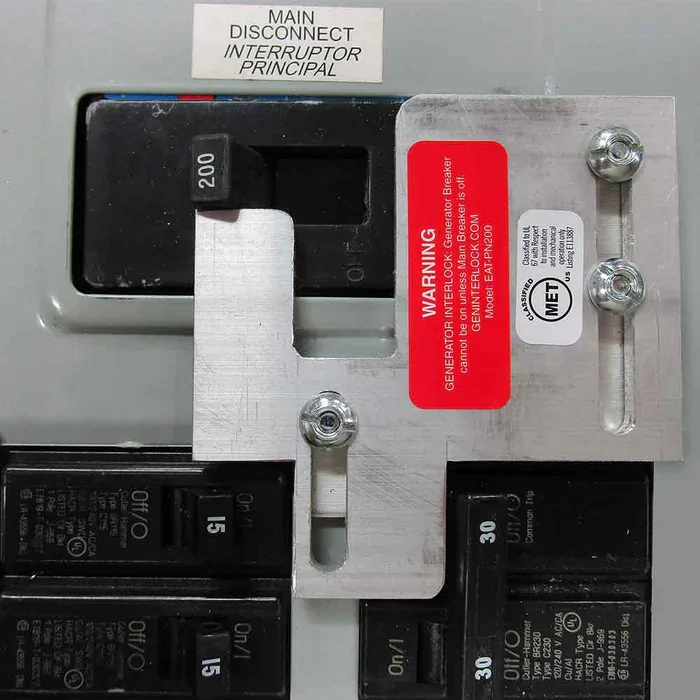
He probably has one of these on his panel:

Slate Auto Pickup Truck Home Level 2 charging from generator outlet 1771711579014-a


This is to ensure when the breaker is turned on and you're planning to energize the generator circuit, the main feed from the house is turned off. This is important so you don't backfeed the grid from your generator in the case of a power outage and potentially electrocute a lineman working upstream from your house. Without the interlock, you have a "suicide circuit" like @bloo said. These are usually done with suicide cords with two male ends, allowing you to turn any circuit in your house into a generator outlet.

If you remove the interlock (the metal bracket thingy) and replace the inlet with a typical receptacle, it turns into a regular circuit. This isn't unsafe if done correctly; it's just converting some bits of infrastructure to change the purpose of the circuit. OP wanted to do this, but without changing the inlet. That's a little more reckless.

You might be referring to a transfer switch that lets you choose your "favorite circuits" and power them with a generator. Those have a small sub panel. I agree in that case that this wouldn't work since that line going to the generator inlet is dead if you're feeding the subpanel from the utility. You'd need to bypass the transfer switch in addition to replacing the inlet.
 

bloo

Well-Known Member
Joined
Nov 7, 2025
Threads
3
Messages
158
Reaction score
209
Location
USA
Vehicles
'21 Kia Seltos 2.0 AWD
I'll have to disagree here. The pic the OP shows is a generator "inlet" receptacle meant for continuous high-amperage draw from a generator to power a house electrical system. With none of us knowing the details of the specific installation, I think it is improper to inject some FUD into the discussion.

However, to the OP, you are reversing the intention of the circuit. You said there is a "lock-out (switch)", which indicates the generator feed circuit probably supplies specific critical power circuits in your home, so switching the lock-out to energize the generator inlet will de-power those other circuits. That's why you can't use the generator feed in reverse to charge an EV.

Just bite the bullet and have a properly configured L2 EVSE circuit installed by a qualified electrician. If you are waiting for the 4-wheeled-powered Slate Truck, you've got a few years to get the circuit installed. Keep the generator circuit for its intended purpose and buy a nice generator for when the power goes out.
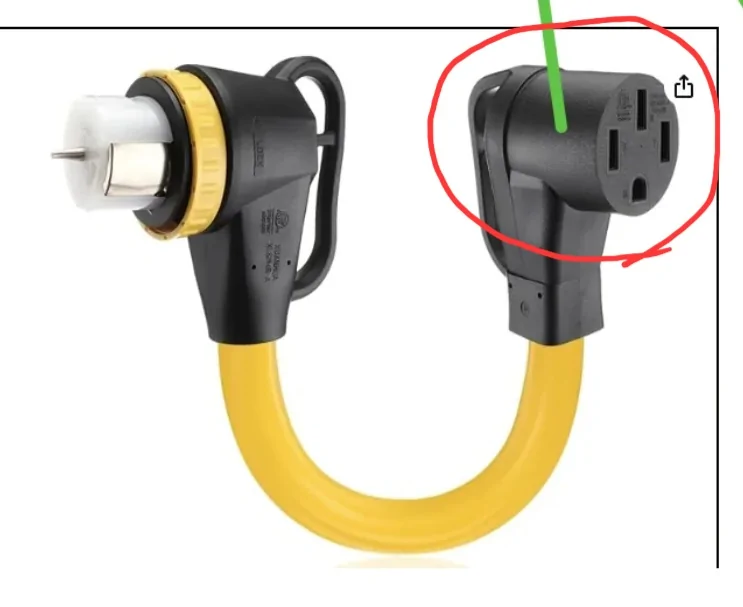
Im not talking about the generator inlet for the fire hazard. I mean tge 14-50R adapter thats going in between...

Slate Auto Pickup Truck Home Level 2 charging from generator outlet Screenshot_20260222_051525_DuckDuckGo


Those things suck. The molded-in contact points loosen over time and the plastic around them melts.

Take a look at beatle's post above. His was wired into a Leviton recepticle. Those tend to be good quality, yet it still failed.

It's not FUD to warn someone away from molded adapters like these. We are not allowed to use them where I work for a reason.
 

beatle

Well-Known Member
Joined
Jan 13, 2026
Threads
1
Messages
145
Reaction score
276
Location
Springfield, VA
Vehicles
'23 R1T, '97/25 Miatas, '19 Monkey
TBH, that Leviton receptacle I used actually was junk. I just didn't know any better. The newer EVSE rated Levitons like this one are the ones to use. Check out the back and see how it's a lot different than the one I used:

Slate Auto Pickup Truck Home Level 2 charging from generator outlet 1771715373640-lk


I actually still use an adapter like that to mate a 14-50 EVSE to a 14-30 outlet. They're not inherently bad. I let my partner take my Tesla UMC for her trip and she left me with the Ford one which only has a 14-50 at the end. I plugged into a 14-30 at my parents' home using that adapter and turned the charging amps down in the truck to 24. I'm sure using them at work is frowned upon since they can lead to overloading the circuit. Technically you shouldn't be allowed to plug a 32-40A device a 30A circuit.

I think the EV charging advice is mixed, in that some people are looking for something truly temporary, like when they travel. Others turn temporary into permanent because it worked for a few times.

I also have a couple of heavy duty extension cords that work great when at family member's homes with receptacles too far away from the driveway. They don't get warm even when charging for 16-20 hours in the summer.
 

bloo

Well-Known Member
Joined
Nov 7, 2025
Threads
3
Messages
158
Reaction score
209
Location
USA
Vehicles
'21 Kia Seltos 2.0 AWD
TBH, that Leviton receptacle I used actually was junk. I just didn't know any better. The newer EVSE rated Levitons like this one are the ones to use. Check out the back and see how it's a lot different than the one I used:

1771715373640-lk.webp


I actually still use an adapter like that to mate a 14-50 EVSE to a 14-30 outlet. They're not inherently bad. I let my partner take my Tesla UMC for her trip and she left me with the Ford one which only has a 14-50 at the end. I plugged into a 14-30 at my parents' home using that adapter and turned the charging amps down in the truck to 24. I'm sure using them at work is frowned upon since they can lead to overloading the circuit. Technically you shouldn't be allowed to plug a 32-40A device a 30A circuit.

I think the EV charging advice is mixed, in that some people are looking for something truly temporary, like when they travel. Others turn temporary into permanent because it worked for a few times.

I also have a couple of heavy duty extension cords that work great when at family member's homes with receptacles too far away from the driveway. They don't get warm even when charging for 16-20 hours in the summer.
For stranded wire, a clamping mechanism is the only way to go.
 
 
Top