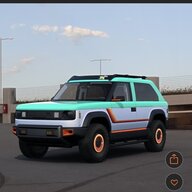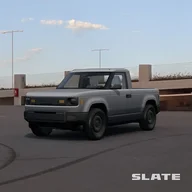
Speculation: What Will Slate's second model be?

TPL

Active Member
Joined
Mar 28, 2026
Threads
1
Messages
39
Reaction score
54
Location
USA
Vehicles
500e, Leaf, Prius C
Assuming of course that the Blank Slate is successful enough to spawn a second model, because of course it will be, what makes sense for Slate the company to build for their second model?

Full size truck? (Four door option, two door with very long bed option? Body on frame? Three row SUV variant?)

Hatchback, maybe the second coming of the VW bug?

A more significant reengineered version of the Slate 1, learning from whatever mistakes they made? Perhaps with more of the features that they famously avoided the first time around?

Sedan + minivan like the Camry? (I don't know about this one.)

 

Mac-Tyson

Well-Known Member
First Name
Mac
Joined
Jun 4, 2025
Threads
21
Messages
206
Reaction score
317
Location
United States of America
Vehicles
Lincoln MKZ and Chevy Silverado
I predict product cycle will probably be something like this: light refresh + e4x4/AWD option -> 4 Door Slate XL the size of an early 2000’s Full Size Pickup Truck -> Slate SUV on the same Platform -> Modular Slate Van -> Slate Coupe/Sedan

Continually refining the OG Blank Slate Truck throughout.
 

E90400K

Well-Known Member
First Name
Francis
Joined
Apr 26, 2025
Threads
5
Messages
1,055
Reaction score
903
Location
Under a Bridge in the Middle of the Mid Atlantic
Vehicles
A Ford truck
4-door fixed-roof SUV (i.e. no conversion) based on an extended Slateboard platform. Maybe with AWD. That's the meat of the market a 4-door SUV w/ AWD.

This would require minimum production line tooling changes (if any - wheelbase shouldn't matter).
 

ScooterAsheville

Well-Known Member
First Name
Scooter
Joined
Jul 25, 2025
Threads
13
Messages
521
Reaction score
1,167
Location
Asheville, NC
Vehicles
Maverick, Volvo
Well, we can do the Elon thing and go to first principles. It's totally fair if somebody wants to argue that I'm making these up out of thin air. Go for it. I did my best to be logical here and not spin fanboy or hater narratives.

  • I'm going to assume that Slate is a business and that it's reason for existence is to earn profit for investors, especially venture capitalists (since Slate is by definition a startup).
  • I'm further going to assume that Slate's model is to go public at some point, because that is the #1 most common way for private startups return investment profit to venture capitalists.
  • I'm going to offer up that in automotive, scale is the only path to profit, survival, and return on investment. Scale amortizes investment. Scale lowers cost from suppliers. Scale covers overhead costs.
  • I'm going to assume that Slate has $1.5 billion in venture capital (so far), and they expect a return, but we don't really know what their timeline is. Remember, an operating profit does not typically return venture capital - stock appreciation typically (not always) does that.
  • I'm going to propose that Slate has the capital to reach production (they said that twice, btw, once at $700 million, and once at $1.5 billion) of a first product, but probably not enough to produce a second product that is not highly derivative of the first.
So, what I'm trying to get at above is that Slate is capital constrained and is motivated to return investment to venture capitalists.

And that points me to a second product that involves minimal capital raise. And that's highly speculative, because maybe there is a Series D raise in the future.

(fleet) So that suggests to me something easily derived from the current platform. The no-brainer is a two door work van with classic 1970s layout. Two doors up front. And clamshell doors at the business end. This is the lowest investment derivative of the current product.

(consumer) A four door truck and a four door SUV. I lump these together just because they both involve the very expensive platform modification of adding two extra doors. But they take Slate into higher volume segments in the consumer space. However, this option also involves the highest cost - engineering a two door platform into a four door platform is not trivial. And it takes Slate into a higher cost product and a more competitive space.

I have to add the obvious. This whole thread starts with some highly speculative assumptions... (1) That Slate will be profitiable and (2) that Slate will be appealing beyond us fans and (3) that Slate will generate the operating profit and/or venture capital and/or commercial lending to engineer variants.
 

atx_ev

Well-Known Member
First Name
ACC
Joined
May 29, 2025
Threads
5
Messages
266
Reaction score
356
Location
Austin
Vehicles
tundra gle 450e
1) For sure AWD, this is a relatively minor modification
2) expanded uses cases for the existing form factor (e.g. work van, minivan with rear entry, bench seat to expand front passenger seating))
3) extending the bed, this is also a relatively minor modification
4) beefing it up to expand tow rating, cargo capacity.

In the US the car categories volumes are in the following order

SUV crossover
trucks
sedan
van/minivan
coupe/sports car

So I would expect them to follow that order
 

Mac-Tyson

Well-Known Member
First Name
Mac
Joined
Jun 4, 2025
Threads
21
Messages
206
Reaction score
317
Location
United States of America
Vehicles
Lincoln MKZ and Chevy Silverado
Well, we can do the Elon thing and go to first principles. It's totally fair if somebody wants to argue that I'm making these up out of thin air. Go for it. I did my best to be logical here and not spin fanboy or hater narratives.

  • I'm going to assume that Slate is a business and that it's reason for existence is to earn profit for investors, especially venture capitalists (since Slate is by definition a startup).
  • I'm further going to assume that Slate's model is to go public at some point, because that is the #1 most common way for private startups return investment profit to venture capitalists.
  • I'm going to offer up that in automotive, scale is the only path to profit, survival, and return on investment. Scale amortizes investment. Scale lowers cost from suppliers. Scale covers overhead costs.
  • I'm going to assume that Slate has $1.5 billion in venture capital (so far), and they expect a return, but we don't really know what their timeline is. Remember, an operating profit does not typically return venture capital - stock appreciation typically (not always) does that.
  • I'm going to propose that Slate has the capital to reach production (they said that twice, btw, once at $700 million, and once at $1.5 billion) of a first product, but probably not enough to produce a second product that is not highly derivative of the first.
So, what I'm trying to get at above is that Slate is capital constrained and is motivated to return investment to venture capitalists.

And that points me to a second product that involves minimal capital raise. And that's highly speculative, because maybe there is a Series D raise in the future.

(fleet) So that suggests to me something easily derived from the current platform. The no-brainer is a two door work van with classic 1970s layout. Two doors up front. And clamshell doors at the business end. This is the lowest investment derivative of the current product.

(consumer) A four door truck and a four door SUV. I lump these together just because they both involve the very expensive platform modification of adding two extra doors. But they take Slate into higher volume segments in the consumer space. However, this option also involves the highest cost - engineering a two door platform into a four door platform is not trivial. And it takes Slate into a higher cost product and a more competitive space.

I have to add the obvious. This whole thread starts with some highly speculative assumptions... (1) That Slate will be profitiable and (2) that Slate will be appealing beyond us fans and (3) that Slate will generate the operating profit and/or venture capital and/or commercial lending to engineer variants.
For your last point Slate doesn’t necessarily have to be profitable with their first vehicle. They just need to be profitable enough that investors see a clear roadmap to profitability. The thing that Slate also benefits from is their accessories system allows them to make money on 2nd and 3rd Slate owners as well. So they don’t need to sell in Model Y numbers nor do they plan to since the production capacity can’t even reach those numbers.
 

ScooterAsheville

Well-Known Member
First Name
Scooter
Joined
Jul 25, 2025
Threads
13
Messages
521
Reaction score
1,167
Location
Asheville, NC
Vehicles
Maverick, Volvo
100% agree with those points, Mac-Tyson. Rivian and Tesla and Lucid are all examples of highly capitalized auto startups where investors continued to pour vast sums of money into the coffers based on future promises. For Tesla they eventually paid off, albeit with billions upon billions of direct and indirect government support. For Rivian, they promise to pay off in CY 2027, as the R2 ramps. For Lucid, well the Saudis are investor saints, pouring seemingly endless sums into that piggy bank.

One interesting difference between Slate and the others is the product type. Those startups all begain at the high end, with content-rich products, and incredibly heavy technology investments. For Rivian that tech investment totally paid off with VW, and probably others soon, investing billions. Whereas Slate reversed the script. Slate is swimming against conventional wisdom, starting at the bottom - a historically great way to lose money or at best make thin margin.

Here's hoping Slate isn't gaslighting everyone about profitability day one (and how we define profitability really matters). And that they do generate or attract the capital needed for future product.

I for one would be super disappointed to see the Slate adventure fail early. It's a cool initiative that pretty much everyone out there in the auto universe supports. Now it's all about execution. And buyers showing up at a scale sufficient to support an ongoing enterprise (whatever that number is - I surely dunno).
 

Shrink36s

Well-Known Member
Joined
Apr 16, 2026
Threads
1
Messages
80
Reaction score
143
Location
Michigan
Vehicles
'18 Equinox
I think they will add AWD ass soon as it becomes clear they have something special here. Meaning, they have sales, and a market share that seems like a successful future. I would bet money they already have a dual motor AWD plan that probably even works within the current chassis.

As far as next. Probably 4-door small SUV as long as the market continues to show that is what the US market generally prefers. I could see this as the continued minimal "blank Slate" model where it's a 4-door truck with modular accessories. As Mac made clear, that accessory market may very well be where they find their larger profit model.
 

sodamo

Well-Known Member
First Name
David
Joined
May 19, 2025
Threads
8
Messages
1,293
Reaction score
1,630
Location
Big Island Hawaii
Vehicles
Tundra 1794, Subaru Ascent
A more conservative viewpoint. I don’t see major mods that would effect the crash rating or major retooling, so maybe more a v1.5 vs v2.0.
1. AWD
2. increased towing/load
3. Longer bed, possibly bed options.
4. expended electronics, but not geared toward infotainment
5. Battery improvements
6. Seating options.
7. More accessories, backward compatible.
 

Shrink36s

Well-Known Member
Joined
Apr 16, 2026
Threads
1
Messages
80
Reaction score
143
Location
Michigan
Vehicles
'18 Equinox
A more conservative viewpoint. I don’t see major mods that would effect the crash rating or major retooling, so maybe more a v1.5 vs v2.0.
1. AWD
2. increased towing/load
3. Longer bed, possibly bed options.
4. expended electronics, but not geared toward infotainment
5. Battery improvements
6. Seating options.
7. More accessories, backward compatible.
For radio, they could just partner with a Kenwood, or Alpine on a stereo they already produce and drop it in with the dash speakers. Low cost, especially if what they said about the wiring already being there for some plug and play. It could still fit their model of accessories and be done off the assembly line.
 

ScooterAsheville

Well-Known Member
First Name
Scooter
Joined
Jul 25, 2025
Threads
13
Messages
521
Reaction score
1,167
Location
Asheville, NC
Vehicles
Maverick, Volvo
Slate's future fascinates me, because they can go in so many directions with future product. So many things we don't know...

  • What is the competitive landscape in 2028? 2030? 2035? Does anybody else step into the small two-door BEV truck market segment?
  • How successful are they in the fleet and retail and accessory markets?
  • How much free cash flow will they generate? And how much capital from other sources can they bring in?
  • What are their costs? Remember they buy from suppliers. That's a double-edged sword. It means they don't need the capital to engineer stuff, but they have to pay the supplier's profit margins atop the components themselves. What are their warranty costs? Does the union arrive and raise compensation costs?
The reason I pay attention to these factors is because they all play into Slate's future business strategy.

One thing I'll be watching really closely... Right now, Slate is a glorified kit car maker. Competitors like Tesla and Rivian have gone in the oppostie direction, choosing vertical integration - they make everything in house. And they've gone bigtime in cost-reducing technology like castings, zonal compute, 48V wiring harnesses, owning all the software themselves. These things cost billions, but once developed they drive down unit cost and essentially print money.

So will Slate stay a kit car maker? Which is not an insult by me. There's a place for that approach. It's capital efficient because the suppliers incur the billions in investment cost to develop the systems Slate installs in their vehicles. But it comes with a cost penalty - the suppliers claw back those billions over time in margin.

So is Slate's long-term strategy to stay capital light, super simple, and supplier-dependent? Or do they choose the strategy for long-term efficiency, and attract the capital to start investing in serious platform and technology engineering (and yes, the Slate has tons of tech in the electric drivetrain - just not owned by Slate).

I'm fascinated. I don't get a vote. I don't pretend to know which path is the right one for Slate. I can't wait to see what decisions they make down the road.
 
  • Like
Reactions: TPL

sodamo

Well-Known Member
First Name
David
Joined
May 19, 2025
Threads
8
Messages
1,293
Reaction score
1,630
Location
Big Island Hawaii
Vehicles
Tundra 1794, Subaru Ascent
Slate's future fascinates me, because they can go in so many directions with future product. So many things we don't know...

  • What is the competitive landscape in 2028? 2030? 2035? Does anybody else step into the small two-door BEV truck market segment?
  • How successful are they in the fleet and retail and accessory markets?
  • How much free cash flow will they generate? And how much capital from other sources can they bring in?
  • What are their costs? Remember they buy from suppliers. That's a double-edged sword. It means they don't need the capital to engineer stuff, but they have to pay the supplier's profit margins atop the components themselves. What are their warranty costs? Does the union arrive and raise compensation costs?
The reason I pay attention to these factors is because they all play into Slate's future business strategy.

One thing I'll be watching really closely... Right now, Slate is a glorified kit car maker. Competitors like Tesla and Rivian have gone in the oppostie direction, choosing vertical integration - they make everything in house. And they've gone bigtime in cost-reducing technology like castings, zonal compute, 48V wiring harnesses, owning all the software themselves. These things cost billions, but once developed they drive down unit cost and essentially print money.

So will Slate stay a kit car maker? Which is not an insult by me. There's a place for that approach. It's capital efficient because the suppliers incur the billions in investment cost to develop the systems Slate installs in their vehicles. But it comes with a cost penalty - the suppliers claw back those billions over time in margin.

So is Slate's long-term strategy to stay capital light, super simple, and supplier-dependent? Or do they choose the strategy for long-term efficiency, and attract the capital to start investing in serious platform and technology engineering (and yes, the Slate has tons of tech in the electric drivetrain - just not owned by Slate).

I'm fascinated. I don't get a vote. I don't pretend to know which path is the right one for Slate. I can't wait to see what decisions they make down the road.
I agree. I would hope to see Slate step into various areas as they see an advantage.
 

The Weatherman

Well-Known Member
First Name
Dean
Joined
Apr 26, 2025
Threads
11
Messages
235
Reaction score
341
Location
KY
Vehicles
2022 F150 Lightning Lariat
For sure the next offering will be 4x4 option.

Perhaps after that a four door version.
 
 
Top