
What would you tow?!

kvermeer

Well-Known Member
First Name
Kevin
Joined
Mar 29, 2026
Threads
4
Messages
96
Reaction score
204
Location
Grand Rapids, MI
Vehicles
Toyota Sequoia, Toyota Highlander, Ford Escape, (previously) Ford Ranger
Agreed, it has to be a receiver. Hitches are far more commonly used for bike racks than they are for trailers....
Citation needed? At least at my house, the hitch is used mostly for trailers. However, I've got a mix of trailers with 1 7/8", 2", and 2 5/16" ball sizes, so I've got an assortment of stingers with mounted balls to go with each size.

It's trivial to transfer the stinger - just a pin - but a pain in the butt with crazy-high-torque giant wrenches to mount and dismount the balls. You won't want to change sizes on a bumper-mount ball frequently!

 

GaRailroader

Well-Known Member
First Name
PJ
Joined
Apr 26, 2025
Threads
13
Messages
508
Reaction score
841
Location
Atlanta, GA
Vehicles
2026 Tesla Model Y Premium, 2018 Tesla Model 3 LR
Citation needed? At least at my house, the hitch is used mostly for trailers. However, I've got a mix of trailers with 1 7/8", 2", and 2 5/16" ball sizes, so I've got an assortment of stingers with mounted balls to go with each size.

It's trivial to transfer the stinger - just a pin - but a pain in the butt with crazy-high-torque giant wrenches to mount and dismount the balls. You won't want to change sizes on a bumper-mount ball frequently!
Didn’t think of that. That is a good point. I used to have a Harbor Freight monster combination wrench for changing balls. I sold it at a yard sale now that I don’t have any trailers I need to pull.
 

phidauex

Well-Known Member
First Name
Sam
Joined
Nov 24, 2025
Threads
0
Messages
145
Reaction score
292
Location
Boulder, CO
Vehicles
2021 Mach E AWD, 1997 Tacoma ExCab
Citation needed? At least at my house, the hitch is used mostly for trailers. However, I've got a mix of trailers with 1 7/8", 2", and 2 5/16" ball sizes, so I've got an assortment of stingers with mounted balls to go with each size.

It's trivial to transfer the stinger - just a pin - but a pain in the butt with crazy-high-torque giant wrenches to mount and dismount the balls. You won't want to change sizes on a bumper-mount ball frequently!
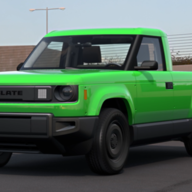
To be clear, I'm not talking about all hitch types on all types of vehicles, but thinking about passenger vehicles, light trucks, light SUVs, etc., not work trucks or large towing-specific rigs. There is a huge market for hitch mounted bike racks - bigger than roof racks or other types of bike carriers, all hitch installation companies offer to install the hitch with no wiring, and trailer ownership is low. A lot more people own a Thule rack than own a utility trailer.

I've helped 5 people install hitches on their vehicles, and in only one of those cases did the person intend to ever pull a trailer. My work parking lot right now has at least 5 cars where they leave the hitch mounted bike rack on virtually all year.

So, no, I don't have a number, but I do feel confident that among everyone who owns a hitch on a passenger vehicle, it is more likely that they will use it for a bike rack or cargo carrier than for a trailer.
 

Ronnie

Member
First Name
Ronnie
Joined
May 17, 2026
Threads
3
Messages
19
Reaction score
8
Location
Virginia
Vehicles
Toyota Tundra
Citation needed? At least at my house, the hitch is used mostly for trailers. However, I've got a mix of trailers with 1 7/8", 2", and 2 5/16" ball sizes, so I've got an assortment of stingers with mounted balls to go with each size.

It's trivial to transfer the stinger - just a pin - but a pain in the butt with crazy-high-torque giant wrenches to mount and dismount the balls. You won't want to change sizes on a bumper-mount ball frequently!
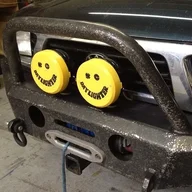
I have a heavy tow vehicle so a 2" ball is all i need on the slate to tow a small boat. My tow vehicle has an air ride hitch good for 16,000lbs.
 

Ronnie

Member
First Name
Ronnie
Joined
May 17, 2026
Threads
3
Messages
19
Reaction score
8
Location
Virginia
Vehicles
Toyota Tundra
To be clear, I'm not talking about all hitch types on all types of vehicles, but thinking about passenger vehicles, light trucks, light SUVs, etc., not work trucks or large towing-specific rigs. There is a huge market for hitch mounted bike racks - bigger than roof racks or other types of bike carriers, all hitch installation companies offer to install the hitch with no wiring, and trailer ownership is low. A lot more people own a Thule rack than own a utility trailer.

I've helped 5 people install hitches on their vehicles, and in only one of those cases did the person intend to ever pull a trailer. My work parking lot right now has at least 5 cars where they leave the hitch mounted bike rack on virtually all year.

So, no, I don't have a number, but I do feel confident that among everyone who owns a hitch on a passenger vehicle, it is more likely that they will use it for a bike rack or cargo carrier than for a trailer.
In the context of the Slate i think you are right about this.
 

Tom Sawyer

Well-Known Member
Joined
Jan 11, 2026
Threads
0
Messages
466
Reaction score
459
Location
Northeast Ohio
Vehicles
CJ-7
It's trivial to transfer the stinger - just a pin - but a pain in the butt with crazy-high-torque giant wrenches to mount and dismount the balls. You won't want to change sizes on a bumper-mount ball frequently!
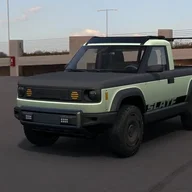
Didn’t think of that. That is a good point. I used to have a Harbor Freight monster combination wrench for changing balls. I sold it at a yard sale now that I don’t have any trailers I need to pull.
Did you really think Slate decided on manual window cranks just for nostalgia? It's to build your muscles for transferring balls.
 

Tom Sawyer

Well-Known Member
Joined
Jan 11, 2026
Threads
0
Messages
466
Reaction score
459
Location
Northeast Ohio
Vehicles
CJ-7
Man, you guys use AI a lot...
Or not enough:
GPT-5 mini said:
## Slate EV Truck — A Towing Story

The Slate rolled out of the charging bay like a patient beast, its slate-gray paint swallowing the morning light. Mara slid into the driver's seat, hands finding the warm, sculpted wheel. This was her fourth trip with the new Slate EV truck; she'd read specs and watched reviews, but today she needed it to prove itself hauling the old horse trailer from the northern farm to the ranch 120 miles away.

The Slate's electric powertrain hummed, delivering instant torque as she eased onto the county road. The dashboard displayed a live towing graphic: predicted range with trailer attached, battery temperature, and the real-time load distribution. Behind the truck, an aluminum gooseneck trailer sat low and steady, its tongue bolted to a gooseneck ball mounted in the Slate's bed. The installation had been meticulous — a reinforced subframe kit, welded pocket for the ball, and the factory auxiliary battery option that fed the trailer’s lights and hydraulic pump without drawing down the main traction pack.

Mara thought about the hitch choices she'd considered. A bumper-mounted ball could have been simpler, but for the heavy livestock trailer she trusted the gooseneck configuration. Gooseneck coupling transfers more weight onto the truck's rear axle, improving stability; the Slate's adaptive air suspension automatically raised ride height and increased spring rate as sensors detected the additional tongue load. That integration—truck and trailer acting as one—was the Slate’s quiet advantage.

They passed through the town, and a pair of pickups gave approving nods. At a stoplight, Mara toggled the Slate’s tow-assist menu. The stinger—an aftermarket extended hitch tongue she'd fitted to increase tongue weight leverage for the trailer—was visible in the exterior camera feed. The stinger added a few inches of effective length between ball and trailer frame, improving clearance and lowering the trailer pivot point for this particular load. Mara had chosen a steel stinger with a corrosion-resistant finish and integrated safety-chain mounts; its dovetail fit snugly over the trailer tongue and locked with a shear pin. She liked that the Slate's trailer-view cameras showed both the ball pocket and the stinger connection in high resolution, so she could verify alignment before locking the fourth and final latch.

On the highway, the Slate’s regenerative braking and brake controller took over when the trailer’s hydraulic surge brakes engaged. The truck's towing software smoothed the deceleration curve, blending regen torque with the trailer brakes to minimize snatch and maintain battery recapture. Mara felt the difference during a long downhill—no brake fade, no overheating. When a semi merged ahead, she activated the Slate's dynamic load-control mode. The truck tightened its electronic stability control and adjusted torque distribution between axles to counter trailer sway. Small corrective torque pulses and gentle application of the trailer brakes tamped down oscillations before they could grow.

They stopped at a farm supply to double-check the hitching hardware. The shop owner admired the setup: a pair of polished hitch balls of different diameters—2-5/16" for the gooseneck adapter and a smaller 2" for a bumper ball option—stored in a lockbox in the Slate’s under-bed compartment. Because the Slate has modular mounting points and a lockable in-bed toolbox, Mara could carry both balls, a spare stinger pin, safety chains, and the trailer electrical adaptor without cluttering the cabin. She also carried a set of load-distributing bars for lighter trailers she sometimes towed; the Slate’s payload capacity and payload-sensing suspension made switching between setups straightforward.

As they climbed out of the feedlot and into rolling grasslands, Mara reflected on the practicalities that made the Slate a towing workhorse. The truck’s adjustable ride-height preset for hauling allowed her to level the trailer quickly; the integrated trailer lighting diagnostics flashed a warning when a taillight filament on the trailer began to dim, and the Slate routed a low-voltage draw to an auxiliary circuit specially hardened for trailer use. The regenerative braking estimates updated projected range in real time; with the heavy trailer, the Slate predicted a modest reduction in range, but the route included a downhill stretch that would return much of the energy.

Around mile 60, a kink in the trailer’s sway appeared—an intermittent shimmy when they accelerated over coarse pavement. Mara eased off the accelerator, engaged the trailer-stability assist, and reduced speed to allow the system and the trailer’s dampers to settle. When they pulled to the shoulder a few miles later, she checked the stinger attachment and chain lashings. Everything was tight; the shimmy resolved after re-torquing the safety chain mounts and adjusting the trailer’s spring shackles slightly. The Slate’s diagnostic log captured the transient oscillation and offered a short report on the dashboard for later review.

Tow mirrors folded as they entered the ranch gate and the Slate's reverse camera with integrated hitch guidance projected trajectory lines toward the unloading ramp. The gooseneck ball disengaged with a satisfying clunk when Mara backed the truck under the trailer, raised the air suspension to unload the weight gradually, and removed the stinger’s shear pin. Releasing the trailer, she stowed the stinger in the bed-mounted rack; the Slate’s smart bed lighting and a low-voltage outlet made the chore easy in the dusk.

By the time the horses were settled, the Slate's battery reported a healthy state-of-charge despite the work. Mara topped up the cab's coffee, checked the trip summary, and smiled. The Slate had towed steadily and confidently—its integration of traditional mechanical towing components like balls, stingers, chains, and load-distributing hardware with modern EV systems such as regen braking, adaptive suspension, and trailer-assist software had turned a potentially taxing move into a routine day.

She closed the bed cover, set the Slate to charge at the ranch’s 80A charger, and watched the truck’s status screen estimate recharge time. Tomorrow she’d tow a smaller camper with bumper-ball hardware and load-distribution bars—different kit, same confidence. The Slate wasn't just an electric truck; it was a platform that respected the old vocabulary of hitches and balls while offering new tools to tow smarter, safer, and cleaner.
What a bunch of baloney. This is why I don't use AI...
 

GaRailroader

Well-Known Member
First Name
PJ
Joined
Apr 26, 2025
Threads
13
Messages
508
Reaction score
841
Location
Atlanta, GA
Vehicles
2026 Tesla Model Y Premium, 2018 Tesla Model 3 LR
To be clear, I'm not talking about all hitch types on all types of vehicles, but thinking about passenger vehicles, light trucks, light SUVs, etc., not work trucks or large towing-specific rigs. There is a huge market for hitch mounted bike racks - bigger than roof racks or other types of bike carriers, all hitch installation companies offer to install the hitch with no wiring, and trailer ownership is low. A lot more people own a Thule rack than own a utility trailer.

I've helped 5 people install hitches on their vehicles, and in only one of those cases did the person intend to ever pull a trailer. My work parking lot right now has at least 5 cars where they leave the hitch mounted bike rack on virtually all year.

So, no, I don't have a number, but I do feel confident that among everyone who owns a hitch on a passenger vehicle, it is more likely that they will use it for a bike rack or cargo carrier than for a trailer.
Seems reasonable. I installed 2 inch receivers on the 2018 Tesla Model 3 and my wife’s 2012 Kia Sorento before that. Didn’t install wiring harness on either, just used it for carrying bike racks.
 
 
Top