
Which battery option will suit your purposes best?


  • Total voters
    161

bloo

Well-Known Member
Joined
Nov 7, 2025
Threads
0
Messages
79
Reaction score
110
Location
USA
Vehicles
'21 Kia Seltos 2.0 AWD
Compact size would be another reason people are interested. I would not have put in a reservation if this was another so-called midsize truck.

And I don't care what Ford calls it - the Maverick is not a compact.
 
Last edited:

OP
OP
AZFox

AZFox

Well-Known Member
Joined
Apr 29, 2025
Threads
37
Messages
1,362
Reaction score
1,923
Location
Arizona
Vehicles
Honda NC700X
And I don't care what Ford calls it - the Maverick is not a compact.
Turn up your gasslight so you can read the Fine Print. It's compact compared to other Ford pickups. 😉

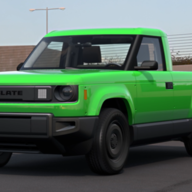
I suppose that makes the Slate Truck a subcompact.

AI says:
Size Comparison: Slate Truck vs. Ford Maverick
FeatureSlate Truck2025 Ford MaverickDifference
Overall Length174.6 inches199.8 inches25.2 inches shorter
Wheelbase108.9 inches121.1 inches12.2 inches shorter
Width (excl. mirrors)70.6 inches72.6 inches2 inches narrower
Height69.3 inches68.5 inches0.8 inches taller
Bed Length60 inches54.4 inches5.6 inches longer
Bed Width (between wheel arches)42.9 inches42.6 inches0.3 inches wider
Bed Volume37 cubic feet33.3 cubic feet3.7 cubic feet larger
Seating Capacity2 (convertible to 5 with SUV kit)5Maverick seats 3 more by default
 

ElectricShitbox

Well-Known Member
Joined
Dec 13, 2025
Threads
2
Messages
68
Reaction score
114
Location
Great Lakes Autonomous Region
Vehicles
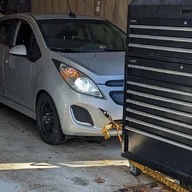
Spark EV
Turn up your gasslight so you can read the Fine Print. It's compact compared to other Ford pickups. 😉

I suppose that makes the Slate Truck a subcompact.

AI says:
Size Comparison: Slate Truck vs. Ford Maverick
FeatureSlate Truck2025 Ford MaverickDifference
Overall Length174.6 inches199.8 inches25.2 inches shorter
Wheelbase108.9 inches121.1 inches12.2 inches shorter
Width (excl. mirrors)70.6 inches72.6 inches2 inches narrower
Height69.3 inches68.5 inches0.8 inches taller
Bed Length60 inches54.4 inches5.6 inches longer
Bed Width (between wheel arches)42.9 inches42.6 inches0.3 inches wider
Bed Volume37 cubic feet33.3 cubic feet3.7 cubic feet larger
Seating Capacity2 (convertible to 5 with SUV kit)5Maverick seats 3 more by default
For size reference, the Slate is the same overall length as the '98 Civic sedan I've been commuting in lately. It really is small (good).
 

smack daddy

Member
First Name
david
Joined
Dec 22, 2025
Threads
0
Messages
12
Reaction score
3
Location
North Carolina
Vehicles
bolt f450 jeep harley
I have a bolt the range is good for my driving however I wish I had more range so I wouldn’t have to charge so much I drive 100 miles a day so range is kind of important
 

ElectricShitbox

Well-Known Member
Joined
Dec 13, 2025
Threads
2
Messages
68
Reaction score
114
Location
Great Lakes Autonomous Region
Vehicles
Spark EV
If you need to/can charge every day, it should just become a habit of park, plug in. This should be more convenient than stopping at a gas station every week more or less. Spend seconds plugging in daily instead of minutes at a gas station every week.
To me, plugging in my car when I got home became as normal a part of my routine as plugging in my phone when I go to bed. It's so much easier once you're used to it. After almost 6 years of commuting in my spark ev, I'm driving an old civic now. Every time I have to get gas, I complain that it's annoying. Imagine if instead of charging your phone every night, you had to go to a special store to buy expensive cell phone juice once a week to keep it working.
 

metroshot

Well-Known Member
First Name
Pat
Joined
Apr 30, 2025
Threads
4
Messages
212
Reaction score
239
Location
CA
Website
www.kudo-ume-farms.com
Vehicles
Mach E + Honda PHEV
If you need to/can charge every day, it should just become a habit of park, plug in. This should be more convenient than stopping at a gas station every week more or less. Spend seconds plugging in daily instead of minutes at a gas station every week.
ABC

Always
Be
Charging

Wife's PHEV with 40 mile range gets plugged in every night to 100% within 90 minutes.

My BEV with 240 mile range gets Tesla Supercharged every week and sometimes topped off at home on L2 to 100%.
 

smack daddy

Member
First Name
david
Joined
Dec 22, 2025
Threads
0
Messages
12
Reaction score
3
Location
North Carolina
Vehicles
bolt f450 jeep harley
If you need to/can charge every day, it should just become a habit of park, plug in. This should be more convenient than stopping at a gas station every week more or less. Spend seconds plugging in daily instead of minutes at a gas station every week.
The more often you charge the greater the degradation I would like to know how much a new battery pack will cost
 

KevinRS

Well-Known Member
First Name
Kevin
Joined
Jul 4, 2025
Threads
2
Messages
699
Reaction score
890
Location
California
Vehicles
Nissan Versa
The more often you charge the greater the degradation I would like to know how much a new battery pack will cost
It's not the number of partial cycles that count, it's the amount of total charging. 1/2 charge only counts as 1/2 of a charge cycle.
 
OP
OP
AZFox

AZFox

Well-Known Member
Joined
Apr 29, 2025
Threads
37
Messages
1,362
Reaction score
1,923
Location
Arizona
Vehicles
Honda NC700X
The more often you charge the greater the degradation I would like to know how much a new battery pack will cost
Charging frequently isn't harmful unless maybe you're constantly topping up after minimal driving. That would mean the battery spends more time at a higher, more stressful voltage.

NFC battery stress happens when the state-of-charge is very high or very low.

Easy solution: Don't plug it in when you've only driven a few miles.

The overarching principle is that your battery wears less when it's the middle of the SOC range.

More about that in the video here.
 
Last edited:

Kopsis

Member
First Name
David
Joined
Dec 7, 2025
Threads
0
Messages
7
Reaction score
30
Location
Arizona
Vehicles
Kia EV6
Late to the thread, but I think some explanation of EV electrical architecture may be helpful. Modern EVs are designed around either a 400V or 800V architecture. The 400V is most common (and what the Tesla v2/v3 supercharger network supports). The 800v is used by Kia/Hyundai, Cybertruck, Porsche, the GM monstrosities, Lucid, and a handful of others. Just about everything else is 400V. Every indication (especially predicted charging times) is that Slate will be a 400V architecture.

In all cases, the architecture voltage is what gets applied to the battery pack when charging, and is the maximum nominal voltage the battery pack can reach. Modules are simply a packaging technique to keep battery production and assembly into the vehicle's pack efficient. How individual cells are wired and managed within a module is a "don't care" at the vehicle level. Modules are designed to operate at the architecture voltage and bussed (connected in series) within the vehicle battery pack. Slate is designing around 10.5 kWh 400V modules, hence 5 modules in the 52.7 kWh battery and 8 modules in the 84.3 kWh battery.

Number of modules will have no effect on architecture voltage. You'll charge at 400V and your EDM inverter will see (nominally) 400V. It will have a small effect on per-cell discharge rate when driving, since each module in the extended range battery will see 1/8th the load vs. 1/5th in the standard. But at 3 mi/kWh average you're so far below the maximum discharge rate of the individual cells that the difference in battery cell "wear" is negligible.

So really, the only way standard/extended battery has any impact on longevity is the ease of keeping the pack in the optimal charge range. For NMC packs, it's well established that optimum longevity comes from keeping the pack in the 20 - 80% SoC range. That doesn't mean you should never go above/below (in fact its recommended to charge to 100% at least monthly to let the BMS achieve optimal cell balancing), but if you're dropping below 20% or have to charge higher than 80% to meet your daily needs, the extended battery will improve your overall pack longevity. Those looking to maximize longevity may want to consider 32 kWh daily average (roughly 100mi in "normal" conditions) the maximum for the standard battery and opt for the extended battery if your projected average usage is higher than that.
 

GaRailroader

Well-Known Member
First Name
PJ
Joined
Apr 26, 2025
Threads
10
Messages
289
Reaction score
482
Location
Atlanta, GA
Vehicles
2026 Tesla Model Y Premium, 2018 Tesla Model 3 LR
Late to the thread, but I think some explanation of EV electrical architecture may be helpful. Modern EVs are designed around either a 400V or 800V architecture. The 400V is most common (and what the Tesla v2/v3 supercharger network supports). The 800v is used by Kia/Hyundai, Cybertruck, Porsche, the GM monstrosities, Lucid, and a handful of others. Just about everything else is 400V. Every indication (especially predicted charging times) is that Slate will be a 400V architecture.

In all cases, the architecture voltage is what gets applied to the battery pack when charging, and is the maximum nominal voltage the battery pack can reach. Modules are simply a packaging technique to keep battery production and assembly into the vehicle's pack efficient. How individual cells are wired and managed within a module is a "don't care" at the vehicle level. Modules are designed to operate at the architecture voltage and bussed (connected in series) within the vehicle battery pack. Slate is designing around 10.5 kWh 400V modules, hence 5 modules in the 52.7 kWh battery and 8 modules in the 84.3 kWh battery.

Number of modules will have no effect on architecture voltage. You'll charge at 400V and your EDM inverter will see (nominally) 400V. It will have a small effect on per-cell discharge rate when driving, since each module in the extended range battery will see 1/8th the load vs. 1/5th in the standard. But at 3 mi/kWh average you're so far below the maximum discharge rate of the individual cells that the difference in battery cell "wear" is negligible.

So really, the only way standard/extended battery has any impact on longevity is the ease of keeping the pack in the optimal charge range. For NMC packs, it's well established that optimum longevity comes from keeping the pack in the 20 - 80% SoC range. That doesn't mean you should never go above/below (in fact its recommended to charge to 100% at least monthly to let the BMS achieve optimal cell balancing), but if you're dropping below 20% or have to charge higher than 80% to meet your daily needs, the extended battery will improve your overall pack longevity. Those looking to maximize longevity may want to consider 32 kWh daily average (roughly 100mi in "normal" conditions) the maximum for the standard battery and opt for the extended battery if your projected average usage is higher than that.
I appreciate the very detailed post. I have been leaning towards the extended range pack and these are my primary 2 reasons.

1. I think it would be reasonable to assume at 10 years and 100k miles that either pack would have degraded to 75% so that would be 112 miles range at 100% SOC on the 52.7 kWh pack and 180 miles range at 100% SOC on the 84.3 kWh pack.

2. At the 10 year mark, the 52.7 kWh pack would have 633 cycles on it and the 84.3 kWh pack would have 395 cycles on it. Going back to the assumption from #1, knowing the cycle count difference might a better assumption be that the 52.7 kWh pack has degraded to 70% and the 84.3 kWh pack only degraded to 80%? If that is the case then the 10 year range of the 52.7 kWh pack would be 105 and the 192 on the 84.3 kWh pack.

I would appreciate your thoughts on the above.
 

ElectricShitbox

Well-Known Member
Joined
Dec 13, 2025
Threads
2
Messages
68
Reaction score
114
Location
Great Lakes Autonomous Region
Vehicles
Spark EV
Slate is designing around 10.5 kWh 400V modules, hence 5 modules in the 52.7 kWh battery and 8 modules in the 84.3 kWh battery.

Number of modules will have no effect on architecture voltage.
Do you have any confirmation that this is the architecture? Because this would make it one of a kind in terms of battery design. The only other company using full pack voltage modules is Arrival, that was making commercial vans before they went bankrupt. Ample modular battery swap system was messing with it a little, but they also just went bankrupt.

This was my guess at battery architecture
https://www.slateforums.com/forum/t...ttery-option-suits-you-best.13395/post-206872
 
Last edited:

phidauex

Member
First Name
Sam
Joined
Nov 24, 2025
Threads
0
Messages
21
Reaction score
35
Location
Boulder, CO
Vehicles
2021 Mach E AWD, 1997 Tacoma ExCab
I appreciate the very detailed post. I have been leaning towards the extended range pack and these are my primary 2 reasons.

1. I think it would be reasonable to assume at 10 years and 100k miles that either pack would have degraded to 75% so that would be 112 miles range at 100% SOC on the 52.7 kWh pack and 180 miles range at 100% SOC on the 84.3 kWh pack.

2. At the 10 year mark, the 52.7 kWh pack would have 633 cycles on it and the 84.3 kWh pack would have 395 cycles on it. Going back to the assumption from #1, knowing the cycle count difference might a better assumption be that the 52.7 kWh pack has degraded to 70% and the 84.3 kWh pack only degraded to 80%? If that is the case then the 10 year range of the 52.7 kWh pack would be 105 and the 192 on the 84.3 kWh pack.

I would appreciate your thoughts on the above.
75% at 10 years would be a very conservative assumption for either pack. My MachE is about to hit 5 years from manufacturing date, and is at 91.5% State of Health with NMC cells (by LG Chem, in this case).

As for the two sizes, while it is true that a larger battery will see fewer equivalent cycles and a lower C-rate, the dominant aging method will just be time. For NMC batteries, time, operating temperature, cycles, average C-rate, and hours above 90% SOC are the biggest factors for degradation. Of these, cycles and C-rate will be slightly different between the two packs, but the other factors will be the same. No way to calculate without knowing details about the SK On cell that SK won't share with us, but if I were to just imagine, I'd be thinking something like 82% SOH at 10 yr for the standard range, and 85% SOH at 10 yr for the extended range.
 

GaRailroader

Well-Known Member
First Name
PJ
Joined
Apr 26, 2025
Threads
10
Messages
289
Reaction score
482
Location
Atlanta, GA
Vehicles
2026 Tesla Model Y Premium, 2018 Tesla Model 3 LR
75% at 10 years would be a very conservative assumption for either pack. My MachE is about to hit 5 years from manufacturing date, and is at 91.5% State of Health with NMC cells (by LG Chem, in this case).

As for the two sizes, while it is true that a larger battery will see fewer equivalent cycles and a lower C-rate, the dominant aging method will just be time. For NMC batteries, time, operating temperature, cycles, average C-rate, and hours above 90% SOC are the biggest factors for degradation. Of these, cycles and C-rate will be slightly different between the two packs, but the other factors will be the same. No way to calculate without knowing details about the SK On cell that SK won't share with us, but if I were to just imagine, I'd be thinking something like 82% SOH at 10 yr for the standard range, and 85% SOH at 10 yr for the extended range.
I like your more optimistic numbers. I am at 82% on my 2018 Tesla Model 3 with NCA chemistry.(according to Tesla battery health). It is showing 91% on recurrent auto which uses a different algorithm. My Leaf was 4 years old when I got rid of it and Leaf Spy was showing it at 90%. The Leaf typically got charged to 100% during every charging session though.
 
 
Top