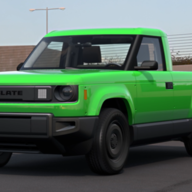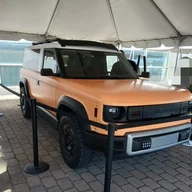
What are the main reasons you're interested in the Slate? (Pick 2)

  • Affordability/Price

  • Modularity (SUV/Open Top/Cargo kits)

  • Aftermarket Support

  • Customization / Modability

  • EV Powertrain

  • Owner Serviceability (Repairability)

  • Simplicity / Lack Of Technology or Screens

  • Lack of Telemetry / Minimal Data Collection

  • Safety

  • Design / Look Of The Slate

  • Made In The U.S.A.

  • Crank Windows

  • Wrap Friendly Design

  • Other

  • No Dealerships

  • Truck Form Factor

  • Dent Resistant Plastic Body Panels


Results are only viewable after voting.

RequiredInfo

New Member
Joined
Dec 24, 2025
Threads
0
Messages
2
Reaction score
2
Location
Required
Vehicles
Required
Okay, so we are discussing a future issue that may never come to fruition, then?

I do not think the regulations that mandate OBDII allow for manufacturers to use proprietary hardware closed from repair or replacement by non-OEM repair facilities; that is the whole impetus behind OBDII.

Perhaps there are loopholes with EV since EV do not fall under Federal emissions regulations, yet I think I recently read somewhere where CARB (i.e. California) is mandating OBDII-like repairability open source as it did for ICEV some 30+ years ago. I still doubt Slate is going to release repair information as open-source to the public considering the liabilities associated with potential electrocution risks working on high-voltage EV battery systems. Maybe they will.

In the Repair Pal thread it was reported that Slate says there will be no propriety manufacturer tools required to service the HV system (if I understand that correctly). I'm taking that with a grain of salt since I would think the unique architecture* the Slate EV battery will dictate specific battery system diagnostic tools (software at a minimum) to diagnose and service the battery.

*All manufacturer's EV batteries are comprised of unique architecture (in some form) using standard battery cells based on their service applications as a traction battery feeding a unique downstream EV drivetrain housed in unique individualized chassis.

There are several open BMS controllers for retrofits, grid packs, e-motos, etc. Orion makes ev-sized ones.
 

GaRailroader

Well-Known Member
First Name
PJ
Joined
Apr 26, 2025
Threads
9
Messages
269
Reaction score
449
Location
Atlanta, GA
Vehicles
2026 Tesla Model Y Premium, 2018 Tesla Model 3 LR
I was thinking “dent resistant plastic body panels” might be added to the list. I consider that a distinct feature that I’m actually looking forward to.
Me too. Living in the southeast I’ve had multiple vehicles get hail damage. I’d appreciate the plastic panels for that reason alone.
 

SichuanHot

Well-Known Member
Joined
May 13, 2025
Threads
3
Messages
191
Reaction score
223
Location
USA
Vehicles
BMW E53 X5 3.0i
Eh, I don't see it this way, I think this whole right to repair issue is overblown. I have been repairing my own cars for 45+ years and have never found any of the manufacturers of my vehicles withholding information or parts that has prevented me from maintaining my fleet.

I have a subscription to All-Data for some of my cars and 3rd-party service information for others in my fleet. My newest, MY 2022, has been maintainable so far; just oil changes at this point. The dealership sells the oil and oil filters, and the vehicle uses standard metric fasteners.

And to be contrary, auto manufacturers make a significant profit from the public maintaining and repairing old cars via parts sales and dealership-level maintenance/service.
I don't see it as overblown at all. Older cars from the early 2000s from the Bentley Arnage to the humble Toyota Celica were all pretty easy to repair because they didn't have any overly complicated hardware that couldn't be accessed with a basic set of tools. Now all the infotainment systems that are baked into crucial parts of the car's function are found in basically every car that make DIY repair without oem tools a bear. I wouldn't touch any modern Mercedes with the MBUX system because of that.

Granted, I'll give you that some cars are still easier than most like stripped down Fords and the GR86/BRZ.
 

E90400K

Well-Known Member
First Name
Francis
Joined
Apr 26, 2025
Threads
5
Messages
453
Reaction score
304
Location
Under a Bridge in the Middle of the Mid Atlantic
Vehicles
A Ford truck
I don't see it as overblown at all. Older cars from the early 2000s from the Bentley Arnage to the humble Toyota Celica were all pretty easy to repair because they didn't have any overly complicated hardware that couldn't be accessed with a basic set of tools. Now all the infotainment systems that are baked into crucial parts of the car's function are found in basically every car that make DIY repair without oem tools a bear. I wouldn't touch any modern Mercedes with the MBUX system because of that.

Granted, I'll give you that some cars are still easier than most like stripped down Fords and the GR86/BRZ.
Okay, but without training in repair of electronic hardware and software development, what general home DIY'er even has knowledge or a skills base to attempt board-level/component-level repairs of computer modules and infotainment system hardware? To get the education and skills training is far more expensive than buying an extended warranty that covers such systems and electronic hardware components for basically the life of the vehicle. The dealership tech is going to just replace the module and upload the software for it (if required).
 
OP
OP
Bayfire2441

Bayfire2441

Well-Known Member
First Name
Justin
Joined
Oct 14, 2025
Threads
2
Messages
49
Reaction score
69
Location
Ohio
Vehicles
65 Ford Falcon, 89 Pontiac Trans Am, x2 03 Dodge Durango, 22 Hyundai Tuscon
I was thinking “dent resistant plastic body panels” might be added to the list. I consider that a distinct feature that I’m actually looking forward to.
Added that, thanks for the suggestion.
 
Joined
Nov 29, 2025
Threads
0
Messages
11
Reaction score
13
Location
WA
Vehicles
2007 Toyota Corolla
If it wasn't affordable and electric, I wouldn't be looking at it at all. But the dedication to repairability/longevity is the reason I'm interested.
"Low tech" EV is my dream. I'm looking forward to upgrading to your username from what I once heard derisively called a "disposable people-mover".

The openness is intriguing, especially the nebulously promised "Slate U", which will hopefully be a nice, modern upgrade to my Chilton repair manuals.

It's more like people don't want to pay for the detailed repair information they might need.
I'm technology-averse as concerns my vehicles, so I'm a bit out of the loop on some of this (15+ year old cars). Is this repair information readily available with affordable diagnostic hardware? Do I need a Picoscope and some kind of software license to deal with it? Honest question. I don't know the details of the gap between the basic OBDII reader and high-end mechanic documentation. I don't think I remember stumbling across many pieces of advice more complicated than "pull codes", but also see previous comment about vehicle vintage.
 
 
Top