
Vehicle Nanny

Member
First Name
Bill
Joined
Apr 5, 2026
Threads
0
Messages
9
Reaction score
21
Location
Michigan
Website
vehiclenanny.com
Vehicles
2014 MINI Countryman; 2025 Ford Bronco
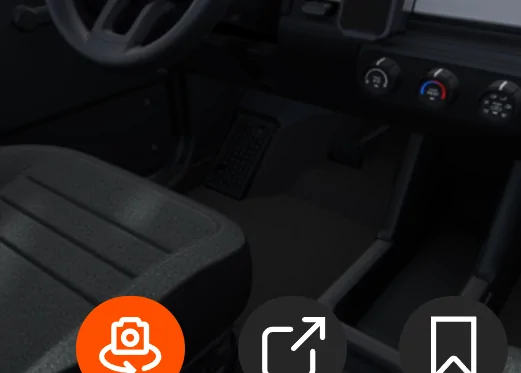
Looking back at this video, it does look like it intrudes a fair amount. If you put your left foot there, how does it feel compared to a typical "dead pedal"? Is there enough space between that and the brake pedal to add a dead pedal (where a clutch pedal would be, if that wasn't clear)?
It was noticeable, but not a deal breaker. It reminded me of driving a chevrolet Astro van, but with overall better ergonomics.
 

ElectricShitbox

Well-Known Member
Joined
Dec 13, 2025
Threads
6
Messages
342
Reaction score
701
Location
Great Lakes Autonomous Region
Vehicles
Spark EV
It was noticeable, but not a deal breaker. It reminded me of driving a chevrolet Astro van, but with overall better ergonomics.
From the model, it looks pretty tall, and no space between there and the brake pedal. People with really long legs might find it uncomfortable for longer drives, but we'll have to see ***closer to production***

Slate Auto Pickup Truck Slate production line w/ frames! Current status video (5/19/26) Screenshot_20260520-110007_1
 

ElectricShitbox

Well-Known Member
Joined
Dec 13, 2025
Threads
6
Messages
342
Reaction score
701
Location
Great Lakes Autonomous Region
Vehicles
Spark EV
You guys analyzing this vid like the JFK Zapruder film. Love it!
We've got another month before we get more details, so that gives this forum plenty of time to create a dozen theories to argue over. Also, about 20 new members will join just to say that the truck looks far too barebones for them, and they can't believe that the steering wheel is an accessory, because somehow this video is all they've seen.
 

ScooterAsheville

Well-Known Member
First Name
Scooter
Joined
Jul 25, 2025
Threads
13
Messages
541
Reaction score
1,221
Location
Asheville, NC
Vehicles
Maverick, Volvo
Very fair comparison. That's one thing I notice right away watching Telo test drives. I think Telo got too obsessed with being shorter than a Mini. An extra 18" on that truck would have still been 4" shorter than a Slate. I have a feeling Telo will do a longer gen two truck if they survive gen one.

I follow Telo closely. One thing they disclosed in one talk is that they get to meet relaxed safety standards. I forget why, but they don't have to meet the same safety metric as a passenger car. That's why details matter. When somebody says the exceed FMVSS standards - there are multiple standards for multiple classes of vehicles.

https://en.wikipedia.org/wiki/Federal_Motor_Vehicle_Safety_Standards
 

ElectricShitbox

Well-Known Member
Joined
Dec 13, 2025
Threads
6
Messages
342
Reaction score
701
Location
Great Lakes Autonomous Region
Vehicles
Spark EV

Driven5

Well-Known Member
Joined
Jul 8, 2025
Threads
2
Messages
274
Reaction score
479
Location
WA
Vehicles
F150
When I sat in one at an event in Michigan last year, I noticed the left front wheelwell made it awkward for taller drivers to rest their left foot. It's wider and farther back than most other vehicles I've driven. It doesn't cause me to rule out the vehicle, just realize it may be a production characteristic I need to get used to. If you think it might be a concern to you, find an event or other opportunity to sit in one.
It's nice to know the dead pedal thing wasn't just me. This was what I posted about it shortly after sitting in the Slate at the Seattle event...
The pedal position seemed ok, but there was something that just felt a little 'off' about the dead pedal placement. It felt too close and/or too far left. A more natural position put my foot on the awkwardly angled portion of the wheel well.
I figure either Slate will end up mounting some type of actual dead pedal to the angled part of the wheel well, somebody in the aftermarket might offer one, or I could just make one myself.
 
Last edited:
First Name
Ron
Joined
May 17, 2026
Threads
0
Messages
8
Reaction score
2
Location
NY
Vehicles
Subaru Toyota
Here's better detail from 10 months ago on pre-production builds, but the design & manufacturing was already worked out.


dragondroptv

Well-Known Member
Joined
Dec 17, 2025
Threads
5
Messages
54
Reaction score
115
Location
Wisconsin
Vehicles
Chevy Spark
I had AI analyze the video.


A few things stand out that most people probably wouldn’t notice right away:

The body structure is extremely simple
The rear cab wall and bed floor area look very flat and modular compared to most modern trucks. That’s a huge clue that Slate Auto is optimizing for:
  • fewer stamped parts
  • easier assembly
  • lower tooling cost
  • easier accessory/swappable panels later
That matches their whole “customize over time” philosophy you’ve been talking about.

They appear to be building around a single body configuration
You can tell from the assembly fixtures and symmetry that this line is likely highly standardized. Traditional OEMs often have massive variation points:
  • multiple cab sizes
  • wheelbases
  • bed lengths
  • drivetrains
  • trims
This looks much closer to:
“one core platform, customize afterward.”
That dramatically simplifies manufacturing complexity.

The bed/cab integration looks unusually rigid
The rear wall of the cab and the surrounding structure look heavily boxed in. That suggests they’re prioritizing:
  • structural stiffness
  • crash simplicity
  • manufacturing simplicity
It almost feels more like an industrial/commercial vehicle architecture than a lifestyle pickup.

Minimal penetrations/openings
There are surprisingly few holes/cutouts in the body shell right now. That usually means:
  • fewer wiring paths
  • fewer modules
  • reduced assembly labor
  • fewer leak/failure points
Modern vehicles are insanely hole-heavy at this stage. This looks intentionally stripped down.

The assembly line itself is interesting
The robotic cells on both sides suggest:
  • high automation for body joining/welding
  • likely low labor count per vehicle
  • probably designed around lower production volume initially
But what’s interesting is the line doesn’t look enormous like Ford/GM mega plants. It feels more compact and modular.

No obvious luxury packaging provisions
At this stage you’d normally see clues for:
  • power sliding rear windows
  • rear HVAC complexity
  • luxury harness routing
  • sound deadening prep
  • complicated interior supports
This shell looks almost “utility-first.” Which honestly supports the theory that: the real product is the platform/accessory ecosystem, not the base truck itself.

The rear opening proportions are unusual
The back wall opening/window area seems taller and more vertical than many modern pickups, which may:
  • improve visibility
  • maximize interior space efficiency
  • reduce aerodynamic obsession in favor of packaging
It almost has a “small truck / fleet truck / Jeep-like modularity” vibe.

One subtle thing:
The body appears designed for easy robotic access. Notice how open and straight many surfaces are. Robots love:
  • straight weld paths
  • accessible seams
  • fewer deep recessed areas
Curvy sculpted bodies are harder and more expensive to automate. This thing looks engineered backward from:
“How do we build this cheaply and repeatedly?”
instead of:
“How do we make the most visually dramatic body possible?”
And honestly, that may end up being their biggest advantage if they execute well.
 
 
Top