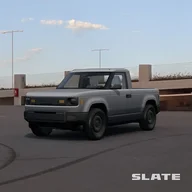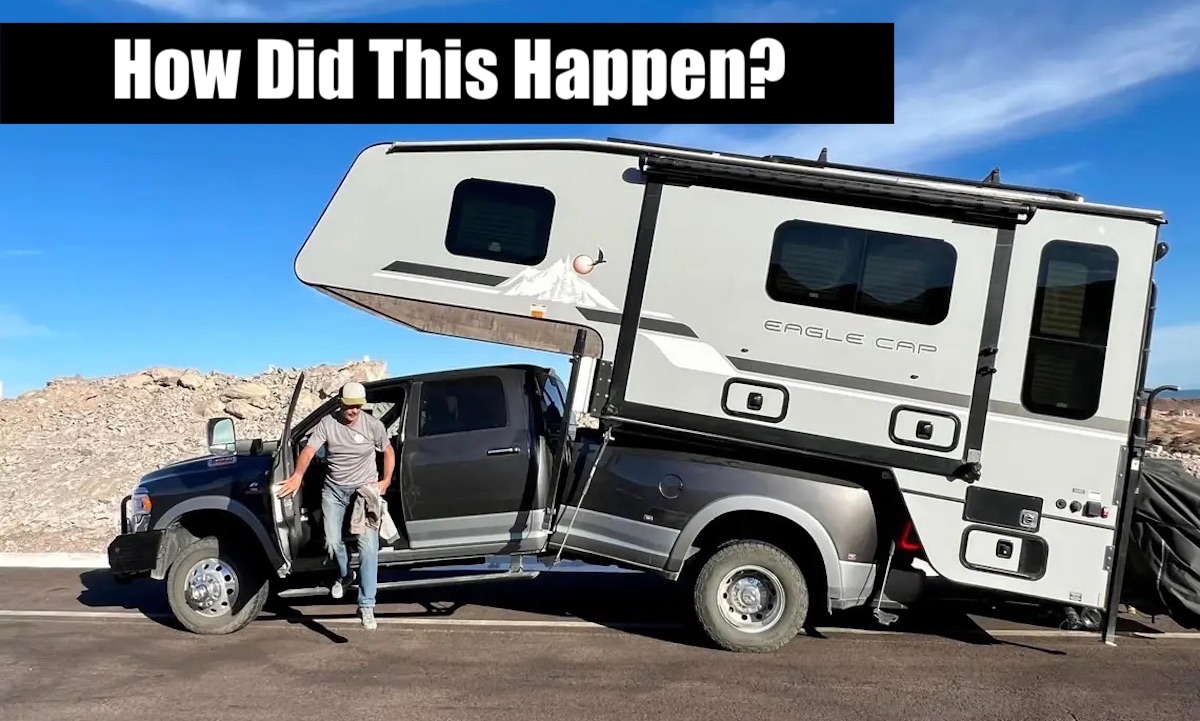

How do you feel about Slate's towing capacity?

How do you feel about a strictly 1k lb towing capacity for the Slate.


  • Total voters
    95

sodamo

Well-Known Member
First Name
David
Joined
May 19, 2025
Threads
8
Messages
1,379
Reaction score
1,768
Location
Big Island Hawaii
Vehicles
Tundra 1794, Subaru Ascent
Ah yes, 60 VW and a 65 Corvair while just a yung’un in Maine, just can’t remember ever having a problem in the snow.

 

E90400K

Well-Known Member
First Name
Francis
Joined
Apr 26, 2025
Threads
6
Messages
1,153
Reaction score
984
Location
Under a Bridge in the Middle of the Mid Atlantic
Vehicles
A Ford truck
Ah yes, 60 VW and a 65 Corvair while just a yung’un in Maine, just can’t remember ever having a problem in the snow.

I'll take a balanced chassis any day over a rear-engined chassis with 65% of the weight in the back (same for FWD). My RWD BMWs have all been great cars to drive in the snow.
 

Driven5

Well-Known Member
Joined
Jul 8, 2025
Threads
2
Messages
283
Reaction score
496
Location
WA
Vehicles
F150
Boxed sheet metal can be quite strong regardless of the gauge used to construct the boxed elements. While the Slate doesn't have a traditional ladder truck frame it does have a large frame rail battery box and very large frame rails that serve as the traditional rocker panels. Perhaps the tow kit would include a revised rear bumper that serves as the hitch much as small pickup trucks of the 1980's had a trailer ball that bolted directly to the step section of the bumper, which would reduce the lever effect of, what seems to be, a makeshift hitch system in the pics you posted of the prototype truck.
It's not just about the overall strength, but also the local stress concentrated at the hitch mounts. Think E46 rear subframe mounts tearing out. The framing around the battery box does nothing to reinforce the sheet metal at the points where the hitch is physically attached. At this point, I also doubt they're changing the chassis to move the hitch mounting points from those used for the towing tests back towards the bumper.
 
Last edited:

E90400K

Well-Known Member
First Name
Francis
Joined
Apr 26, 2025
Threads
6
Messages
1,153
Reaction score
984
Location
Under a Bridge in the Middle of the Mid Atlantic
Vehicles
A Ford truck
It's not just about the overall strength, but also the local stress concentrated at the hitch mounts. Think E46 rear subframe mounts tearing out. The framing around the battery box does nothing to reinforce the sheet metal at the points where the hitch is physically attached. At this point, I also doubt they're changing the chassis to move the hitch mounting points from those used for the towing tests back towards the bumper.
It was a test mule to test the thermodynamic performance of the cooling system. No way that is the final configuration of the hitch. The battery box adds strength to the frame, which reduces flex and therefore metal fatigue. I'll repeat, 3,500 pounds is not much weight to tow and not too much for that unibody frame design.
 

GaRailroader

Well-Known Member
First Name
PJ
Joined
Apr 26, 2025
Threads
13
Messages
468
Reaction score
776
Location
Atlanta, GA
Vehicles
2026 Tesla Model Y Premium, 2018 Tesla Model 3 LR
It's not just about the overall strength, but also the local stress concentrated at the hitch mounts. Think E46 rear subframe mounts tearing out. The framing around the battery box does nothing to reinforce the sheet metal at the points where the hitch is physically attached. At this point, I also doubt they're changing the chassis to move the hitch mounting points from those used for the towing tests back towards the bumper.
Here is an excerpt from the FAQ on Slate Auto site.


“The Slate is designed for real-world use cases and daily utility, so its towing capacity is tuned around preserving range and ensuring predictable performance.”

Based on this verbiage I would think that it would be reasonable to conclude that the tow capacity was not driven by concerns over a strength limitation of the unibody. My Model Y has a 3500 pound tow rating and I don’t think it is 3.5 times stronger than the Slate. Heck the Model Y has a 160 pound weight limit for bike racks or cargo carriers plugged in to the hitch. I used to have a Jeep GC that you could easily hang ~350 pounds from the hitch in the form of a rail carrier for a dirt bike and a 300 pound dual sport bike.(it was rated for 500 pound tongue load and didn’t have a lower limitation for cargo carriers)
 

Driven5

Well-Known Member
Joined
Jul 8, 2025
Threads
2
Messages
283
Reaction score
496
Location
WA
Vehicles
F150
My Model Y has a 3500 pound tow rating and I don’t think it is 3.5 times stronger than the Slate. Heck the Model Y has a 160 pound weight limit for bike racks or cargo carriers plugged in to the hitch. I used to have a Jeep GC that you could easily hang ~350 pounds from the hitch in the form of a rail carrier for a dirt bike and a 300 pound dual sport bike.(it was rated for 500 pound tongue load and didn’t have a lower limitation for cargo carriers)
Good engineering is done as a system, and Slate should be no less engineered to it's specs than those are to theirs.

Engineers don't massively overbuild one part of the system relative to the rest unnecessarily. Yes, Slate management may have set targets for towing based largely on range, but the rest of the systems (structure, cooling, etc) would have all been engineered to THAT specification.

I'm not saying it isn't possible the structure isn't overbuilt at the hitch mounts for other non-towing reasons. But there is zero evidence available to support, let alone validate, any such baseless claims.... At least not any more than if claiming those 3.5k rated unibodies should all be good to 7k too.

Otherwise, why adhere to the Model Y 160 lb rack limit, since all unibody structures are being assume equally overbuilt?
 
Last edited:

GaRailroader

Well-Known Member
First Name
PJ
Joined
Apr 26, 2025
Threads
13
Messages
468
Reaction score
776
Location
Atlanta, GA
Vehicles
2026 Tesla Model Y Premium, 2018 Tesla Model 3 LR
By that logic, 3.5k rated vehicles are good for 5k+, and my 9k rated truck should be good for at least 12k+. LOL
I think you are misunderstanding the logic. I was just pointing out the limiting factor driving the 1000 pound tow rating doesn’t appear to be the frame structure. One of Slate’s non-negotiables is a 5 star crash rating. To achieve that crash rating they need to score well on rear end collisions. The design of the rear structure is likely be driven by the 5 star crash rating goal rather than minimum viable product to meet the goal of a 1000 lb tow rating.
 

GaRailroader

Well-Known Member
First Name
PJ
Joined
Apr 26, 2025
Threads
13
Messages
468
Reaction score
776
Location
Atlanta, GA
Vehicles
2026 Tesla Model Y Premium, 2018 Tesla Model 3 LR
Otherwise, why adhere to the Model Y 160 lb rack limit, since all unibody structures are being assume equally overbuilt?
Dude. I have no intention of exceeding any of the published limits of my Slate. I was simply pointing out that by reading the Slate FAQ it would be reasonable to conclude that the it wasn’t the frame structure that caused the low tow rating. Perhaps that is not a valid conclusion but that is the conclusion I have drawn.
 

E90400K

Well-Known Member
First Name
Francis
Joined
Apr 26, 2025
Threads
6
Messages
1,153
Reaction score
984
Location
Under a Bridge in the Middle of the Mid Atlantic
Vehicles
A Ford truck
Good engineering is done as a system, and Slate should be no less engineered to it's specs than those are to theirs.

Engineers don't massively overbuild one part of the system relative to the rest unnecessarily. Yes, Slate management may have set targets for towing based largely on range, but the rest of the systems (structure, cooling, etc) would have all been engineered to THAT specification.

I'm not saying it isn't possible the structure isn't overbuilt at the hitch mounts for other non-towing reasons. But there is zero evidence available to support, let alone validate, any such baseless claims.... At least not any more than if claiming those 3.5k rated unibodies should all be good to 7k too.

Otherwise, why adhere to the Model Y 160 lb rack limit, since all unibody structures are being assume equally overbuilt?
I think any automotive structure/chassis can handle more than a 1,000-pound tow rating simply because of the stresses it must endure just carrying itself around by applying torque to the road. 1,000 pounds is seriously a lightweight spec. Again, back to the Ridgeline, it's unibody structure tows 5,000 pounds with just a 280 HP ICE and AWD with a curb weight 800 to 900 pounds more than a Slate. And the Ridgeline is supporting that tow rating with a fully independent rear suspension vs. the Slate's Di Dion beam axle.

Asking the Slate's chassis to handle 3,500 pounds towing doesn't require a massively over-built structure. I'll reiterate the low tow rating is a conservative rating based on a 52 kWh battery.
 

E90400K

Well-Known Member
First Name
Francis
Joined
Apr 26, 2025
Threads
6
Messages
1,153
Reaction score
984
Location
Under a Bridge in the Middle of the Mid Atlantic
Vehicles
A Ford truck
Dude. I have no intention of exceeding any of the published limits of my Slate. I was simply pointing out that by reading the Slate FAQ it would be reasonable to conclude that the it wasn’t the frame structure that caused the low tow rating. Perhaps that is not a valid conclusion but that is the conclusion I have drawn.
It is 100% a valid conclusion.
 

KevinRS

Well-Known Member
First Name
Kevin
Joined
Jul 4, 2025
Threads
5
Messages
1,335
Reaction score
1,556
Location
California
Vehicles
Nissan Versa
Until someone can really look at the rear end, and I mean tear it down, I wouldn't assume you can put a tongue weight over 100 lbs on it(except that they will have included a safety margin) Sure other unibodies can tow more, but it can be as simple as doubling up the sheet metal, ridges formed into the sheet for strength, etc.
The truck was engineered to the 1000 lb rating, with of course a safety margin, they won't have put extra weight and work into making any part specced to 2-3.5x that spec.
Safety rating doesn't help, in fact it may hurt, because the hitch may be hanging off of something like a crumple zone needed to get that rating. Safety ratings aren't about the vehicle surviving untotaled, they are about the driver and passengers surviving, the vehicle can be sacrificed to that end.

There will be no resolution on this question unless it comes from Slate, or people actually getting their hands on one and tearing it down or testing to destruction.
 

Driven5

Well-Known Member
Joined
Jul 8, 2025
Threads
2
Messages
283
Reaction score
496
Location
WA
Vehicles
F150
I was just pointing out the limiting factor driving the 1000 pound tow rating choice doesn’t appear to be the frame structure.
I was simply pointing out that by reading the Slate FAQ it would be reasonable to conclude that the it wasn’t the frame structure that caused the low tow rating choice. Perhaps that is not a valid conclusion but that is the conclusion I have drawn.
FTFY. It's honestly not an otherwise unreasonable conclusion for anybody not doing this type of stuff for a living, and becomes valid with this small but critical added distinction. You don't engineer the vehicle then figure out what it's capabilities it might meet. You choose the capabilities to meet then engineer the vehicle to suit. So while it's true that the hitch area frame structure was not what caused the 1k choice, the 1k choice was a driver of what the hitch area frame structure was engineered to handle.

The 5* crash rating intent also doesn't actually tell us anything about the rear structure for two reasons. First, there is no rear impact crash test that they have to pass to achieve a 5* rating. Second, even if there was, the most efficient structural design for more impact energy dissipation in a sheet metal structure is not inherently the most efficient structural design for a stronger hitch mount. Whether or not the additional crash impact structural needs were addressed in a way that also made the hitch mounting points equivalent to a 3.5x heavier rated vehicle is purely a baseless assumption at this point.

Remember, it's not the static load rating of 100 vs 350 pounds that's the real issue here. It's the imperfect (real world) loading and dynamic loads. Few people know their actual tongue weight compared to the common recommendation is 10% minimum up to 15% tongue weight, vs the typical 10% 'max' official rating, and a 2.5x dynamic load factor. Combine those and t's now 375 vs 1312 pounds pulling on those few weld-nuts in the sheet metal... And as I previously noted, while they might integrate the hitch design to not need the extension, if they don't change the hitch mounting points from their trucks used while performing their SAE J2807 testing and it stays similarly cantilevered out like that, there's another rough doubling of the 'equivalent' loads at the mounts to potentially 750 vs 2625 pounds... Which is the same reason for Tesla derating from 350 to 160 for cantilevered accessories.


The battery box adds strength to the frame, which reduces flex and therefore metal fatigue.
I think any automotive structure/chassis can handle more than a 1,000-pound tow rating simply because of the stresses it must endure just carrying itself around by applying torque to the road.
Reducing frame flex between the front and rear suspensions does not reduce local flexing and metal fatigue of structure cantilevered behind the rear suspension, and the motor likewise does not react torque through structure that isn't between the motor mounts and suspension. That's simply not how structures actually work. The hitch is mounted behind both the rear suspension and motor mounts. The suspension and motor mounts also all have increased metal thicknesses engineered to specifically meet their respective chosen load requirements too.
 
Last edited:
 
Top